



Gherkin
Description
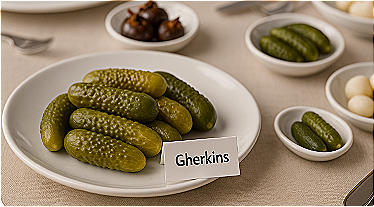
Gherkins are small, immature cucumbers (typically Cucumis sativus or specialty pickling varieties) harvested early for their firm texture and tangy flavor.
Commonly preserved in brine, vinegar pickling solutions, or fermented lactically.
Used widely in condiments, salads, relishes, dressings, and ready meals for acidity, crunch, and flavor contrast.
Market forms include whole, sliced, diced, julienned, or incorporated into sauces (relish, spreads).
Indicative nutritional values per 100 g
(Values refer to drained pickled gherkins; fresh gherkins are lower in sodium.)
Energy: 10–25 kcal
Carbohydrates: 1.5–4 g
Sugars: 1–2 g
Dietary fiber: 1–1.5 g
Proteins: 0.3–0.7 g
Lipids: <0.2 g
SFA (first occurrence): negligible
MUFA: negligible
PUFA: negligible
TFA: absent
Sodium: 500–900 mg (from pickling brine; varies widely)
Minerals: potassium (low in pickled form), manganese, traces of magnesium
Vitamins: small amounts of vitamin K and vitamin C (reduced during pickling)
Key constituents
Organic acids: acetic acid (from vinegar), lactic acid (in fermented gherkins).
Flavor compounds: aldehydes and terpenes responsible for fresh cucumber aroma.
Phenolics: flavonoids and tannins contributing to mild astringency.
Salts: sodium chloride (brine), sometimes calcium salts to enhance firmness.
Natural sugars: present in small amounts, partially consumed during fermentation.
Production process
Harvesting: picked at early maturity (2–5 cm), ensuring firmness and low seed development.
Sorting & grading: size, color, and surface integrity selected for premium quality.
Primary processing:
Washing and trimming
Optional pricking/slitting to improve brine penetration
Pickling methods:
Vinegar pickling: immersion in acetic acid brine with salt, herbs, spices.
Natural fermentation: lactic acid bacteria convert sugars into lactic acid in salted brine.
Additives (optional): dill, mustard seeds, garlic, turmeric, calcium chloride.
Packaging: glass jars, plastic tubs, or single-serve sachets.
Quality standards: microbiological and physicochemical control under GMP/HACCP.
Physical properties
Appearance: bright green to olive green; whole or cut.
Texture: firm, crisp, with snap on biting; firmness influenced by calcium salts and pickling method.
pH: typically 2.8–4.0 depending on acidification.
Moisture: >90% (fresh), similar after pickling due to water equilibrium with brine.
Density: variable based on brine concentration and cut size.
Sensory and technological properties
Taste: tangy, acidic, salty, slightly sweet depending on recipe.
Aroma: mildly herbal with dill, mustard, garlic, or spice notes.
Color: green with possible yellowish hue from turmeric or brine.
Technological benefits:
Provides acidity and flavor brightness.
Adds crunch and textural contrast.
Helps balance fatty, creamy, or rich foods.
Stable in pasteurized and shelf-stable products.
Food applications
Sandwiches, burgers, wraps, and salads.
Condiments: tartar sauce, dill sauces, relish.
Cold ready meals and meal kits.
Charcuterie, smoked fish preparations, and antipasti.
Sauces, dips, dressings, and marinades.
Finely chopped for spreads or mixed salads (potato salad, tuna salad, egg salad).
Nutrition & health
Very low caloric content.
Provides beneficial organic acids and mild antioxidant components.
Natural fermentation (when used) provides lactic acid and can support digestive health.
High sodium content in pickled form may be unsuitable for low-sodium diets.
Minimal contribution of vitamins and minerals after pickling.
Portion note
Typical portion size in prepared foods: 10–30 g diced or sliced.
Whole gherkins: 1–3 pieces depending on size.
Allergens & intolerances
Gherkins themselves are not allergens.
Check for:
Mustard seeds or mustard spices (common allergen).
Sulfites (sometimes used in pickling).
Gluten-free and dairy-free unless cross-contaminated.
Storage & shelf-life
Unopened jars: 1–3 years at room temperature.
Opened product: 1–2 months refrigerated, submerged in brine.
Fermented gherkins: may continue slow fermentation under refrigeration.
Avoid exposure to air to prevent softening and mold formation.
Safety & regulatory
Must comply with safety criteria for acidified or fermented foods.
pH control is critical: below 4.6 for safety (typically far lower in gherkins).
Must follow GMP/HACCP standards.
Labeling must include added allergens (mustard, sulfites).
Limits for preservatives, colorants, and contaminants depend on regional regulations.
Labeling
Ingredient declaration: “Gherkins” or “Pickled gherkins”.
Must list:
Water, vinegar, salt, sugar (if present)
Spices (dill, mustard, turmeric, garlic)
Preservatives (if used)
For fermented gherkins: declare “fermented” or list lactic acid as naturally occurring.
Troubleshooting
Soft texture:
Caused by enzymatic activity or insufficient acidity; use calcium salts or rapid acidification.
Cloudy brine:
Natural during fermentation; in vinegar pickles may indicate mineral precipitation or microbial activity.
Off-flavors:
Due to oxidation, poor raw material quality, or spice degradation.
Hollow centers:
Often caused by rapid growth in the field or delayed processing.
Sustainability & supply chain
Gherkins are typically cultivated in intensive but controlled agricultural systems.
Key sustainability factors:
Efficient irrigation management
Reduced pesticide usage
Soil conservation practices
Processing generates low waste; trimmings can be composted.
Wastewater treatment must monitor parameters such as BOD/COD.
Main INCI functions (cosmetics)
(When used as “Cucumber Extract” or “Gherkin Extract”)
Skin conditioning
Soothing and hydrating agent
Antioxidant botanical component
Refreshing and toning functionality
Conclusion
Gherkins are a widely used ingredient that provides acidity, texture, and characteristic pickle flavor to a vast range of prepared foods. Their crispness, versatility, and ability to elevate savory formulations make them valuable in both home and industrial cooking. With low calories and clean labeling potential, they integrate well into modern, health-conscious food products. Proper pickling, storage, and processing ensure safety, quality, and long shelf-life.
Mini-glossary
SFA – Saturated fatty acids. Excessive intake may raise LDL cholesterol; gherkins contain negligible amounts.
MUFA – Monounsaturated fatty acids. Generally heart-healthy.
PUFA – Polyunsaturated fatty acids. Important for metabolic and cardiovascular functions.
TFA – Trans fatty acids. Industrial TFAs are harmful; gherkins contain none.
GMP/HACCP – Good Manufacturing Practices / Hazard Analysis and Critical Control Points: systems ensuring hygiene, safety, and traceability.
BOD/COD – Biological oxygen demand / chemical oxygen demand: parameters used to evaluate the environmental impact of wastewater.

