



Crab extract
Description
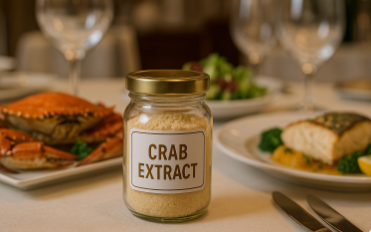
Crab extract is a concentrated preparation obtained from edible crab species, typically from the meat, shell, and internal liquids.
Used as a natural flavor base in soups, broths, sauces, seasonings, and ready-made dishes.
Characterized by a strong marine, savory profile with natural umami compounds.
Indicative nutritional values per 100 g
(Values vary by species and production method.)
Energy: 30–50 kcal
Proteins: 6–10 g
Total lipids: 0.5–1.5 g
Of which SFA (first occurrence bold): SFA low
MUFA: very low
PUFA (mainly n-3): present in traces
Trans fats: negligible
Carbohydrates: <1 g
Sodium: 500–1500 mg (increased if salt is added during extraction)
Minerals: iodine, selenium, zinc, copper
Vitamins: B12, B6, niacin
Key constituents
Free amino acids and peptides: glutamate, glycine, alanine → key for natural umami.
Nucleotides: inosinate (IMP), guanylate (GMP) → synergistic flavor enhancers.
Minerals: sodium, magnesium, calcium, potassium, iodine.
Volatile aromatic molecules: marine aldehydes, ketones, sulfur-containing compounds.
Trace lipids: marine omega-3 fatty acids (EPA, DHA) in minimal concentration.
Production process
Raw material selection: fresh or cooked crab parts, including shells and internal liquids.
Mechanical grinding or homogenization to increase surface area.
Aqueous extraction at controlled temperature to release flavor compounds.
Clarification through filtration, centrifugation, or enzymatic treatment.
Concentration via evaporation or vacuum reduction to reach desired intensity.
Optional spray drying to obtain a powdered extract.
Quality controls under GMP/HACCP guidelines.
Physical properties
Appearance:
Liquid extract: brown to reddish-brown, viscous.
Powdered extract: light brown, fine to granular.
Solubility: high in water; partially soluble in fats depending on formulation.
Density: varies with concentration (typically 1.03–1.15 g/mL for liquids).
Stability: sensitive to oxidation and high heat; stable when refrigerated or dried.
Sensory and technological properties
Taste: intense marine flavor with strong umami notes.
Aroma: characteristic crab aroma with slight sweetness.
Color impact: light brown pigmentation when used in broths or sauces.
Technological roles:
Natural flavor enhancement.
Synergistic umami booster (due to amino acids + nucleotides).
Masking of off-notes in complex formulations.
Food applications
Broths, soups, bisques.
Ready-made meals (risotto, paella, ramen, noodles).
Seafood sauces and condiments.
Snack seasonings (chips, crackers).
Surimi, fish cakes, crab-flavored products.
Concentrated pastes and bouillons.
Nutrition and health
Provides high-quality proteins and bioavailable minerals, especially vitamin B12 and iodine.
Very low in fat; minimal presence of omega-3 lipids (EPA, DHA).
Naturally contains compounds that support palatability and may help reduce added salt by enhancing flavor.
People with shellfish allergy must avoid it.
Not recommended in low-sodium diets if salt concentration is high.
Portion note
Typical usage in foods is 1–5 g per serving depending on concentration and dish type.
Allergens and intolerances
Contains crustaceans, a major allergen.
Must be avoided by individuals with shellfish allergies.
No gluten, lactose, or common non-crustacean allergens unless added via formulation.
Storage and shelf life
Liquid extract:
Refrigerated (0–4 °C): 2–4 weeks.
Frozen: 6–12 months.
Powder extract:
Shelf-stable, 12–24 months in a cool, dry environment.
Protect from humidity and light to prevent oxidation and aroma loss.
Safety and regulatory
Classified as a food ingredient derived from crustaceans; subject to allergen labeling requirements.
Must be produced following GMP/HACCP quality and safety standards.
Complies with regional seafood regulations (EU, FDA, Codex) depending on market.
No specific ADI (Acceptable Daily Intake) established.
Labeling
Usual declaration: “Crab extract” or “Crustacean extract”.
Allergen statement required: “Contains crustaceans.”
If used in powdered products, carrier agents (e.g., maltodextrin) must be listed.
Country-specific rules may require identification of species.
Troubleshooting
Weak flavor intensity:
Increase dosage; ensure correct rehydration; check storage conditions for oxidation.
Cloudiness in broths:
Use clarified extract or filter after dissolution.
Off-odors:
Caused by oxidation; use antioxidants or improve packaging.
Excessive saltiness:
Choose low-sodium versions or reduce added salt in formulation.
Sustainability and supply chain
Sourcing often utilizes by-products from crab processing, contributing to waste reduction.
Sustainability depends on:
Fishery management and catch quotas.
Responsible harvesting certifications (e.g., MSC where applicable).
Environmental considerations:
Marine ecosystem impact varies by species.
Adoption of efficient extraction methods reduces water and energy use.
Main INCI functions (cosmetics)
(When used in cosmetic formulations as “Crab Extract”)
Skin conditioning
Moisturizing agent
Nutrient-rich marine extract
Revitalizing/tonifying component
Conclusion
Crab extract is a versatile marine ingredient valued for its intense natural flavor, strong umami profile, and ability to enhance a wide range of foods. With low caloric impact but high sensory performance, it is widely used in savory preparations, ready meals, and seafood-based products. Proper allergen management, sourcing transparency, and controlled processing ensure both safety and quality. When formulated responsibly, crab extract contributes to flavor, sustainability, and product differentiation.
Mini-glossary
SFA – Saturated fatty acids. Excessive intake may raise LDL cholesterol; crab extract contains very low levels.
MUFA – Monounsaturated fatty acids. Generally considered heart-healthy.
PUFA – Polyunsaturated fatty acids. Include omega-3 and omega-6 families with roles in cardiovascular and neural health.
EPA – Eicosapentaenoic acid, an omega-3 PUFA with anti-inflammatory benefits.
DHA – Docosahexaenoic acid, an omega-3 PUFA essential for brain and eye health.
TFA – Trans fatty acids. Industrial TFAs are harmful; natural marine TFAs are negligible in crab extract.
GMP/HACCP – Good Manufacturing Practices / Hazard Analysis and Critical Control Points; essential systems ensuring food safety and quality.
BOD/COD – Biological Oxygen Demand / Chemical Oxygen Demand; indicators of environmental impact relevant in wastewater from seafood processing.

