



Fermented rice extract
Description
Fermented rice extract is obtained by controlled fermentation of rice (Oryza sativa) using selected microorganisms (typically lactic acid bacteria or food-grade yeasts).
Fermentation partially breaks down starches and proteins, increases the availability of amino acids and minerals, and can generate additional bioactive compounds and organic acids.
The ingredient is typically supplied as a liquid extract, concentrated syrup, or spray-dried powder for use in foods, beverages, supplements, and cosmetics.
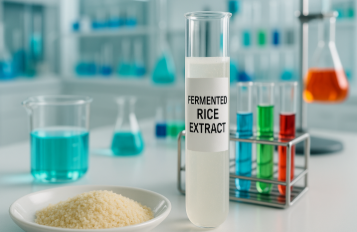
Indicative nutritional values per 100 g
(Typical ranges; values depend on rice variety, fermentation conditions, and concentration)
Energy: 250–330 kcal
Carbohydrates: 55–70 g
of which sugars: 10–18 g
part of the starch may be converted to more digestible fractions and resistant starch during fermentation.
Protein: 4–8 g
includes peptides and free amino acids.
Fat: 0.5–2 g
very low total fat; small amounts of SFA, MUFA and PUFA depending on rice variety, but nutritionally almost negligible.
Dietary fiber: 1–3 g
may include resistant starch formed or preserved during fermentation.
Ash (minerals): 1–2 g (potassium, magnesium, phosphorus, calcium, iron, zinc in small amounts).
Moisture: wide range (5–80%) depending on whether the product is a powder, concentrate, or ready-to-drink liquid.
Key constituents
Peptides and low–molecular weight protein fragments formed by microbial and enzymatic proteolysis.
Free amino acids (e.g. glutamic acid, leucine, valine, and other essential amino acids).
Carbohydrates
residual starch, dextrins, oligosaccharides, sugars.
Organic acids
mainly lactic acid; depending on process also acetic, succinic, malic and others.
Rice-derived phytochemicals
phenolic compounds, γ-oryzanol, and other antioxidants (especially when bran or brown rice is used).
B vitamins formed or increased during fermentation (especially some B-group vitamins in small amounts).
Production process
Raw material selection
White, brown, or pigmented rice chosen according to the desired flavor and nutritional profile.
Cooking / gelatinization
Rice is cooked or otherwise processed to gelatinize starch and make carbohydrates accessible to the microorganisms.
Inoculation
Addition of selected lactic acid bacteria and/or yeasts approved for food use (often probiotic or starter strains).
Controlled fermentation
Conducted at controlled temperature and time (commonly 30–37 °C for several hours to 1–2 days, depending on process).
Separation and clarification
Pressing, filtration and/or centrifugation to obtain a clarified fermented rice liquid.
Concentration and drying (if applicable)
Vacuum concentration and spray-drying or freeze-drying to obtain powders or concentrates.
Stabilisation and quality control
Heat treatment or other stabilization steps; microbiological and chemical checks under HACCP or equivalent food safety plans.
Physical properties
Appearance
Liquid: milky to slightly opaque, beige to light brown.
Powder: light yellow to beige, free-flowing to slightly hygroscopic.
Solubility
Readily dispersible in water; solubility and viscosity depend on degree of hydrolysis and added starches.
pH
Typically acidic, around 3.5–5.0 due to lactic and other organic acids.
Viscosity
Can range from low to highly viscous; may be tailored using added starches or concentration level.
Sensory and technological properties
Flavor profile
Mildly acidic, slightly sweet, and “fermented”; powder products are often described as roasty, toasty, bread-crust-like with light cocoa or nutty notes.
Mouthfeel
Can provide body and roundness in beverages; contributes to creaminess in dairy alternatives and soups.
Technological functionalities
Light thickening and viscosity builder (depending on solids and dextrin content).
Natural flavor enhancer, improving umami and overall taste complexity.
Can aid in moisture retention and browning in baked goods due to residual sugars and proteins.
Food applications
Functional and fermented beverages (ready-to-drink or instant powders).
Dairy alternatives and plant-based yogurts, smoothies, and shakes.
Soups, sauces, broths, and seasonings (for depth and “slow-cooked” flavor).
Bakery products (breads, rolls, crackers) and snacks for flavor and texture enhancement.
Nutritional supplements and sports nutrition formulations where gentle carbohydrates and peptides are desired.
Nutrition & health
Enhanced nutrient availability
Fermentation improves digestibility of starch and proteins and may reduce antinutritional factors (e.g. phytates), increasing mineral availability.
Gut health support
Fermented rice drinks have been associated with better tolerance in the gastrointestinal tract and potential benefits for gut microbiota due to organic acids, fiber and resistant starch.
Micronutrient profile
Studies show increased or better-retained levels of calcium, iron, zinc and some B vitamins compared to unfermented rice preparations, although levels remain modest in the extract itself.
Energy source
Provides easily digestible carbohydrates with relatively low fat; suitable for populations needing energy-dense yet light foods, when used as part of a balanced diet. ajbls.com+1
Fat quality
Very low-fat ingredient; the small lipid fraction includes minor amounts of saturated and unsaturated fatty acids (including SFA, MUFA and PUFA), but total quantities are too low to be nutritionally critical.
Portion note
Typical use levels in finished food products are about 1–10 g/day per person, depending on the concentration of the extract and the nutritional or flavor function.
Higher intakes are possible in beverages and specialized foods but should remain consistent with overall energy and carbohydrate intake targets.
Allergens and intolerances
Rice is not classified among the major “big 8” / “big 14” allergens in most regulations.
However, strict gluten-free status depends on avoiding cross-contamination with gluten-containing cereals during farming and processing; many commercial fermented rice extracts are specifically certified gluten-free.
The fermentation process itself does not typically introduce new major allergens, assuming only food-grade, well-characterized microbial strains and processing aids are used.
Storage & shelf-life
Liquid extracts
Shelf-life often 6–12 months under cool conditions (e.g., refrigerated or ambient depending on pasteurization and packaging).
Powdered extracts
Shelf-life typically 12–24 months in sealed packaging, protected from moisture, heat, and direct light; water activity is usually kept low to ensure microbiological stability.
Once opened
Liquid products should be refrigerated and used within the period indicated by the manufacturer.
Powders should be tightly closed and stored in a dry place to avoid caking and off-flavors.
Safety & regulatory
Rice and rice-derived ingredients are widely recognized as safe for use in foods; fermented rice products are traditional in many cultures (Asia, etc.).
Microbial strains used for fermentation should have a clear safety status (e.g., GRAS/QPS or otherwise authorized for food use).
Commercial products are typically produced under documented food safety systems such as HACCP, and may carry additional certifications (kosher, halal, organic, non-GMO).
In the EU and other regions, the regulatory status depends on the exact process; traditional-style fermented rice extracts using conventional microbes and rice are generally not considered novel foods, but non-traditional processes or microbial strains may require novel food or equivalent assessment.
Labelling
Typical ingredient declarations
“Fermented rice extract”
“Rice extract (fermented)”
“Rice ferment extract” or similar wording, sometimes with the botanical name Oryza sativa in brackets.
Additional information
Indication of carrier materials (e.g. maltodextrin, starch) and processing aids if present.
“Gluten-free”, “vegan”, “non-GMO” or organic claims where backed by certification.
Troubleshooting
Sedimentation or phase separation in liquids
Cause: insufficient homogenization or high particle size.
Mitigation: improve filtration/clarification, adjust homogenization, or use stabilizers if allowed.
Excessively sour or sharp flavor
Cause: over-fermentation or dominance of strongly acidifying strains.
Mitigation: shorten fermentation time, adjust inoculum level, or select milder cultures.
Color too dark in powders or concentrates
Cause: Maillard reactions during concentration or drying, or use of pigmented rice varieties.
Mitigation: lower concentration temperature, optimize drying conditions, or adjust rice type.
Poor solubility or clumping of powders
Cause: high hygroscopicity, inadequate particle size distribution.
Mitigation: modify spray-drying parameters, include suitable carriers, ensure proper packaging and storage.
Sustainability & supply chain
Rice is a globally cultivated cereal with established supply chains; many producers offer sustainably grown and organic rice.
Fermentation is generally considered a low-impact process, requiring moderate energy and water compared with many other food processing technologies.
By-products such as rice bran, husk and residual solids can be valorised in animal feed, bioenergy or upcycled food ingredients, supporting a circular-economy approach.
Certified schemes (organic, fair trade, sustainable rice initiatives) may be used to strengthen sustainability claims along the supply chain.
Main INCI functions (cosmetics)
Typical cosmetic INCI name: Rice Ferment Extract or equivalent (e.g. “Fermented Rice Extract”) when used in personal care formulations.
Key cosmetic functions:
Skin conditioning and moisturizing
Helps support the skin barrier and can improve hydration and softness.
Soothing and anti-inflammatory support
Fermented rice-derived components may help calm sensitive or stressed skin.
Antioxidant activity
Phenolic compounds and fermentation-derived metabolites contribute to protection against oxidative stress.
Texture and sensorial improvement
Enhances skin feel, can contribute to a smoother, more elegant texture in serums and creams.
Supporting anti-aging claims
Some patented fermented rice extracts are described as promoting collagen synthesis or helping to reduce signs of aging in the skin.
Conclusion
Fermented rice extract is a versatile ingredient that combines the nutritional and technological potential of rice with the functional benefits of fermentation. It offers gentle, easily digestible carbohydrates, bioactive peptides, organic acids and minor micronutrients, while contributing desirable flavor, body and stability to foods and beverages. Its very low fat content and generally favorable tolerance make it suitable for a wide range of consumers when used within a balanced diet.
In cosmetics, fermented rice extract serves as a multi-functional active for skin conditioning, soothing, and antioxidant support, and is often associated with premium, “fermentation-inspired” skincare concepts. With well-established supply chains, good sustainability prospects, and the possibility of clean label positioning, fermented rice extract can be considered a modern, adaptable and safe ingredient for both food and cosmetic applications.
Mini-glossary
SFA – Saturated fatty acids; typically associated with increased LDL cholesterol when consumed in excess, though fermented rice extract contains only trace amounts.
MUFA – Monounsaturated fatty acids; generally regarded as “heart-friendlier” fats when replacing saturated fats in the diet, present only in very small quantities in this ingredient.
PUFA – Polyunsaturated fatty acids; include essential omega-6 and omega-3 fatty acids, important for cell membranes and inflammatory balance; present at very low levels in fermented rice extract.
HACCP – Hazard Analysis and Critical Control Points; a structured food safety management system used to identify and control hazards in food production.
Lactic acid bacteria (LAB) – Group of beneficial bacteria that ferment sugars into lactic acid; widely used in fermented foods and sometimes considered probiotic.
Resistant starch – Fraction of starch that resists digestion in the small intestine and behaves like fiber, supporting gut microbiota and production of short-chain fatty acids.
GRAS / QPS – “Generally Recognized As Safe” (US) / “Qualified Presumption of Safety” (EU); regulatory concepts indicating that a substance or microorganism is considered safe under specified conditions of use.
INCI – International Nomenclature of Cosmetic Ingredients; standardized naming system for cosmetic ingredients printed on product labels.

