



Cured cucumbers
(pickled cucumbers in brine or vinegar – fermented or non-fermented, whole, spears, slices, relish)
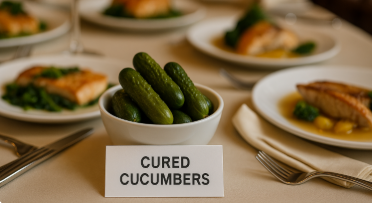
Description
“Cured cucumbers” generally refers to cucumbers preserved in salt brine and/or vinegar, with spices, herbs and sometimes sugar. They include traditional fermented dills, sour pickles, vinegar pickles and sweet pickle styles.
Products can be whole, spears, slices, chips or finely chopped (relish), packed in glass jars, cans, pouches or bulk barrels.
Two main technological families:
Lactic fermented cucumbers – cucumbers in salt brine where naturally occurring LAB (lactic acid bacteria) convert sugars to lactic acid (probiotic–type pickles).
Non-fermented vinegar pickles – cucumbers are heated and packed in an acidified vinegar brine; preservation relies on vinegar and pasteurisation rather than active fermentation.
Indicative nutritional values (per 100 g drained, unsweetened dill/sour cucumbers)
(Typical dill/sour styles; sweet pickles with added sugar can be much higher in energy and carbohydrates.)
Energy: 10–20 kcal
Water: ≈ 90–94 g
Protein: 0.3–0.8 g
Total fat: 0.1–0.4 g
First occurrence: SFA/MUFA/PUFA = saturated/monounsaturated/polyunsaturated fatty acids. In cured cucumbers the total fat content is so low that SFA, MUFA and PUFA are nutritionally negligible; they do not materially affect the fatty-acid profile of the diet.
Carbohydrates (available): 2–4 g (mostly sugars from cucumber and, in some recipes, a small amount of added sugar)
Dietary fibre: 0.4–1.0 g
Sodium (brine/acidified products): typically 500–1 800 mg/100 g, depending on formulation and whether “reduced sodium” brine is used.
Micronutrients: small amounts of vitamin K, vitamin C, potassium, calcium; levels vary with cucumber variety, brine and processing.
Sweet cured cucumbers (bread-and-butter pickles, sweet relish) may reach 70–120 kcal/100 g with 15–30 g carbohydrates due to added sugars.
Key constituents
Vegetable matrix
High water content and low energy density.
Cellulose and hemicellulose in the peel and flesh provide modest dietary fibre.
Acid and salt system
Lactic acid and/or acetic acid lower pH and contribute to tangy flavour and microbial stability.
Sodium chloride (and sometimes potassium chloride) provides ionic strength, flavour and osmotic effect; the main nutritional issue for cured cucumbers is their high sodium content, not their calories or fat.
Microflora (fermented styles)
In traditional brine fermentations, LAB (lactic acid bacteria such as Lactobacillus species) dominate, producing lactic acid and other metabolites that shape flavour, texture and microbiological safety. Some refrigerated, unpasteurised products may contain live LAB.
Aromatics and spices
Dill, mustard seed, garlic, peppercorns, coriander, bay leaf and other spices; these add flavour and minor quantities of essential oils and phenolic compounds.
Production process
Raw material selection
Use of small, firm pickling cucumbers with uniform size and intact skin; sorting, washing and trimming of blossom ends to reduce softening enzymes.
Fermented cured cucumbers
Cucumbers loaded into tanks or barrels and covered with salt brine (sometimes with starter LAB).
Anaerobic fermentation at controlled temperature; LAB convert sugars to lactic acid, reducing pH and inhibiting spoilage microbes.
After fermentation, cucumbers may be stored in brine or further processed (desalting, re-brining with spices, packaging, mild pasteurisation or refrigeration).
Vinegar-cured cucumbers (non-fermented)
Cucumbers may be briefly blanched or kept raw; packed into containers with vinegar-based pickling liquid (water, vinegar, salt, sugar, spices).
Containers are sealed and pasteurised or hot-filled; shelf-stable products are typically fully pasteurised.
Relish and sliced products
Cucumbers are sliced or chopped, sometimes salted and drained to remove water, then mixed with vinegar, sugar, spices and other vegetables (onions, peppers) before pasteurisation and packaging.
Physical properties
Texture: ideally crisp and firm, with snap when bitten; soft or hollow centres indicate process defects.
Colour: from bright green (freshly packed, often with added colour stabilisers) to olive green in fermented or heat-processed products.
pH: usually < 4.0 in finished products, ensuring shelf stability when combined with salt and heat treatment.
Water activity: high (aw ≈ 0.97–0.99); safety is ensured by acidity and salt rather than water reduction.
Sensory and technological properties
Flavour
Balance of acidic tang, saltiness and cucumber aroma, with herbal and spicy notes.
Fermented products tend to have more complex lactic and sometimes effervescent notes; vinegar-cured pickles have a sharper, more straightforward acidity.
Texture functionality
Provide crunch and contrast in sandwiches, burgers, salads and ready meals.
Firmness depends on cucumber variety, calcium content, salt, pH and use of firming agents (e.g. calcium chloride).
Technological behaviour
Stable under ambient storage when correctly acidified/pasteurised.
Can be chopped, sliced or incorporated into relishes, sauces, salads without losing structure if processed gently.
Food applications
Retail and foodservice
Condiment and side for burgers, sandwiches, hot dogs, charcuterie boards.
Component in potato salads, coleslaw, mixed vegetable salads.
Served as appetiser or side dish with meat, cheese and cured fish.
Food industry
Incorporated into tartar sauce, burger sauces, remoulade, Thousand Island dressing, and other creamy condiments where acidity balances fat.
Used in ready meals such as wraps, rice bowls, pasta salads, potato salads, and deli-style prepared salads to provide brightness, crunch and flavour contrast.
Included in tuna, chicken, egg or ham salads as an acidic, textural component.
Basis for relish, chutneys and sandwich spreads, where chopped cured cucumbers combine with onions, peppers, herbs and sugar.
Dehydrated or freeze-dried cured cucumber particles may be used in snack seasonings or dry soup/dip mixes for a tangy profile.
Industrial bulk fermented cucumbers are used as starting material for commercial pickling, slicing, relishing and for production of acidified foods.
Nutrition & health
Cured cucumbers are a low-calorie, low-fat ingredient contributing acidity and flavour rather than macronutrients. They contain:
Modest amounts of vitamin K, vitamin C (reduced by heat), potassium, calcium and phytonutrients from cucumber.
Very low levels of fat; the first occurrence of SFA/MUFA/PUFA (saturated / monounsaturated / polyunsaturated fatty acids) is present in trace amounts only and has no significant dietary impact.
Some fermented styles may provide residual lactic acid bacteria, although most shelf-stable products are pasteurised and therefore not probiotic.
Health considerations
Sodium content is the primary nutritional concern: typical products contain 500–1800 mg sodium/100 g, which can contribute substantially to daily intake. Reduced-salt versions exist but may compromise crispness or flavour.
For individuals with hypertension, cardiovascular concerns or sodium-sensitive conditions, portion control is important.
The acidic environment benefits food safety and digestion for many consumers, though highly acidic foods may pose issues for people with acid reflux or gastric sensitivity.
Allergens and intolerances
Cucumbers themselves are not a major allergen.
Cured cucumber products are generally allergen-free but may contain or be cross-contaminated with:
mustard (seeds, spices, powders used in brines),
celery,
sulphites (used as colour stabilisers or in some brines),
allergens from added vegetables in relishes (e.g., onion).
Sweet pickles or relishes may include ingredients with additional allergens, depending on the recipe.
Fermented products do not contain dairy, gluten or soy by default, unless part of a mixed condiment.
Quality & specification parameters
Physical–sensorial: firmness (crispness), absence of hollow centers, colour uniformity, absence of off-odours (yeasty, moldy or sulphurous).
Chemical: pH typically < 4.0, salt concentration according to specification (often 1.5–3.5% in finished products), absence of excessive softening enzymes.
Microbiological: for fermented styles, dominance of LAB; for pasteurised styles, commercial sterility; absence of yeast, molds and pathogens.
Additives: possible use of calcium chloride (firming agent), preservatives (sodium benzoate, potassium sorbate), colour stabilisers; all must comply with food regulations.
Defect criteria: broken pieces (if whole/spear product), mushy texture, floating fruit, gas pocket formation, turbidity in brine.
Storage & shelf-life
Shelf-stable jars/cans:
store at room temperature away from heat and light;
typical shelf-life 1–3 years unopened;
once opened, refrigerate and consume within 1–4 weeks, ensuring cucumbers remain submerged in brine to maintain texture and prevent spoilage.
Refrigerated fermented pickles (unpasteurised):
must be kept at 0–4 °C;
shelf-life shorter, typically 1–3 months;
ongoing fermentation may slowly change flavour and texture.
Avoid cross-contamination, dilution of brine, or exposure to air, all of which can lead to softening, yeast growth or mold.
Safety & regulatory
Regulation focuses on:
acidified foods rules (pH control, thermal processing, container integrity),
salt concentration and natural fermentation monitoring,
limits and labelling requirements for preservatives and sulphites,
adherence to GMP/HACCP for brined and acidified vegetables.
Routine surveillance includes: pH verification, salt monitoring, container vacuum checks, LAB/yeast counts and detection of spoilage organisms.
Containers must not show swelling, leakage or corrosion.
Labelling
Must include:
product name (“cured cucumbers”, “pickled cucumbers”, “dill pickles”, etc.),
list of ingredients (cucumbers, water, salt, vinegar, sugar, spices, preservatives),
allergen declarations (mustard, sulphites if present),
nutritional panel,
drained weight and net weight,
storage instructions (refrigeration after opening),
origin or production batch traceability.
Fermented (refrigerated) products may specify “unpasteurised” or “contains live cultures”.
Troubleshooting
Soft or mushy texture → calcium deficiency, incomplete fermentation, too low salt, high temperature, residual blossom-end enzymes.
Hollow cucumbers → over-mature fruit or improper raw material selection.
Cloudy brine → yeast growth, protein precipitation, starch from spices, or calcium/magnesium interactions.
Off-flavours (yeasty, alcoholic) → uncontrolled fermentation or contamination.
Colour fading → oxidation, insufficient acidity, heat/light exposure.
Sustainability & supply chain
Cucumbers have a low GHG footprint relative to animal ingredients, but sustainability depends on irrigation, fertiliser use and transport.
Industrial pickling facilities focus on:
reduction of BOD/COD in brine effluents,
recycling of packaging materials,
optimisation of salt and acid usage,
control of waste cucumbers and peel residues (valorised in feed or compost).
Seasonal gluts can be stabilised through fermentation or acidification, reducing food waste.
INCI functions (cosmetics)
Although rare in cosmetics, extracts from cucumbers—including cured forms—may appear under Cucumis Sativus Fruit Extract:
skin conditioning
soothing / hydrating effect
fragrance component
Preservation through curing does not fundamentally change cucumber’s low-irritation profile, but vinegar/salt components are not typically used in cosmetic extracts.
Conclusion
Cured cucumbers are a low-calorie, high-acidity preserved vegetable with notable flavour, crunch and versatility. Through fermentation or acidified brines, they achieve long shelf-life and excellent microbiological stability. Their primary nutritional consideration is sodium content, while their functional value lies in texture, acidity and aromatic complexity. They are widely used in both household and industrial foods, from sandwiches to sauces and relishes.
Mini-glossary
SFA/MUFA/PUFA – saturated / monounsaturated / polyunsaturated fatty acids; in cured cucumbers these are present only in negligible amounts.
LAB – lactic acid bacteria; microbes responsible for fermentation and lactic acid production in fermented pickles.
HACCP/GMP – hazard analysis and critical control points / good manufacturing practices; systems ensuring safety and quality of acidified and fermented foods.
BOD/COD – biochemical/chemical oxygen demand; indicators of organic load in effluents from brining or pickling plants.
Studies
Recent studies have attributed cucumber nutraceutical properties to cucumber for its discreet content of minerals, fiber and vitamins.
It consists of:
- water 95%
- carbohydrates 3.6%
- protein 0.65%
nutraceuticals (1):
- Vitamin C 8mg/100g
- Vitamin E 0.16mg/100g
- Retinol 28ug/100g
- Vitamin B9 15ug/100g
- Flavonoids
What it is used for and where
Medical
This study attributes to cucumber the effectiveness of reducing pain in moderate osteoarthritis (2).
Traditional medical medicine used it to treat hyperlipidaemia, constipation and headaches. It has anti-inflammatory and antioxidant properties (3) and the fruit juice of this plant is used as an emollient in anti-acne lotions. It has been studied in some animal models where anti-hyperglycaemic effects were observed (4).
Cosmetics
The aqueous extract of cucumber has demonstrated cooling properties that soothe irritated skin and reduce swelling (5).
For more information:

