



Whey powder
(dried whey from milk; sweet whey or acid whey, food ingredient and dairy derivative)
Description
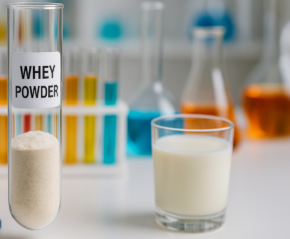
Whey powder is obtained by removing most of the water from liquid whey, the aqueous fraction that remains after cheese or casein production from milk.
Appears as a free-flowing, off-white to light cream powder with a characteristic milky, slightly sweet flavour (sweet whey) or more tangy taste (acid whey).
Used as a nutrient-rich dairy ingredient (proteins + lactose + minerals) and as a functional component for flavour, colour, browning and texture in a wide range of foods.
Indicative nutritional values (per 100 g, typical sweet whey powder)
(Actual values depend on process and whether it is sweet or acid whey.)
Energy: 350–380 kcal
Water: ≤ 4–6 g
Protein: 10–15 g
Total fat: 1–3 g
First occurrence: SFA/MUFA/PUFA = saturated/monounsaturated/polyunsaturated fatty acids; in whey powder total fat is low, but most fatty acids are SFA from milk fat, with smaller amounts of MUFA and PUFA. In the context of a normal diet, whey powder adds little to overall fat intake, though it still contributes mainly saturated fat.
Total carbohydrates: 70–80 g
Lactose: 60–75 g (main carbohydrate)
Minor glucose/galactose and oligosaccharides
Dietary fibre: 0 g
Ash (minerals): 8–11 g (mainly calcium, phosphorus, sodium, potassium, magnesium)
Sodium: typically 300–700 mg (higher in salty/acid whey powders)
Calcium: 400–700 mg
Potassium: 1,500–2,000 mg
Key constituents
Whey proteins (globular proteins):
β-lactoglobulin, α-lactalbumin, serum albumin, immunoglobulins, lactoferrin (in small amounts).
High biological value (BV), good digestibility and rich in branched-chain amino acids (BCAA).
Lactose: main carbohydrate; contributes sweetness, browning (Maillard) and body.
Minerals (milk salts): calcium, phosphorus (mainly as phosphates), sodium, potassium, magnesium; contribute to buffering capacity and ionic strength.
Lipids: small amounts of milk fat, mostly saturated triglycerides and milk fat globule membrane fragments.
Small amounts of water-soluble vitamins (B-group) depending on the process; fat-soluble vitamins mostly follow the cream phase and are lower in whey.
Production process
Liquid whey generation:
Sweet whey: from rennet-coagulated cheese (e.g. hard/semi-hard cheeses), pH around 6.0–6.6.
Acid whey: from acid-coagulated cheese or casein (pH around 4.5–5.0).
Clarification and separation: removal of fat, curd fines and other solids via centrifugation, filtration, screening.
Concentration: whey is evaporated under vacuum to a syrup-like concentrate (e.g. 40–60% total solids).
Drying:
spray drying (most common) to obtain a free-flowing powder;
sometimes followed by agglomeration/instantisation to improve dispersibility and wettability.
Finishing & packing: cooling, sieving, metal detection, blending (standardisation) → packed in moisture-barrier bags (paper + PE, multi-layer, big bags) for industrial use.
Physical properties
Appearance: fine to slightly granular powder, off-white to light yellow.
Solubility: highly soluble in water, though agglomerated powders wet and dissolve more easily than non-agglomerated ones.
Hygroscopicity: moderately hygroscopic; can cake if exposed to moisture.
pH (10% solution): typically 5.5–6.7 for sweet whey; more acidic for acid whey.
Bulk density: around 0.4–0.8 g/mL, depending on particle size and agglomeration.
Sensory and technological properties
Flavour: mild dairy flavour, slightly sweet; acid whey powder tends to have a more tangy note.
Colour: off-white/light cream, can darken with heat and storage due to Maillard reactions (lactose + proteins).
Functional behaviour:
contributes body and mouthfeel in beverages, dairy products and sauces;
participates in browning and flavour development during baking and frying;
offers some emulsifying and foaming capacity due to whey proteins (weaker than dedicated emulsifiers, but helpful);
provides water binding and slightly increases viscosity in high-solids systems.
Food applications
Bakery: breads, biscuits, cakes, muffins, pancakes → colour and flavour development, improved crust, added protein and dairy notes.
Confectionery & chocolate: caramels, toffees, milk chocolate, fillings → lactose and milk solids provide sweetness, bulk and texture.
Dairy & desserts: ice cream, yogurts, dairy drinks, puddings → body, solids and mild sweetness; cost-effective replacement for part of milk solids.
Beverages: cocoa mixes, sports drinks, instant beverages → as a carrier for flavours and cocoa, and as a dairy base.
Savory & snacks: soup bases, sauces, mashed potato flakes, snack coatings and seasonings → flavour enhancement and browning.
Nutrition products (where permitted): as carbohydrate/protein source in meal replacements, oral nutritional supplements or as a base for further protein fractionation (whey protein concentrates/isolates).
Nutrition & health
Provides high-quality protein, though at lower percentage than whey protein concentrates/isolates.
Main carbohydrate is lactose:
useful energy source but may cause digestive discomfort in individuals with lactose intolerance;
contributes to glycaemic load, especially in large servings.
Low in fat, but the limited fat present is mostly saturated; the contribution to overall dietary fat intake is generally small because serving sizes are moderate.
Minerals (especially calcium, phosphorus, potassium) support bone health and electrolyte balance as part of a balanced diet.
May be unsuitable or must be used with caution for:
individuals with cow’s milk allergy (due to whey proteins);
people with lactose intolerance, unless lactose-reduced or used in very small amounts.
Serving note: in formulations, typical inclusion levels are 2–15% of total recipe weight depending on application (e.g. small amount in bread up to higher levels in bakery mixes or confectionery fillings).
Allergens and intolerances
Whey powder is a milk-derived ingredient and therefore a major allergen.
Contains whey proteins, which can trigger reactions in individuals with cow’s milk protein allergy.
High in lactose:
problematic for lactose-intolerant individuals, especially at higher doses;
low-lactose or lactose-free versions require special processing (e.g. enzymatic hydrolysis, ultrafiltration + recombination).
May contain traces of casein and other milk fractions depending on cheesemaking and separation efficiency.
Quality and specifications (typical themes)
Chemical/physical:
moisture ≤ 4–6%;
protein, fat, lactose, ash within specified ranges;
scorched particle level (indicator of overheating) within limits;
titratable acidity, pH;
solubility index, bulk density, particle size distribution.
Microbiology:
low total plate count;
coliforms, yeasts and moulds within defined limits;
pathogens (e.g. Salmonella absent in 25 g).
Contaminants:
residues (e.g. veterinary drugs, cleaning agents) within legal limits;
heavy metals (Pb, Cd, Hg, As) controlled;
very low foreign matter (verified via sieving, metal detection, optical sorting).
Storage and shelf-life
Store in a cool, dry place, away from strong odours and direct sunlight.
Recommended storage: ≤ 25 °C and relative humidity < 65%.
Keep in tightly sealed, moisture-barrier packaging; once opened, reclose well or transfer to sealed containers to prevent caking and odour uptake.
Typical shelf-life: 12–24 months from production, depending on process, packaging and storage; flavour and colour may slowly deteriorate (cooked/malty notes, browning) if exposed to heat and humidity.
Safety and regulatory
Produced under GMP/HACCP, with full traceability from milk collection through cheese/whey production, concentration, drying and packing.
Classified as a milk ingredient; not an additive.
Must comply with regulations on microbiological criteria, contaminants (e.g. aflatoxin M1 in milk products), and labelling of milk allergen.
Organic whey powder must meet additional requirements regarding milk origin, processing aids and cleaning agents.
Labeling
Ingredient declaration examples:
“whey powder”, “sweet whey powder”, “dried whey”;
in some contexts, may be specified as “milk (whey powder)” to highlight allergen.
Allergen labelling: “milk” must be clearly indicated according to local regulations.
Nutritional or marketing claims (e.g. “source of protein”, “with milk solids”) must comply with nutrient claim rules and actual composition.
Troubleshooting
Caking / lumping in bags or mixes
Cause: moisture uptake, high humidity, insufficient barrier, or incomplete cooling before packing.
Action: improve packaging and storage conditions; ensure proper drying and cooling; consider anti-caking approaches or agglomeration.
Poor solubility / undissolved specks
Cause: non-agglomerated fine powder, high temperatures during reconstitution, insufficient mixing, or high scorched particle levels.
Action: use agglomerated/instantised whey powder; control water temperature; optimise mixing/shear; check supplier quality.
Excessive browning in baked goods
Cause: high lactose content + high baking temperatures/time.
Action: reduce whey powder level, adjust sugar/baking profile, or blend with lower-lactose dairy ingredients.
Off-flavours (cooked, oxidised, rancid)
Cause: prolonged storage, exposure to high temperature and humidity, or fat oxidation.
Action: improve storage conditions, shorten shelf-life, rotate stock (FIFO), review process (dryer inlet/outlet temperatures, oxygen exposure).
Sustainability and supply chain
Whey powder is a key example of by-product valorisation: it turns cheesemaking whey (once a waste/effluent) into a high-value ingredient, reducing environmental burden.
Main environmental aspects:
energy use for concentration and drying (opportunities for heat recovery and energy efficiency);
treatment of any residual whey streams and cleaning water, with BOD/COD reduction;
transport efficiency and packaging choice (recyclable/mono-material where feasible).
Good supply-chain practice includes robust milk quality programs, responsible dairy farming, and strict hygiene in cheese and whey processing.
Main INCI functions (cosmetics)
Related cosmetic ingredients:
Lactis Proteinum (Whey Protein), Lactose, Whey Powder (depending on nomenclature).
Functions: skin conditioning, humectant, and sometimes film-forming or nutritive component in cosmetic and personal care products.
Cosmetic-grade materials may require tighter specifications (microbiology, contaminants) than standard food-grade whey powder.
Conclusion
Whey powder is a versatile dairy ingredient that concentrates the soluble components of milk—whey proteins, lactose and minerals—in a stable, easily handled powder. It brings nutritional value (high-quality protein, minerals), characteristic dairy flavour and important technological functions (body, browning, texture) to bakery, confectionery, dairy, beverages and savoury products. When produced and stored under proper GMP/HACCP with suitable moisture and temperature control, whey powder is a robust, cost-effective tool for enhancing both the sensory and nutritional profile of a wide variety of foods.
Mini-glossary
SFA/MUFA/PUFA – Saturated/monounsaturated/polyunsaturated fatty acids; in whey powder total fat is low but mainly SFA from milk fat, with smaller amounts of MUFA and PUFA.
BV (biological value) – Indicator of how efficiently dietary protein can be used for body protein synthesis; whey proteins have high BV.
GMP/HACCP – Good Manufacturing Practices / Hazard Analysis and Critical Control Points; key systems to ensure safe, hygienic and traceable production.
BOD/COD – Biochemical/Chemical Oxygen Demand; measures of organic load in wastewater, relevant for effluent treatment in dairy plants.
FIFO – First In, First Out; stock rotation rule to ensure older batches are used before newer ones, reducing product ageing and waste.

