RECENSIONE
Recensione

Al222 (25264 pt) • 14-Nov-2025 15:25
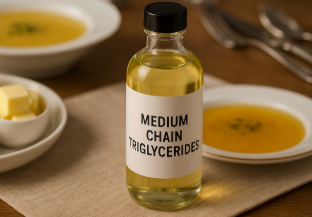
Trigliceridi a media catena (MCT)
(olio alimentare neutro da acidi grassi C6–C10; liquido o polvere spray-dried)
Descrizione
• Olio chiaro, neutro, quasi inodore, composto da triacilgliceroli di acidi grassi a media catena (prevalentemente C8 caprilico e C10 caprico). MCT è l’acronimo di medium chain triglycerides, lipidi rapidamente assorbiti e preferenzialmente ossidati a scopo energetico rispetto all’accumulo.
• Ottenuto da frazioni di cocco o palmisto; impiegato come fonte energetica “pulita” e come carrier tecnico.
• Disponibile come olio sfuso o come polvere di MCT (olio microincapsulato su carrier carboidratici/proteici) per applicazioni in miscele secche.
Valori nutrizionali indicativi (per 100 g, grado olio)
• Energia: 830–860 kcal
• Grassi: 100 g — prima occorrenza lipidi SFA/MUFA/PUFA (acidi grassi saturi/mono/polinsaturi; in generale è consigliabile moderare i saturi)
• Carboidrati: 0 g • Zuccheri: 0 g • Proteine: 0 g • Sodio: 0 mg
• TFA (acidi grassi trans): ~0 g
• Acidi grassi essenziali (LA/ALA): trascurabili → non usare gli MCT come unica fonte lipidica.
Principali sostanze contenute
• Profilo tipico degli acidi grassi (% su totale): C8:0 50–80%; C10:0 20–50%; C6:0 ≤ 3%; C12:0 ≤ 2%; insaturi ≤ 1%.
• Componenti minori: tracce di tocoferoli/steroli; possibile antiossidante aggiunto (es. tocoferoli misti) secondo specifica.
Processo di produzione
• Olio di cocco/palmisto raffinato → idrolisi a acidi grassi → distillazione frazionata per isolare tagli C6–C10 → re-esterificazione con glicerolo food-grade → raffinazione (neutralizzazione, decolorazione, deodorazione) → filtrazione fine → riempimento sotto gas inerte.
• Per le polveri: emulsione con carrier (es. maltodestrina, gomma arabica, proteine del latte) → spray-drying → eventuale agglomerazione/setacciatura → confezionamento.
Proprietà fisiche
• Aspetto: liquido limpido, incolore/paglierino.
• Densità (25 °C): ~0,94–0,96 • Indice di rifrazione (40 °C): ~1,440–1,452 • Viscosità: bassa.
• Indice di iodio: ≤ 1 g I₂/100 g (elevata saturazione) • Valore di saponificazione: ~305–345 mg KOH/g.
• Punto di fumo: ~160–170 °C → non ideale per fritture ad alta T.
• Insolubile in acqua; miscibile con la maggior parte degli oli; disperdibile con emulsionanti.
Proprietà sensoriali e tecnologiche
• Gusto/aroma neutri: non copre i sapori delicati.
• Alta stabilità ossidativa (completamente saturo), ma punto di fumo moderato; eccellente solvente/carrier per aromi, colori e attivi lipofili (vitamine A, D, E, K).
• Possibile lieve velatura vicino a 0 °C senza impatto qualitativo.
• Rapidità di digestione può influenzare mouthfeel e percezione di “energia” in bevande e shot.
Impieghi alimentari
• Bevande & nutrizione: formulazioni chetogeniche e sportive, coffee/tea creamers, sostituti pasto, energy shot.
• Bakery & confetteria: agente ammorbidente, aiuto al controllo del bloom, carrier per aromi/colori lipofili; ripieni e coating dal gusto neutro.
• Salato: salse emulsionate, dressing, veicolo per aromi culinari.
• Sistemi secchi (come polvere): ready-to-mix, barrette, premix da forno, zuppe istantanee.
Nutrizione e salute
• Assorbiti via vena porta e ossidati rapidamente, possono fornire energia pronta e supportare formulazioni low-carb/keto.
• Apporto trascurabile di acidi grassi essenziali: garantire LA/ALA da altri oli.
• Tolleranza gastrointestinale variabile: dosi elevate in unica assunzione possono causare crampi o feci molli → aumentare gradualmente.
• Densità calorica elevata: inserire entro l’apporto energetico complessivo.
Nota porzione
• Dosaggi tipici: liquidi 5–10 g per porzione; in miscele secche 2–6% come polvere (as is). Introdurre gradualmente (es. ~5 g/porzione, poi aumentare se tollerato).
Allergeni e intolleranze
• Derivano da cocco o palmisto; l’olio MCT altamente raffinato contiene proteine praticamente nulle.
• In alcune giurisdizioni (es. USA) il cocco è regolato come “tree nut”: dichiarare l’origine secondo le norme locali.
• Le polveri di MCT possono veicolare allergeni dai carrier (es. latte, soia) → verificare la scheda tecnica.
• Naturalmente senza glutine.
Qualità e specifiche (tipiche, grado olio)
• PV (peroxide value) ≤ 1,0 meq O₂/kg • AV (acid value) ≤ 0,1–0,5 mg KOH/g • Umidità ≤ 0,1%
• Colore (APHA) ≤ 50 • Odore/sapore: neutro, assenza di note rancide/saponose • Metalli pesanti conformi ai limiti alimentari.
• Microbiologia: non applicabile all’olio tal quale; per le polveri, conte microbiologiche nei limiti per polveri secche e Salmonella assente/25 g.
Conservazione e shelf-life
• Conservare al fresco, asciutto e al buio (≤ 25 °C), ben chiuso con minimo ossigeno in testa; preferibile inertizzazione.
• Durata: oli 24–36 mesi chiusi; polveri 12–24 mesi a seconda di carrier e packaging.
• Evitare calore/luce per mantenere basso il PV e il profilo sensoriale pulito.
Sicurezza e regolatorio
• Prodotto secondo GMP/HACCP; conforme agli standard per oli commestibili speciali.
• Antiossidanti/coadiuvanti devono essere permessi per uso alimentare e dichiarati quando richiesto.
• Claim nutrizionali e structure/function variano per paese: verificare localmente.
Etichettatura
• Denominazione ingrediente: “Medium Chain Triglycerides (MCT) (da cocco/palmisto)” o “MCT Oil”; per le polveri: “MCT Powder (olio MCT, [carrier])”.
• Dichiarare eventuali allergeni dei carrier (es. latte/soia) e l’origine cocco dove applicabile.
• Tabella nutrizionale tipica: 100% grassi, 0 g carboidrati/proteine; energia secondo regole locali.
Troubleshooting
• Nota saponosa/amara → idrolisi/ossidazione (AV/PV elevati) → stringere le specifiche di raffinazione; migliorare controllo di ossigeno/luce.
• Velatura a bassa T → lieve cristallizzazione → riscaldare dolcemente e miscelare; specificare correttamente punti di scorrimento/flash.
• Rottura d’emulsione in bevande/dressing → emulsionante o shear insufficienti → aumentare emulsionante, rivedere ordine fasi/processo.
• Impaccamento della polvere → assorbimento di umidità → migliorare barriera del pack, anti-caking, controllo U.R. in magazzino.
Sostenibilità e filiera
• La scelta della fonte conta: preferire forniture certificate (es. RSPO per derivati del palmisto) e cocco da filiere responsabili.
• In stabilimento: gestione reflui con riduzione BOD/COD, recupero calore, imballi riciclabili/monomateriale.
• Logistica ottimizzata (FIFO, controllo T) per ridurre sprechi.
Principali funzioni INCI (cosmesi)
• INCI: Caprylic/Capric Triglyceride — emolliente leggero, solvente, migliora lo skin-feel; alta stabilità ossidativa; ampio impiego in skincare/suncare/make-up (specifiche cosmetiche dedicate).
Conclusione
Gli MCT sono un grasso funzionale dal gusto pulito, stabile e versatile, che fornisce energia rapida e ottime prestazioni come carrier. Se approvvigionati responsabilmente e impiegati in formulazioni bilanciate, risultano utili in bevande, bakery, confetteria, salato e sistemi in polvere.
Mini-glossario
• MCT — Medium chain triglycerides; lipidi (soprattutto C8/C10) assorbiti rapidamente, usati per energia pronta e come veicoli neutri.
• SFA/MUFA/PUFA — Acidi grassi saturi/monoinsaturi/polinsaturi; moderare i saturi favorisce un profilo cardiometabolico più favorevole.
• TFA — Trans fatty acids; ~0 g negli MCT correttamente raffinati.
• AV — Acid value; mg KOH necessari per neutralizzare gli acidi grassi liberi per g di olio (indice di idrolisi/freschezza).
• PV — Peroxide value; indice primario di ossidazione lipidica (più basso = più fresco).
• SV — Saponification value; mg KOH per saponificare 1 g di grasso (inversamente proporzionale alla lunghezza media di catena).
• GMP/HACCP — Buone pratiche di fabbricazione / analisi dei pericoli e punti critici di controllo.
• BOD/COD — Domanda biochimica/chimica di ossigeno; indicatori del carico organico dei reflui.
Bibliografia__________________________________________________________________________
Ezaki O. Possible Extracellular Signals to Ameliorate Sarcopenia in Response to Medium-Chain Triglycerides (8:0 and 10:0) in Frail Older Adults. Nutrients. 2024 Aug 8;16(16):2606. doi: 10.3390/nu16162606.
Abstract. In frail older adults (mean age 85 years old), a 3-month supplementation with a low dose (6 g/day) of medium-chain triglycerides (MCTs; C8:0 and C10:0) given at a meal increased muscle mass and function, relative to supplementation with long-chain triglycerides (LCTs), but it decreased fat mass. The reduction in fat mass was partly due to increased postprandial energy expenditure by stimulation of the sympathetic nervous system (SNS). However, the extracellular signals to ameliorate sarcopenia are unclear. The following three potential extracellular signals to increase muscle mass and function after MCT supplementation are discussed: (1) Activating SNS-the hypothesis for this is based on evidence that a beta2-adrenergic receptor agonist acutely (1-24 h) markedly upregulates isoforms of peroxisomal proliferator-activated receptor gamma coactivator-1alpha (PGC-1alpha) mRNAs, promotes mitochondrial biogenesis, and chronically (~1 month) induces muscle hypertrophy. (2) An increased concentration of plasma acyl-ghrelin stimulates growth hormone secretion. (3) A nitrogen-sparing effect of ketone bodies, which fuel skeletal muscle, may promote muscle protein synthesis and prevent muscle protein breakdown. This review will help guide clinical trials of using MCTs to treat primary (age-related) sarcopenia.
Babayan VK. Medium chain triglycerides and structured lipids. Lipids. 1987 Jun;22(6):417-20. doi: 10.1007/BF02537271.
Abstract. Lipids are an essential component of our body composition and necessary in our daily food intake. Conventional fats and oils are composed of glycerides of long chain fatty acids and are designated as long chain triglycerides (LCT). Body fat as well as the fats and oils in our daily intake fall into this category. In enteral and parenteral hyperalimentation, we can identify such LCT fats and oils. Soy, corn, safflower and sunflowerseed oils are typical of the LCT oils. In the search for alternative noncarbohydrate fuels, medium chain triglycerides (MCT) are unique and have established themselves in the areas of malabsorption syndrome cases and infant care and as a high energy, rapidly available fuel. Structure lipids with a MCT backbone and linoleic acid built into the triglyceride molecule have been developed to optimize the triglyceride structure that is best for patients, particularly the critically ill. Structured lipids with built-in essential fatty acid components or other polyunsaturated fatty acids promise greater flexibility in patient care and nitrogen support.
Zhao Y, Wang C. Meta-Analysis of Structured Triglyceride versus Physical Mixture Medium- and Long-Chain Triglycerides for PN in Liver Resection Patients. Biomed Res Int. 2017;2017:4920134. doi: 10.1155/2017/4920134.
Abstract. Background: The use of total parenteral nutrition can affect liver function, causing a series of problems such as cholestasis. The aim of this meta-analysis was to compare structured triglyceride- (STG-) based lipid emulsions with physical medium-chain triglyceride (MCT)/long-chain triglyceride (LCT) mixtures in patients who had undergone liver surgery to identify any differences between these two types of parenteral nutrition. Methods: We searched the databases of PubMed, the Cochrane Library, Web of Science, EMBASE, and Chinese Biomedicine Database from January 2007 to March 2017 and included studies that compared STG-based lipid emulsions with physical MCT/LCT mixtures for surgical patients with liver disease. Conclusion: The STG was more beneficial than physical MCT/LCT on recovery of liver function and immune function. Therefore, STGs may represent a promising alternative to other types of lipid emulsions for hepatic surgery patients.
Sung MH, Liao FH, Chien YW. Medium-Chain Triglycerides Lower Blood Lipids and Body Weight in Streptozotocin-Induced Type 2 Diabetes Rats. Nutrients. 2018 Jul 26;10(8):963. doi: 10.3390/nu10080963.
Abstract. Medium-chain triglycerides (MCTs) are distinguished from other triglycerides in that each fat molecule consists of 6 to 12 carbons in length. MCTs and long-chain triglycerides (LCTs) are absorbed and utilized in different ways. The aim of this study was to assess the effects of replacing soybean oil with MCT oil, in a low- or high-fat diet, on lipid metabolism in rats with streptozotocin-induced type 2 diabetes mellitus (T2DM). There were, thirty-two T2DM Sprague-Dawley rats divided into low-fat-soybean oil (LS), low-fat-MCT oil (LM), high-fat-soybean oil (HS), and high-fat-MCT oil (HM) groups. After 8 weeks, blood sugar, serum lipids, liver lipids, and enzyme activities related to lipid metabolism were measured. Under a high-fat diet condition, replacement of soybean oil with MCT oil lowered serum low-density lipoprotein cholesterol (LDL-C), non-esterified fatty acids, and liver total cholesterol; whilst it increased serum high-density lipoprotein cholesterol (HDL-C) and the HDL-C/LDL-C ratio. A low-fat diet with MCT oil resulted in lower body weight and reproductive white adipose tissues compared to the HS groups, and higher hepatic acyl-CoA oxidase activities (the key enzyme in the peroxisomal beta-oxidation) compared to the LS group in T2DM rats. In conclusion, MCTs showed more protective effects on cardiovascular health in T2DM rats fed a high-fat diet, by improving serum lipid profiles and reducing hepatic total cholesterol.
Swift LL, Hill JO, Peters JC, Greene HL. Medium-chain fatty acids: evidence for incorporation into chylomicron triglycerides in humans. Am J Clin Nutr. 1990 Nov;52(5):834-6. doi: 10.1093/ajcn/52.5.834.
Abstract. The purpose of this study was to evaluate the fatty acid composition of chylomicron triglycerides isolated from subjects fed liquid-formula diets containing 40% of total energy as medium- (C8:0 and C10:0) or long-chain (C16-C18) triglycerides (MCT, LCT) for 6 d. Medium-chain fatty acids (MCFA) comprised 8% of total chylomicron triglyceride fatty acids after the first MCT meal. After 6 d of continued MCT feeding, chylomicron triglyceride MCFA content increased to 13%. When subjects were fed the LCT (soybean oil) diet, C16:0, C18:1, and C18:2 comprised nearly 90% of the chylomicron triglyceride fatty acids. The mass of triglyceride transported in chylomicrons isolated from subjects fed the MCT diet was approximately 20% of that found when subjects consumed the LCT diet. We conclude that although total triglyceride production during MCT ingestion is low, the chylomicron triglycerides that are synthesized contain significant amounts of MCFA.
Lee YY, Tang TK, Chan ES, Phuah ET, Lai OM, Tan CP, Wang Y, Ab Karim NA, Mat Dian NH, Tan JS. Medium chain triglyceride and medium-and long chain triglyceride: metabolism, production, health impacts and its applications - a review. Crit Rev Food Sci Nutr. 2022;62(15):4169-4185. doi: 10.1080/10408398.2021.1873729.
Abstract. Structured lipid is a type of modified form of lipid that is "fabricated" with the purpose to improve the nutritional and functional properties of conventional fats and oils derived from animal and plant sources. Such healthier choice of lipid received escalating attention from the public for its capability to manage the rising prevalence of metabolic syndrome. Of which, medium-chain triacylglycerol (MCT) and medium-and long-chain triacylglycerol (MLCT) are the few examples of the "new generation" custom-made healthful lipids which are mainly composed of medium chain fatty acid (MCFA). MCT is made up exclusively of MCFA whereas MLCT contains a mixture of MCFA and long chain fatty acid (LCFA), respectively. Attributed by the unique metabolism of MCFA which is rapidly metabolized by the body, MCFA and MCT showed to acquire multiple physiological and functional properties in managing and reversing certain health disorders. Several chemically or enzymatically oils and fats modification processes catalyzed by a biological or chemical catalyst such as acidolysis, interesterification and esterification are adopted to synthesis MCT and MLCT. With their purported health benefits, MCT and MLCT are widely being used as nutraceutical in food and pharmaceutical sectors. This article aims to provide a comprehensive review on MCT and MLCT, with an emphasis on the basic understanding of its structures, properties, unique metabolism; the current status of the touted health benefits; latest routes of production; its up-to-date applications in the different food systems; relevant patents filed and its drawbacks.
Jiang ZM, Zhang SY, Wang XR, Yang NF, Zhu Y, Wilmore D. A comparison of medium-chain and long-chain triglycerides in surgical patients. Ann Surg. 1993 Feb;217(2):175-84. doi: 10.1097/00000658-199302000-00012.
Abstract. Available lipid emulsions made from soybean or safflower oil are classified as long-chain triglycerides (LCT). In contrast, medium-chain triglyceride (MCT) emulsions have different physical properties and are metabolized by other biochemical pathways. To compare the differences between these two fat emulsions, the authors studied 12 surgical patients and 6 volunteers. These subjects were randomly assigned to receive parenteral nutrition with MCT or LCT emulsion. Measurement of arterial and venous concentration differences across the forearm demonstrated that muscle utilization was significantly improved with MCT administration. There was also a trend toward improved nitrogen balance in the MCT group, and less weight loss in the postoperative period also was observed in this group. During the fat clearance test, the serum ketone concentrations were significantly higher in the MCT than the LCT group. The improvement in nitrogen retention may be associated with increasing ketone and insulin levels. Fat emulsions containing 50% MCT are safe for use in parenteral nutrition and may provide an alternate fuel that improves protein metabolism.
Felton EA, Henry-Barron BJ, Jan AK, Shegelman A, Faltersack K, Vizthum D, Cervenka MC. The Feasibility and Tolerability of Medium Chain Triglycerides in Women with a Catamenial Seizure Pattern on the Modified Atkins Diet. Nutrients. 2021 Jun 30;13(7):2261. doi: 10.3390/nu13072261.
Abstract. Ketogenic diet therapy (KDT), particularly modified Atkins diet (MAD), is increasingly recognized as a treatment for adults with epilepsy. Women with epilepsy (WWE) comprise 50% of people with epilepsy and approximately one in three have catamenial epilepsy. The purpose of this study was to determine whether adding a medium chain triglyceride emulsion to MAD to target catamenial seizures was feasible and well-tolerated. This was a prospective two-center study of pre-menopausal WWE with a catamenial seizure pattern on MAD. After a 1-month baseline interval with no changes in treatment, participants consumed betaquik® (Vitaflo International Ltd.) for 10 days each menstrual cycle starting 2 days prior to and encompassing the primary catamenial seizure pattern for five cycles. Participants recorded seizures, ketones, and menses, and completed surveys measuring tolerability. Sixteen women aged 20-50 years (mean 32) were enrolled and 13 (81.2%) completed the study. There was 100% adherence for consuming betaquik® in the women who completed the study and overall intervention adherence rate including the participants that dropped out was 81.2%. The most common side effects attributed to MAD alone prior to starting betaquik® were constipation and nausea, whereas abdominal pain, diarrhea, and nausea were reported after adding betaquik®. The high adherence rate and acceptable tolerability of betaquik® shows feasibility for future studies evaluating KDT-based treatments for catamenial seizures.