Horse meat
(Equus caballus — fresh or processed cuts)
Description
• Lean red meat from adult horses or foals, with a sweet, aromatic taste, fine texture, and deep color.
• Valued for high protein density, low fat content, and richness in heme iron and B vitamins.
• Sold as whole primals, anatomical cuts (round, loin, shoulder), preparations (minced, smoked, marinated), and processed products (sausages, bresaola-style items, cured and cooked meats).
• Marketed chilled (vacuum or MAP) and frozen.
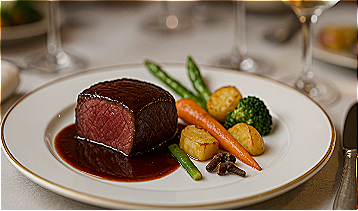
Indicative nutritional values (per 100 g raw, edible portion)
• Energy: 110–130 kcal
• Protein: 20–22 g
• Total fat: 2–5 g
• SFA (saturated fatty acids — excess may raise LDL): 0.7–1.5 g
• MUFA (monounsaturated fatty acids — generally cardiometabolic-friendly): 1.0–2.0 g
• PUFA (polyunsaturated fatty acids — includes n-3 and n-6): 0.3–1.0 g
• Cholesterol: 50–65 mg
• Carbohydrates: 0 g
• Intrinsic sodium: 55–70 mg
• Micronutrients (typical): Heme iron 3.5–5 mg; Phosphorus 200–220 mg; Potassium 320–350 mg; Zinc 2.5–3 mg; Copper 0.3–0.5 mg; Selenium 20–25 µg; Niacin (B3) 6–8 mg; B6 0.5–0.7 mg; B12 2.5–4 µg
Key constituents
• Myofibrillar proteins (myosin, actin, troponin) with high biological value (VB ~85–90).
• Moderate collagen (~2–3%) supporting tenderness.
• Favorable lipid profile with a predominance of unsaturated fatty acids (mufa, pufa) and a meaningful share of n-3 (ALA, EPA, DHA).
• High myoglobin (≈3–6 mg/g) driving intense red color.
• B-group vitamins and highly bioavailable heme iron.
Production process
• Slaughter in approved facilities → rapid bleeding → refrigerated aging (0–4 °C) for 24–72 h to improve tenderness and flavor → cutting and hygienic packaging (vacuum/MAP).
• Optional processes: marination, smoking, drying/curing, or controlled cooking for RTE products.
Physical properties
• Color: bright red turning red-brown after cooking (intensity linked to myoglobin).
• Final pH: 5.5–6.0.
• High aw (~0.98) → perishable without refrigeration.
• Good WHC (water-holding capacity).
• Characteristic sweet, slightly “ferrous” aroma.
Sensory and technological properties
• Sweet, assertive flavor, generally more aromatic than beef.
• Tender, juicy structure after proper aging.
• Good cooking yield; suitable for grilling, braising, stewing, and dry-cured meats.
• Absorbs seasonings and marinades well.
• Meat from foals is milder in taste and softer in texture.
Food applications
• Culinary: steaks, filets, carpaccio, braises, stews, minced dishes.
• Industry: cooked and dry-cured meats (sausages, bresaola-style, hams), ready meals, protein extracts.
• Traditional products: shredded horse, stews, oil preserves, smoked items.
Nutrition and health
Horse meat is among the most nutrient-dense and digestible red meats.
• Excellent source of high-quality protein and highly bioavailable heme iron.
• Rich in B vitamins, especially B12, supporting energy metabolism and hematopoiesis.
• Balanced fat profile with more unsaturated fatty acids (mufa, pufa) than sfa, and relatively low cholesterol.
• The high iron and zinc content suits diets addressing deficiency.
• Prefer moderate temperatures and controlled times to preserve unsaturated lipids and minimize oxidative by-products.
Serving note: 120–150 g cooked (≈170–200 g raw) as a main course; 50–70 g for cured/sliced products.
Allergens and intolerances
• Horse meat contains no recognized allergens under Regulation (EU) 1169/2011.
• Allergic reactions are very rare but possible in individuals with cross-sensitization to other red-meat proteins.
• Naturally gluten-free and lactose-free.
• No known association with common intolerances.
• Manage possible cross-contamination in plants processing mixed meats or allergen-containing ingredients.
Quality and specifications (typical parameters)
• Moisture: 70–73%
• Protein: 20–22%
• Fat: 2–5%
• Collagen/total protein: ≤ 3%
• Iron: 3.5–5 mg/100 g
• Final pH: 5.5–6.0
• Salmonella absent/25 g; Listeria monocytogenes <100 CFU/g (RTE)
• Veterinary residues and contaminants within EU limits
Storage and shelf-life
• Chilled (0–4 °C): 5–7 days; up to 10 days under vacuum/MAP.
• Frozen (≤ −18 °C): 8–12 months.
• Avoid temperature swings and lipid oxidation (color and aroma loss).
• Rapid freezing helps preserve juiciness and color.
Safety and regulatory
• Production compliant with GMP/HACCP and EU red-meat hygiene rules (e.g., Reg. EC 853/2004).
• Mandatory labeling: origin, lot, storage temperature, date coding.
• No intrinsic allergens; microbial risk managed through hygiene and proper cooking (≥ 74 °C core for non-RTE).
Labeling
• Name: “horse meat” or specific anatomical cut (round, loin, tenderloin).
• Product state (fresh/frozen), pack type (vacuum/MAP), origin (country of rearing and slaughter), shelf-life and storage instructions.
Troubleshooting
• Excessively dark color → prolonged oxidation → maintain vacuum and stable low temperature.
• Pronounced ferrous taste → overcooking or long storage → use quick cooking or mild marinades.
• Dry texture → low WHC or high-temperature cooking → apply gentle, moisture-retaining methods.
• Rancid odor → lipid oxidation → limit light/oxygen exposure.
Sustainability and supply chain
• Typically lower environmental footprint than many other red meats when integrated into sustainable agro-zootechnical cycles.
• Decent feed conversion efficiency (FCR ~5:1).
• Priorities include animal welfare, prudent antibiotic use, and by-product valorization (bones, fat, hides).
• In-plant: wastewater treatment with BOD/COD reduction, recyclable packaging, and energy optimization.
Main INCI functions (cosmetics)
• Hydrolyzed Horse Protein / Collagen — skin-conditioning, emollient, and film-forming; used in nourishing cosmetics and hair-repair products within safety limits.
Conclusion
Horse meat is a high-quality, lean red meat rich in heme iron and B-group vitamins. Its favorable lipid profile and excellent digestibility make it a functional choice for balanced diets. Proper handling across the supply chain and appropriate storage ensure safety, quality, and sustainability.
Mini-glossary
• SFA/MUFA/PUFA: Saturated / monounsaturated / polyunsaturated fatty acids — higher MUFA/PUFA and lower SFA generally support cardiometabolic health.
• VB: Biological value — index of protein quality based on amino-acid composition.
• WHC: Water-holding capacity — ability of muscle to retain water during processing/cooking.
• MAP: Modified atmosphere packaging — protective gas mix extending shelf-life and color stability.
• GHG: Greenhouse gases — emissions contributing to climate change.
• BOD/COD: Biochemical / chemical oxygen demand — indicators of organic load in effluents.
• GMP/HACCP: Good manufacturing practices / hazard analysis and critical control points — food-safety management systems.
• aw: Water activity — fraction of free water available for microbial growth.
References__________________________________________________________________________
Belaunzaran, X., Bessa, R. J., Lavín, P., Mantecón, A. R., Kramer, J. K., & Aldai, N. (2015). Horse-meat for human consumption—Current research and future opportunities. Meat Science, 108, 74-81.
Abstract. The consumption of horse-meat is currently not popular in most countries, but because of its availability and recognized nutritional value consumption is slowly increasing in several western European countries based on claims that it could be an alternative red meat. In this review, horse-meat production, trade and supply values have been summarized. In addition, the advantage of horse production is noted because of its lower methane emissions and increased uptake, particularly of n-3 polyunsaturated fatty acids (PUFAs), which is based on its digestive physiology. Of particular interest in this review is the unique fatty acid composition of horse-meat with its high level of the nutritionally desirable PUFAs in both the adipose and muscle fat. Because of its large frame size and digestive physiology, the horse can be considered an alternative to bovine meat, with large advantages regarding the maintenance of less favored mountain grazing areas and its facility to transfer PUFA from feed to meat.
Belaunzaran, X., Bessa, R. J., Lavín, P., Mantecón, A. R., Kramer, J. K., & Aldai, N. (2015). Horse-meat for human consumption—Current research and future opportunities. Meat Science, 108, 74-81.
Abstract. Local horse breeds, particularly cold-blood types, are often marginalized in economic and social contexts, primarily due to the neglect of their economic, genetic, and cultural potential, as well as their role in preserving the identity of rural areas, local communities, and ecosystems. The valorization of these breeds is a crucial prerequisite for their economic repositioning. The Croatian Posavina horse is a local breed, well adapted to harsh, extensive production systems. Its sustainability is achieved through pasture-based meat production, primarily targeting foreign European markets. Ensuring the sustainability of conservation programs requires a thorough understanding of growth dynamics, carcass traits, and meat quality. This study assessed growth performance and carcass characteristics in a sample of 30 male foals, with ten animals selected for detailed analysis of fatty acid, amino acid, and volatile aromatic compound profiles. At eleven months of age, the foals reached a live weight of 347 kg and a dressing percentage of 60.62%. Color, tenderness, and water-holding capacity parameters were favorable for consumers. The meat's high protein content (22.37%) and low intramuscular fat (3.61%) make it suitable for health-conscious or sensitive consumer groups. A high proportion of polyunsaturated fatty acids (28.5%) and a nutritionally balanced ω-6/ω-3 ratio (3.46) highlight the meat's functional properties. The essential-to-non-essential amino acid ratio (0.81) further supports its nutritional value. Sensory analysis confirmed an attractive appearance, desirable texture and flavor, and a rich aromatic profile. The carcass and meat quality results, when compared with the production traits of other horse breeds, indicate that Croatian Posavina foal meat is a high-quality and nutritionally valuable alternative to conventional red meat. With optimized conservation and production strategies, the Croatian Posavina horse holds strong potential for market repositioning within sustainable and functional meat production systems.
Bò, C. D., Simonetti, P., Gardana, C., Riso, P., Lucchini, G., & Ciappellano, S. (2012). Horse meat consumption affects iron status, lipid profile and fatty acid composition of red blood cells in healthy volunteers. International Journal of Food Sciences and Nutrition, 64(2), 147–154.
Abstract. This study investigated the effect of moderate consumption of horse meat on iron status, lipid profile and fatty acid composition of red blood cells in healthy male volunteers. Fifty-two subjects were randomly assigned to two groups of 26 subjects each: a test group consuming two portions of 175 g/week of horse meat, and a control group that abstained from eating horse meat during the 90 days trial. Before and after 90 days, blood samples were collected for analysis. Horse meat consumption significantly (p ≤ 0.05) reduced serum levels of total and low-density lipoprotein cholesterol ( − 6.2% and − 9.1%, respectively) and transferrin ( − 4.6%). Total n − 3, long chain polyunsaturated fatty acids n − 3 and docosahexeanoic acid content in erythrocytes increased (p ≤ 0.05) by about 7.8%, 8% and 11%, respectively. In conclusion, the regular consumption of horse meat may contribute to the dietary intake of n − 3 polyunsaturated fatty acids and may improve lipid profile and iron status in healthy subjects.
Stanciu, S. (2015). Horse meat consumption− between scandal and reality. Procedia Economics and finance, 23, 697-703.
Abstract. The meat adulteration scandal has led to numerous controversies in the press and among consumers concerning the effects of horse meat consumption, its nutritional characteristics, the confidence in foodstuffs, and the frauds and ethics issues in food production. The present article proposes a scientific evaluation of the physical, chemical and nutritional characteristics of the horse meat with a comparison between the meat coming from other species of domestic animals focusing also on its production for human consumption, the traditional consumption in different areas of the world, arguments for consumption, the reaction of the European Commission and the measures taken in order to avoid critical situations of such kind. The materials and methods used for research consisted in treaties and scientific articles regarding the characteristics and nutritional facts of the horse meat, statistical databases, data about its production and consumption, studies among consumers and media items on the horse meat scandal, and official documents concerning the food fraud. Although the horse meat scandal has affected the European consumer behavior, the main problems are not nutritional or food safety. This type of meat is a valuable new foodstuff, with physical, chemical and nutritional characteristics higher or closer to those of other domestic animals, being a part of the traditional diet in many communities. Yet, the main problems are those related to ethics, such as the attempts of fraud of some producers or traders. The European Union reacted promptly to the scandal of beef substitution with horse meat, proposing measures for strengthening the system of control and food fraud prevention.
Lee, C. E., Seong, P. N., Oh, W. Y., Ko, M. S., Kim, K. I., & Jeong, J. H. (2007). Nutritional characteristics of horsemeat in comparison with those of beef and pork. Nutrition research and practice, 1(1), 70-73.
Abstract. This study was conducted to determine the nutritional characteristics of horsemeat and bone meal in comparison with those of beef and pork presented by Dietary Reference Intakes For Koreans. Longissimus muscle and large metacarpal bone samples were collected from 20 fattened Jeju horses. Muscle samples were subjected to proximate analysis, assays for fatty acid profile and minerals, and bone samples to mineral assays. Horsemeat had similar levels of protein (21.1 vs 21.0 or 21.1%) and lower levels of fat (6.0 vs 14.1 or 16.1%) compared with beef or pork, respectively. Horsemeat had much higher levels of palmitoleic (8.2 vs 4.4 or 3.3%) and α-linolenic (1.4 vs 0.1 or 0.6%) acids than beef or pork, respectively. Linoleic acid was much higher in horsemeat (11.1%) and pork (10.1%) than in beef (1.6%). PUFA:SFA and n-6:n-3 ratios in horsemeat were 0.29 and 10.2, respectively. There were no big differences in mineral contents between horsemeat, beef and pork. For daily recommended mineral intakes of male adults (Dietary Reference Intakes For Koreans), phosphorus, sodium, potassium, iron, zinc and copper can be provided up to 24, 2.5, 6.7, 21, 26 and 40%, respectively, by 100 g raw horsemeat, but calcium and manganese levels are negligible. Horse cannon bone had much higher mineral contents especially in calcium (10,193 mg/100 g), phosphorus (5,874 mg/100 g) and copper (0.79 mg/100 g). Thiamin, riboflavin, niacin and retinol contents were 0.20, 0.21, 1.65 mg/100 g and 30 µg/100 g, respectively. But ascorbic acid and beta-carotene were not detected. Our data demonstrated that higher levels of palmitoleic and α-linolenic acid in horsemeat than in beef and pork may be beneficial for human health. Horsemeat and bone meal are a good source of some minerals and vitamins.
Lorenzo, J.M. et al. (2019). Horsemeat: Increasing Quality and Nutritional Value. In: Lorenzo, J., Munekata, P., Barba, F., Toldrá, F. (eds) More than Beef, Pork and Chicken – The Production, Processing, and Quality Traits of Other Sources of Meat for Human Diet. Springer, Cham.
Abstract. Equine meat, including horse and donkey species, is considered an alternative option for red meats’ consumers due to wholesomeness especially in terms of nutritional value. The present chapter shows the nutritional composition of this type of meat, is characterized by low levels of fat and cholesterol, relatively high concentrations of n-3 fatty acids and heme iron indicating that their consumption may be beneficial for human health. Foal is the most important equine slaughter category which guarantees high standard quality compared to adults. These foals come from crossbreeding of native breeds with horses for meat production and are slaughtered between 15 and 24-months-old. Foal carcass is dark with a covered degree of fatness giving a favourable organoleptic profile property on the meat. Livestock production system plays the most important factor affecting horsemeat quality as concerns nutritional value. Extensive feeding systems improve horsemeat fatty acid profile by increasing polyunsaturated fatty acids compared to intensive feeding systems.
Balji, Y., Knicky, M., & Zamaratskaia, G. (2020). Perspectives and safety of horsemeat consumption. International Journal of Food Science and Technology, 55(3), 942-952.
Abstract. In some countries, use of horsemeat as a food is inhibited by ethical and cultural concerns. However, horsemeat has potential health benefits, such as low fat and high unsaturated fatty acid content compared with other meats, as well as attractive sensory properties. Although there are many contradictory data on the dietary value in relation to human health, the effects of horsemeat have not been studied to a large extent. In this paper, we summarise existing knowledge on horsemeat quality and effects on human health. Our conclusion is that horsemeat may be consumed as a healthy alternative to other types of meat, provided that risks associated with microbial contamination during storage and possible presence of contaminants in horsemeat are taken into consideration. Future studies should evaluate the health-promoting properties and safety of horsemeat and associated byproducts.




