Rabbit meat
(Oryctolagus cuniculus domesticus — fresh or processed cuts)
Description
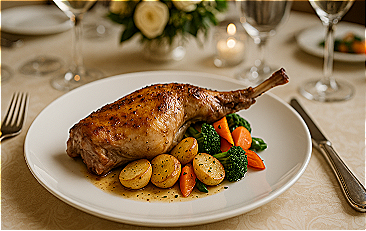
• White, lean meat with a delicate flavor and fine texture, obtained from rabbits raised in intensive or semi-rural systems.
• Valued for its low fat and cholesterol content and high-quality protein.
• Commercially available as whole carcasses, anatomical cuts (legs, loin, shoulders), or processed products (minced, marinated, smoked, RTE/RTC).
• Usually sold refrigerated or frozen, vacuum-packed or in modified atmosphere packaging (MAP).
Indicative nutritional values (per 100 g of raw edible portion)
• Energy: 130–160 kcal
• Protein: 20–22 g
• Total fat: 5–8 g
• SFA (saturated fatty acids): 1.5–2.5 g
• MUFA (monounsaturated fatty acids): 2–3 g
• PUFA (polyunsaturated fatty acids): 1–2 g — mainly n-6 (linoleic) and n-3 (ALA)
• Cholesterol: 55–65 mg
• Carbohydrates: 0 g
• Sodium (intrinsic): 50–60 mg
• Micronutrients (typical): Iron 1–1.5 mg; Phosphorus 200–230 mg; Potassium 320–350 mg; Zinc 1.5–2 mg; Selenium 25–30 µg; Vitamin B3 (niacin) 7–9 mg; B6 0.4–0.6 mg; B12 0.3–0.7 µg
Key constituents
• Myofibrillar proteins (actin, myosin, tropomyosin) of high biological value (BV ≈ 82–85).
• Low collagen content (≈1.5–2%), contributing to tenderness.
• Lipids rich in unsaturated fatty acids (MUFA and PUFA) with a favorable n-6/n-3 ratio ≈ 4:1.
• Rich in minerals and B-group vitamins, similar to or higher than poultry meat.
Production process
• Farmed under controlled feeding → slaughtering → evisceration → rapid chilling (0–4 °C) → cutting → packaging (vacuum/MAP).
• Further processing may include deboning, marination, salting, or controlled cooking (roasted or sliced products).
Physical properties
• Color: pale pink → light brownish after cooking.
• Final pH: 5.6–6.2.
• High aw (water activity) → perishable if not refrigerated.
• Good WHC (water holding capacity), sensitive to pH and temperature variations.
Sensory and technological properties
• Mild, slightly sweet flavor, similar to chicken but more aromatic.
• Tender texture with compact, fine-grained muscle structure.
• Suitable for roasting, stewing, grilling, braising, or sous-vide cooking.
• Good technological yield and excellent ability to absorb marinades.
• In emulsified or stuffed products, provides structure and protein stability.
Food applications
• Culinary: roasted, stewed, or braised dishes; ragouts, grilled cuts, or traditional recipes.
• Food industry: burgers, fillings, ready-to-eat meals, sauces, and cooked sausages.
• Processed products: marinated, smoked, or vacuum-cooked preparations.
Nutrition and health
Rabbit meat is considered a high-protein, low-fat source of animal protein.
• Provides complete proteins, iron, phosphorus, niacin, and selenium.
• Lipid profile dominated by unsaturated fatty acids (MUFA/PUFA) over SFA.
• Beneficial in low-calorie and low-cholesterol diets.
• Free of carbohydrates and naturally low in sodium.
• Highly digestible — suitable for children, elderly, and athletes.
• Excessive consumption of overcooked or high-temperature grilled meats may lead to oxidative compounds: prefer moderate, moist heat cooking.
Serving note: 120–150 g cooked (≈160–200 g raw) as main course; 60–80 g as ingredient.
Allergens and intolerances
• Rabbit meat contains no recognized allergens under Regulation (EU) 1169/2011.
• Allergic reactions are rare but possible in individuals sensitized to animal proteins (especially in occupational exposure).
• Naturally gluten-free and lactose-free.
• No association with common food intolerances.
• Cross-contamination with egg, dairy, or cereal ingredients should be avoided during processing.
Quality and specifications (typical values)
• Moisture: 70–74%
• Protein: 20–22%
• Fat: 5–8%
• Collagen/total protein: ≤ 2%
• Final pH: 5.8–6.2
• Color (Lab*): L* 52–58; a* 6–8; b* 10–12
• Salmonella absent/25 g; Listeria monocytogenes <100 CFU/g (RTE)
• Veterinary residues and contaminants within EU legal limits.
Storage and shelf-life
• Refrigerated (0–4 °C): 5–7 days (up to 10 in vacuum/MAP).
• Frozen (≤ −18 °C): 8–12 months.
• Avoid temperature fluctuations and repeated thawing.
• Rapid freezing after slaughter helps preserve juiciness and protein integrity.
Safety and regulatory
• Production must comply with GMP/HACCP and EU white meat regulations.
• Mandatory labeling: origin, batch, storage temperature, expiration date.
• No intrinsic allergens; microbial risk controlled through hygiene and proper cooking (≥ 74 °C core temperature).
Labeling
• Name: “rabbit meat” or specific anatomical cut (leg, loin, shoulder).
• State (fresh/frozen), packaging type (vacuum/MAP), origin (country of farming and slaughter), expiration date, storage instructions.
Troubleshooting
• Dry/tough meat → overcooking or excessive heat → prefer gentle or moist heat cooking.
• Off-odor → poor refrigeration or prolonged storage → maintain cold chain.
• High purge → low pH or pre-slaughter stress → optimize chilling and handling.
• Dark color → lipid oxidation or oxygen exposure → use vacuum packaging.
Sustainability and supply chain
• Rabbit production has a moderate GHG (greenhouse gas) footprint, lower than beef or pork.
• Good feed conversion efficiency (FCR ≈ 3:1).
• Key sustainability concerns: animal welfare, prudent antibiotic use, and waste management.
• In processing: wastewater treatment with BOD/COD reduction, recyclable packaging, and energy optimization.
Main INCI functions (cosmetics)
• Hydrolyzed Rabbit Protein — hair/skin conditioning, film-forming; used in niche cosmetic formulations for sensitive or natural skin types.
Conclusion
Rabbit meat is one of the leanest and most nutritionally balanced animal proteins. It is rich in high-quality proteins, low in saturated fats, and characterized by a favorable lipid profile and delicate flavor. With proper production and storage practices, it represents a healthy, safe, and sustainable food source.
Mini-glossary
• SFA/MUFA/PUFA: saturated / monounsaturated / polyunsaturated fatty acids — PUFA (especially n-3) support cardiovascular health.
• BV: biological value — measure of protein quality based on amino acid composition.
• WHC: water holding capacity — ability to retain water during cooking or storage.
• MAP: modified atmosphere packaging — controlled gas mixture to extend shelf-life.
• GHG: greenhouse gases — emissions contributing to climate change.
• BOD/COD: biochemical / chemical oxygen demand — measures of organic load in wastewater.
• GMP/HACCP: good manufacturing practices / hazard analysis and critical control points — food safety management systems.
References__________________________________________________________________________
Siddiqui, S. A., Gerini, F., Ikram, A., Saeed, F., Feng, X., & Chen, Y. (2023). Rabbit meat—production, consumption and consumers’ attitudes and behavior. Sustainability, 15(3), 2008.
Abstract. Rabbit meat could play an important role in health, the rural economy, and sustainable development. Rabbit meat has excellent nutritional features, such as high protein content, low-fat content, and a high percentage of unsaturated fatty acids, low cholesterol and sodium levels. In addition, rabbit meat production contributes to maintaining economic activities in rural marginal areas. However, the consumption of rabbit meat is still limited due to several factors such as the higher cost of commercial food that is slowing down rabbits’ breeding. Socio-demographic characteristics, attitudes, and nationality of consumers influence the demand and consumption of rabbit meat. The social and economic changes of the past years are leading to an increased interest in rabbit meat products with convenience characteristics. Consumers are also increasingly paying attention to animal husbandry methods for health concerns and ethical reasons. This paper presents an overview of rabbit meat focusing on production, nutritional composition, consumers’ preferences, and marketing. The review proposes strategies that, coupled with information campaigns could improve consumers’ knowledge of the positive characteristics of rabbit meat, which would contribute to the market development.
Hernández, P. (2008, June). Enhancement of nutritional quality and safety in rabbit meat. In Proceedings of the 9th world rabbit congress, Verona, Italy (pp. 10-13).
Abstract. Nutritional value and safety have gained great importance among the factors that determine meat quality. The close relationship between diet and health has lead to changes in consumer habits, demanding products that meet their dietary and nutritional preferences. Rabbit meat is highly valued for its nutritional and dietary properties; it is a lean meat with a low-fat content and less saturated fatty acids and cholesterol than other meats. In this review, a short description of the nutritional value of rabbit meat is provided and the role of rabbit meat as a functional food is discussed. Rabbit meat consumption could be a good way to provide bioactive compounds to human consumers, since manipulation of rabbit’s diet is very effective in increasing the levels of ω3 PUFA, CLA or Vitamin E. An overview of the possibilities to incorporate these bioactive compounds in rabbit meat is offered. Food safety is an important and essential aspect for consumers, especially on the meat sector since numerous crises have recently affected meat production. Bovine Spongiform Encephalitis (BSE) in bovine, high dioxin levels in chicken meat, the danger of increased spread of other infectious disease (e.g. Foot and Mouth disease, Avian influenza, etc.), as well as pathogens such as Salmonella, Listeria monocytogens, Campylobacter and Escherichia coli 0157:H7 have recently contaminated the European livestock and meat chains. Microbiological quality, presence of chemical residues, animal identification and traceability issues as well as the hazard analysis and critical control points system in rabbit meat production is discussed.
Cullere, M., & Dalle Zotte, A. (2018). Rabbit meat production and consumption: State of knowledge and future perspectives. Meat science, 143, 137-146.
Abstract. Since the 1970s, in some European countries rabbit meat production has progressively become a highly specialized industry, which has made Europe the second (after China) largest rabbit meat producer in the world. However, the industry is currently facing a critical period due to structural weaknesses, progressive and constant reductions in consumption, and raising criticism related to welfare conditions and other ethical issues. This trend is questioning the future of the rabbit meat industry, which could lead to the loss of knowledge and technical expertise acquired over decades of major investments and research efforts (a valuable cultural and professional heritage for future generations). In the present review, we provide an overview of the rabbit meat industry, market and value chain, we depict consumer's attitude towards rabbit meat, highlighting strengths and weaknesses, and factors driving their current purchase behavior. Finally, we will attempt to outline possible strategies to ensure a sustainable future for the production of rabbits for commercial meat purposes.
Cullere, M., & Dalle Zotte, A. (2018). Rabbit meat production and consumption: State of knowledge and future perspectives. Meat science, 143, 137-146.
Abstract . When choosing food products, the consumer is not only looking at their obvious nutritional function, but is increasingly looking for products that support health or counteract the onset of disease. Functional food is defined as food containing one or more ingredients that are not nutritional and have a selective and positive effect on specific functions of the human body. These are foods and beverages that have a documented beneficial effect on human health beyond that attributable to the presence of nutrients considered as essential. Rabbit meat, thanks to a number of positive properties such as its high content of easily digestible protein, low cholesterol content, low sodium content and favourable fatty acid profile, can be classified as a functional product with a positive effect on the human body.
Ruleva, T. A., Sarbatova, N. Y., & Shebela, K. Y. (2015). Nutritional value of rabbit meat. World science, 4(4 (4)), 68-70.
Abstract. Production of rabbit is a promising branch of animal husbandry. Rabbit meat is a dietary product, because it contains little fat, connective tissue, cholesterol, and sodium salts. Rabbit meat is rich in protein, iron, phosphorus, cobalt, vitamins PP, C, B6, B12, is close-grained and has a high digestibility. Rabbit meat retains its taste and nutritional advantages not only fresh, but also in smoked and canned forms. According to research, rabbit serves as a valuable food product for the manufacture of semi-finished products, pates, soups, sausages and corned beef. Food prepared from rabbit meat, is not only of high nutritional value, but also has the taste of qualities, tender and juicy texture. A large variety of dishes can be made of rabbit meat. Having given the biological value of rabbit meat, nutritionists advise to include it on the menu for people at any age. It is useful for children as a source of protein for the growing organism; for older people as a nutritious and easily digestible product; for women, who are recovering, as meat; for men as a valuable protein to support muscles in sport training. Nutritionists advise to use rabbit for people with gastritis and gastric ulcer, colitis and enter colitis, atherosclerosis and hypertension, kidney disease and diabetes. Pure rabbit is sometimes the only option of the beef diet for people with those kinds of allergies, who are contraindicated animal meat. Rabbit meat is known as hypoallergenic. The diet on rabbit meat helps to reduce allergies. But rabbit meat must be natural, without drugs, hormones, growth factors, antibiotics in the diet. Therefore, the value of rabbit is, that with increasing number of patients with allergies, sometimes the meat is the only available type of meat that has no contraindications, and can be recommended to everybody without exception. And the appearance of the meat on store shelves is a real godsend for allergy sufferers.
Frunză, G., Murariu, O. C., Ciobanu, M. M., Radu-Rusu, R. M., Simeanu, D., & Boișteanu, P. C. (2023). Meat quality in rabbit (Oryctolagus cuniculus) and hare (Lepus europaeus Pallas)—A nutritional and technological perspective. Agriculture, 13(1), 126.
Abstract. This study aimed to nutritionally and technologically characterize the meat produced by rabbit (Oryctolagus cuniculus, Flemish Giant breed, 50 farmed individuals) and hare (Lepus europaeus Pallas, 50 hunted individuals). Muscles were sampled from several carcass regions: dorsal torso—Longissimus dorsi (LD), thigh—Semimembranosus (SM), and upper arm—Triceps brachii (TB). To better depict the meat’s nutritional quality, the proximate composition and fatty acid profile were assessed, and then gross energy content and lipid sanogenic indices (Polyunsaturation—PI, atherogenic—AI, thrombogenic—TI, hypocholersyerolemic/hypercholesterolemic ratio—h/H, Nutritional Value Index—NVI) were calculated. pH values at 24 and 48 h post-slaughter, cooking loss (CL), and water-holding capacity (WHC) were the investigated technological quality traits. Gross energy was higher in rabbit TB samples, compared with hare, due to more accumulated lipids (p < 0.001). pH value was higher for TB muscles in both species; the WHC was higher for hare (p < 0.001), and CL was higher for rabbit (p < 0.001). The PI values were 6.72 in hare and 4.59 in rabbit, AI reached 0.78 in hare and 0.73 in rabbit, TI was calculated at 0.66 in hare and 0.39 in rabbit, and the h/H ratio reached 3.57 in hare and 1.97 in rabbit, while the NVI was 1.48 in hare and 1.34 in rabbit samples. Meat from both species is nutritionally valuable for human consumers, meeting nutritional values better than the meat of farmed or other wild species of fowl and mammals. Hare meat was found to be healthier than rabbit in terms of lower fat content, lighter energy, and better lipid health indices.
Montero, L., Pérez, C. E., Puig, A. B., & Vera, J. M. B. (2018). Analysis of the commercial value of rabbit meat based on positioning of the different types of fresh meat. Spanish journal of agricultural research, 16(3), 3.




