



White pepper
(Piper nigrum L. — mature, dehulled, and dried fruits)
Description
• Spice obtained from the fully ripe fruits of Piper nigrum, the same plant that produces black and green pepper, belonging to the Piperaceae family.
• It differs in processing: ripe (reddish) fruits are soaked in water for several days to remove the outer pericarp, then sun-dried to yield light grey–white peppercorns.
• Has a milder aroma and less pungent flavor than black pepper, with earthy, floral, and slightly musky notes.
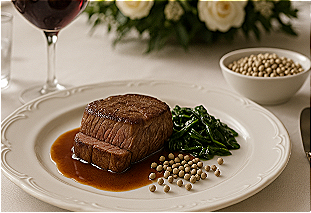
Common name: White pepper
Kingdom: Plantae
Clade: Angiosperms
Clade: Eudicots
Order: Piperales
Family: Piperaceae
Genus: Piper
Species: Piper nigrum L.
Note: White pepper is obtained from fully ripe fruits of Piper nigrum with the outer pericarp removed.
Cultivation and growing conditions
Climate: Prefers warm, very humid tropical climates; needs abundant, well-distributed rainfall throughout the year.
Exposure: Grows best in filtered light or partial shade; strong, direct sunlight can scorch the leaves.
Soil: Requires deep, fertile, well-drained soils rich in organic matter, with slightly acidic to neutral pH; sensitive to waterlogging.
Watering: Needs regular irrigation and high ambient humidity; drought stress reduces yield and berry quality.
Temperature: Optimal growth between 20 and 30 °C; does not tolerate low temperatures or cold winds.
Support: As a climbing vine, it needs vertical supports (posts, live shade trees or trellises).
Fertilization: Benefits from periodic applications of compost, well-rotted manure and potassium-rich fertilizers to support berry production.
Crop management: Light pruning to control height and encourage productive lateral branches; careful monitoring of soil moisture.
Propagation: Mainly by stem cuttings; seed propagation is possible but much slower and rarely used in commercial production.
Indicative nutritional values (per 100 g of dried peppercorns)
• Energy: 250–270 kcal
• Protein: 10–12 g
• Total fat: 3–4 g
• Carbohydrates: 60–65 g (mostly starch and fiber)
• Dietary fiber: 25–30 g
• Sodium: <10 mg
• Micronutrients (typical): Calcium 400–450 mg; Iron 8–10 mg; Magnesium 180–200 mg; Potassium 1200–1300 mg; Manganese 2–4 mg; Vitamin K 150–180 µg
Key constituents
• Piperine (5–9%): main alkaloid responsible for pungency and mild digestive-stimulating effects.
• Essential oils (0.6–1.0%): β-caryophyllene, limonene, sabinene, pinene, linalool — contribute aroma and antimicrobial action.
• Minor compounds: starches, resins, phenolics, lignins, and flavonoids with antioxidant activity.
Production process
• Harvest of fully mature fruits → soaking in water for 7–10 days to soften and ferment → mechanical rubbing/washing to remove the outer skin → drying (sun or hot-air at 40–50 °C) until ≤12% moisture → grading, cleaning, and packaging.
• High-grade white pepper consists of uniform, light-colored kernels free from impurities or molds.
Physical properties
• Appearance: spherical grains, white to light gray, 3–5 mm diameter.
• Odor: spicy, warm, slightly musky.
• Flavor: mild pungency with delicate, lingering aroma.
• Bulk density: 500–600 g/L; highly hygroscopic → store in airtight containers.
Sensory and technological properties
• Provides warm and aromatic flavor without darkening light-colored dishes.
• Ideal for white sauces, fish, poultry, eggs, vegetables, and soft cheeses.
• Used whole, cracked, or ground; piperine and volatiles are sensitive to air and heat — grind immediately before use.
Food applications
• Culinary: general seasoning for savory dishes and refined sauces.
• Food industry: component in cured meats, flavored snacks, ready-to-eat sauces, spice blends, soups, and marinades.
• Beverages: flavoring in certain spirits and spiced liqueurs.
Nutrition and health
White pepper promotes digestion and nutrient absorption via piperine, which enhances the bioavailability of compounds like curcumin and B vitamins.
• Exhibits mild antioxidant and antimicrobial activities.
• Excessive intake may irritate gastric or intestinal mucosa; moderate use recommended (≤ 2 g/day for adults).
Serving note: 0.2–0.5 g per dish in home cooking; 0.1–0.3% in processed foods.
Allergens and intolerances
• White pepper does not contain recognized allergens under EU Regulation (EU) 1169/2011.
• Rarely causes allergic or intolerance reactions.
• In sensitive individuals, inhalation or ingestion of large quantities may cause mild irritation of the respiratory or digestive mucosa.
• Possible cross-contamination with allergenic spices (e.g., mustard, celery, sesame) in multipurpose plants — always verify supplier specifications.
• For consumers with spice sensitivities or gastritis, prefer mild white pepper and use in small amounts.
Quality and specifications (typical values)
• Moisture ≤ 12%
• Total ash ≤ 6%
• Acid-insoluble ash ≤ 1.5%
• Piperine 5–9%
• Microbiological quality: compliant with ISO spice standards (Salmonella absent/25 g)
• Pesticides and mycotoxins: within EU limits (aflatoxin B1 ≤ 5 µg/kg).
Storage and shelf-life
• Store in a cool, dry, dark place, in airtight packaging.
• Sensitive to humidity and light → may lose aroma or develop molds.
• Shelf-life: 24–36 months (whole peppercorns), 12–18 months (ground).
Safety and regulatory
• Complies with EU regulations on contaminants and additives (Reg. EC 1881/2006 and amendments).
• Produced under GMP/HACCP systems.
• Steam sterilization or irradiation may be applied for microbial reduction.
Labeling
• Product name: “white pepper” (Piper nigrum L.).
• Indicate geographical origin (e.g., Malaysia, Indonesia, Vietnam, India).
• Product form (whole/ground), net weight, storage instructions, best-before date.
• For industrial use: lot, piperine content, moisture, microbiological certificates.
Troubleshooting
• Loss of aroma → air/light exposure → use opaque, sealed containers.
• Dark or grayish color → excessive fermentation or poor processing → ensure qualified suppliers.
• Earthy or moldy smell → excessive moisture → dry and store in controlled conditions.
• Microbial contamination → untreated raw material → apply steam sterilization.
Sustainability and supply chain
• Grown in tropical agroforestry systems (mainly in Southeast Asia).
• Key issues: water use and pesticide management; promote integrated cultivation and selective hand-harvesting.
• In processing: effluent treatment with BOD/COD reduction, recyclable packaging, and energy-efficient drying.
• By-products (pericarp) can be reused for aromatic extracts or organic compost.
Main INCI functions (cosmetics)
• Piper Nigrum Fruit Extract / Oil — skin conditioning, toning, microcirculation-stimulating, and warming effect.
• Used in firming balms, slimming or energizing formulations, within dermal safety limits.
Conclusion
White pepper is a refined spice with a delicate yet aromatic flavor profile, obtained through decortication of mature peppercorns. Besides culinary value, it contains bioactive compounds such as piperine and essential oils with potential functional properties. When stored properly, it retains aroma, safety, and quality for long periods.
Mini-glossary
• SFA/MUFA/PUFA: saturated / monounsaturated / polyunsaturated fatty acids — higher PUFA levels are linked to favorable lipid balance.
• GMP/HACCP: good manufacturing practices / hazard analysis and critical control points — food safety management systems.
• BOD/COD: biochemical / chemical oxygen demand — measures of organic load in wastewater.
• aw: water activity — fraction of free water available for microbial growth.
• MAP: modified atmosphere packaging — protective gas mixture extending shelf-life.

