



Aromatic plants: food ingredient
General description
Aromatic plants are plant species that contain high concentrations of essential oils and volatile aromatic compounds responsible for their characteristic fragrances and flavors. They have been used for millennia in food preparation, both to enhance taste and for their preservative and health-promoting properties.
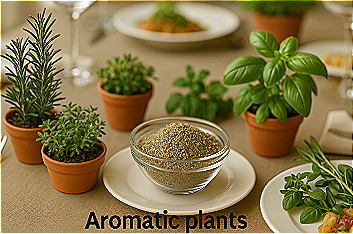
Main examples
Among the most common aromatic plants are:
Basil (Ocimum basilicum)
Rosemary (Rosmarinus officinalis)
Thyme (Thymus vulgaris)
Oregano (Origanum vulgare)
Sage (Salvia officinalis)
Parsley (Petroselinum crispum)
Bay laurel (Laurus nobilis)
Mint (Mentha spp.)
Tarragon (Artemisia dracunculus)
Indicative nutritional values
Although consumed in small amounts, aromatic plants contain micronutrients and beneficial phytocompounds:
Vitamins: A, C, K, some B vitamins
Minerals: iron, calcium, magnesium, potassium
Antioxidants: flavonoids, polyphenols, phenolic acids
Fiber: especially when used fresh or dried
Key constituents
Essential oils: thymol, eugenol, cineole, menthol
Phenolic compounds: rosmarinic acid, caffeic acid
Terpenes: carvacrol, linalool, borneol
Some alkaloids and tannins, in smaller amounts
Production process
Aromatic plants are cultivated in open fields or greenhouses. After harvesting, they can be:
Used fresh, after cleaning
Dried, in low-temperature ovens or air-dried
Frozen, to preserve aroma and nutrients
Distilled, to extract essential oils for the food industry
Applications in the food sector
Flavoring and seasoning: added to sauces, soups, meats, salads
Natural preservation: some, like rosemary and oregano, have antimicrobial properties
Herbal teas and infusions: mint, sage, bay
Marinades: for fish and meat
Processed foods: used in flavored oils, cheeses, cured meats, snacks
Nutrition & health
Help reduce salt and fat usage due to their intense flavor
Some compounds show anti-inflammatory, antioxidant, and digestive properties
Support gut microbiota thanks to their polyphenol content
May help in the prevention of chronic diseases when part of a balanced diet
Environmental and safety considerations
Cultivation generally requires low chemical inputs, making them sustainable
Aromatic plants are generally safe for human consumption, but potential interactions with medications (e.g., sage and anticoagulants) should be considered
Ensuring traceability and purity is important, especially for industrial use
Conclusion
Aromatic plants are a valuable food ingredient: they enhance flavor, improve food preservation, and provide beneficial bioactive compounds. Their use in both modern and traditional cuisine meets sensory, nutritional, and environmental needs.
Mini-glossary
Essential oils: volatile and fragrant mixtures extracted from plants
Polyphenols: natural antioxidants found in plants
Flavonoids: a subclass of polyphenols with antioxidant activity
Distillation: a process used to extract essential oils using steam
GMP/HACCP: standards ensuring food safety and hygiene in production

