Citrus
(Citrus spp.: orange, mandarin/clementine, lemon, grapefruit, lime, bergamot; family Rutaceae)
Description
• Hesperidium fruits with juicy segments, pronounced acidity, and an aroma profile dominated by peel essential oils (flavedo). Sold fresh (table fruit, seeded/seedless) and as derivatives: NFC/conc. juices, purées, marmalades/jellies, candied peel, essential oils and extracts.
• Broad seasonality; cultivars vary in °Brix and titratable acidity; the Brix/acid ratio governs perceived sweetness/balance.
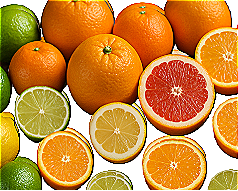
Indicative nutrition values (per 100 g edible portion; typical ranges across major citrus)
• Energy: 25–55 kcal
• Carbohydrate: 8–13 g — sugars 7–10 g
• Dietary fiber: 1.5–3.0 g (mainly soluble pectins)
• Protein: 0.6–1.0 g
• Fat: 0.1–0.3 g — SFA negligible
• Vitamin C: 30–60 mg (mandarin ~26–35; orange/lemon ~45–55)
• Folate: 15–40 μg • Potassium: 140–200 mg • Calcium: 30–40 mg • Magnesium: 8–12 mg
• Sodium: very low (↑ only in brined/syruped products)
Key constituents
• Organic acids: citric dominates (juice pH ~2.2–3.5), malic/minors.
• Flavonoids: hesperidin, eriocitrin, narirutin; in grapefruit naringin (bitter note). PMFs (polymethoxylated flavones) in peels.
• Carotenoids: β-cryptoxanthin (mandarin), β-carotene, lutein/zeaxanthin (pulp color).
• Pectins and hemicelluloses (albedo); limonoids (limonin, nomilin) responsible for delayed bitterness in juices.
• Essential oils: d-limonene predominant, plus linalool, citral, nootkatone (grapefruit).
Production process
• Fresh fruit: harvest at commercial maturity → grading, washing, optional low-dose degreening with ethylene (color uniformity), food-grade waxing, packing.
• Juices: extraction (reamer/press), clarification or with pulp, pasteurization; for concentrates: low-T evaporation → FCOJ/FCLJ; recovery of essential oils and aroma waters.
• Peels: blanching, candying, cutting; pectin manufacture from albedo; by-products to feed/biogas.
• Controls per GMP/HACCP and commercial specs.
Physical properties
• Typical °Brix: orange 10–13; mandarin/clementine 11–14; lemon 7–10; grapefruit 9–12.
• Titratable acidity (as citric): 0.6–1.2% (oranges/mandarins), 5–8% (lemons).
• Brix/acid ratio drives sweetness/balance; color influenced by carotenoids and storage temperature.
Sensory & technological properties
• Acceptance hinges on sweet–acid balance; bitterness from naringin (grapefruit) and limonin (late bitterness) managed by variety selection, clarification/adsorbents, and process conditions.
• Pectins add body and stability in juices/marmalades (gel with sugar/acid).
• Essential oils deliver fresh citrus notes; they are oxidation/light-sensitive → use antioxidants and oxygen protection.
Food applications
• Fresh: table fruit, ready-to-eat segments/supremes.
• Beverages: NFC juices, reconstituted juices, blends, soft drinks, radlers.
• Culinary/pastry: zest and juice for sauces, marinades, desserts, leavened goods; marmalades/jellies.
• Ingredients: essential oils, hydrosols, candied peel, pectin.
Nutrition & health
Citrus are low-energy-density fruits providing vitamin C, folate, potassium, carotenoids, and flavonoids; pectins contribute to satiety and glycemic modulation. Fat and SFA are negligible.
Cautions:
• Drug interactions with grapefruit (and sometimes bergamot) via furanocoumarins inhibiting CYP3A4/P-gp: can raise exposure to sensitive medications—follow medical advice.
• Reflux/sensitivity: acidity may irritate GERD; adjust portion/timing.
• Dental erosion: acidic pH—rinse with water after intake; avoid immediate brushing.
• Allergy/photodermatitis: rare fruit reactions; peel oils can be phototoxic (bergapten) on skin + sunlight.
• Juices: despite vitamin C, they contain free sugars; prefer whole fruit when possible and moderate portions.
Portion note: whole fruit 1 medium orange/mandarin ≈ 120–180 g edible; lemon: juice of ½–1 fruit; juice: 150–200 mL. Marmalade reference 20–30 g.
Quality & specifications (typical topics)
• Class/size, color, freedom from defects (wounds, bruises, calyx molds).
• °Brix, titratable acidity, Brix/acid ratio, juice yield, surface oil (for zest).
• Residues: pesticides ≤ MRL, metals within limits; postharvest peel treatments (waxes/authorized fungicides) declared.
• Microbiology: whole fruit low risk due to low pH; for juices, control acid-tolerant spores, yeasts, molds; pathogens absent/25 g.
• For juices: pulp %, viscosity, color (IU), limonin/naringin (bitterness), vitamin C.
Storage & shelf-life
• Fresh: 4–10 °C (avoid chilling injury in grapefruit/lime below ~7–8 °C), high RH; 2–8 weeks depending on species/cold chain.
• Keep away from ethylene-sensitive lots; separate from odor-absorbing products.
• Juices: NFC pasteurized ≤4 °C with typical 2–4 weeks shelf-life; UHT/concentrates ambient for months (unopened), refrigerate after opening.
Safety & regulatory
• Compliant with fresh-produce marketing standards and hygiene rules; GMP/HACCP for processing.
• Labeling: origin, class/size, any surface treatment (waxes/preservatives) and storage advice; for juices: designation (NFC/from concentrate), % fruit, added sugars if present.
Labeling
• Names: “oranges/mandarins/clementines/lemons/grapefruits/limes”; for processed: “orange juice,” “citrus marmalade,” “essential oil of …”.
• Highlight surface treatments and intended use (edible zest only from fruit labeled edible peel).
Troubleshooting
• Delayed bitterness in juices → limonin formation → optimize extraction (minimize seed/albedo breakage), use clarification/adsorbents, manage T/pH.
• Haze/precipitates → pectins/proteins → apply pectinase, clarification, or microfiltration.
• Aroma/color oxidation → O₂/light → deaerate, use permitted antioxidants, barrier packaging.
• Calyx molds → wounds/high humidity → better sorting/ventilation, authorized postharvest treatments.
• Over-waxy peel hard to zest → excessive wax → choose edible-peel fruit or lightly abrade surface.
Sustainability & supply chain
• Key issues: water use in groves, pesticides, postharvest losses; mitigation via efficient irrigation, IPM, resistant rootstocks, and co-product valorization (oils, pectin, feed, biogas).
• In-plant: heat/water recovery, wastewater to BOD/COD targets, recyclable packaging, optimized logistics.
Conclusion
Citrus deliver bright aroma, vitamin C, flavonoids, and fiber with low calories. Quality and consumer appeal depend on raw-material selection (Brix/acid ratio), processing that preserves aroma/color, and an efficient cold chain.
Mini-glossary
• °Brix: soluble solids (sugars) in juice.
• Titratable acidity (TA): % citric acid in juice.
• Brix/acid ratio: sensory balance index.
• NFC / FCOJ: not-from-concentrate / frozen concentrated orange juice.
• PMF: polymethoxylated flavones — peel flavones.
• Limonin: limonoid behind delayed bitterness in juices.
• Flavedo/Albedo: colored outer peel layer / white pectin-rich inner layer.
• d-Limonene: principal monoterpene of citrus oils.
• SFA: saturated fatty acids — negligible in citrus.
References__________________________________________________________________________
Saini RK, Ranjit A, Sharma K, Prasad P, Shang X, Gowda KGM, Keum YS. Bioactive Compounds of Citrus Fruits: A Review of Composition and Health Benefits of Carotenoids, Flavonoids, Limonoids, and Terpenes. Antioxidants (Basel). 2022 Jan 26;11(2):239. doi: 10.3390/antiox11020239.
Abstract. The increased consumption of fruits, vegetables, and whole grains contributes to the reduced risk of many diseases related to metabolic syndrome, including neurodegenerative diseases, cardiovascular disease (CVD), diabetes, and cancer. Citrus, the genus Citrus L., is one of the most important fruit crops, rich in carotenoids, flavonoids, terpenes, limonoids, and many other bioactive compounds of nutritional and nutraceutical value. Moreover, polymethoxylated flavones (PMFs), a unique class of bioactive flavonoids, abundantly occur in citrus fruits. In addition, citrus essential oil, rich in limonoids and terpenes, is an economically important product due to its potent antioxidant, antimicrobial, and flavoring properties. Mechanistic, observational, and intervention studies have demonstrated the health benefits of citrus bioactives in minimizing the risk of metabolic syndrome. This review provides a comprehensive view of the composition of carotenoids, flavonoids, terpenes, and limonoids of citrus fruits and their associated health benefits.
Wdowiak K, Walkowiak J, Pietrzak R, Bazan-Woźniak A, Cielecka-Piontek J. Bioavailability of Hesperidin and Its Aglycone Hesperetin-Compounds Found in Citrus Fruits as a Parameter Conditioning the Pro-Health Potential (Neuroprotective and Antidiabetic Activity)-Mini-Review. Nutrients. 2022 Jun 26;14(13):2647. doi: 10.3390/nu14132647.
Abstract. Hesperidin and hesperetin are polyphenols that can be found predominantly in citrus fruits. They possess a variety of pharmacological properties such as neuroprotective and antidiabetic activity. However, the bioavailability of these compounds is limited due to low solubility and restricts their use as pro-healthy agents. This paper described the limitations resulting from the low bioavailability of the presented compounds and gathered the methods aiming at its improvement. Moreover, this work reviewed studies providing pieces of evidence for neuroprotective and antidiabetic properties of hesperidin and hesperetin as well as providing a detailed look into the significance of reported modes of action in chronic diseases. On account of a well-documented pro-healthy activity, it is important to look for ways to overcome the problem of poor bioavailability.
Lv X, Zhao S, Ning Z, Zeng H, Shu Y, Tao O, Xiao C, Lu C, Liu Y. Citrus fruits as a treasure trove of active natural metabolites that potentially provide benefits for human health. Chem Cent J. 2015 Dec 24;9:68. doi: 10.1186/s13065-015-0145-9.
Abstract. Citrus fruits, which are cultivated worldwide, have been recognized as some of the most high-consumption fruits in terms of energy, nutrients and health supplements. What is more, a number of these fruits have been used as traditional medicinal herbs to cure diseases in several Asian countries. Numerous studies have focused on Citrus secondary metabolites as well as bioactivities and have been intended to develop new chemotherapeutic or complementary medicine in recent decades. Citrus-derived secondary metabolites, including flavonoids, alkaloids, limonoids, coumarins, carotenoids, phenolic acids and essential oils, are of vital importance to human health due to their active properties. These characteristics include anti-oxidative, anti-inflammatory, anti-cancer, as well as cardiovascular protective effects, neuroprotective effects, etc. This review summarizes the global distribution and taxonomy, numerous secondary metabolites and bioactivities of Citrus fruits to provide a reference for further study. Flavonoids as characteristic bioactive metabolites in Citrus fruits are mainly introduced.
Monteiro SS, de Oliveira VM, Pasquali MAB. Probiotics in Citrus Fruits Products: Health Benefits and Future Trends for the Production of Functional Foods-A Bibliometric Review. Foods. 2022 Apr 29;11(9):1299. doi: 10.3390/foods11091299.
Abstract. The relationship between food and human health drives the search for knowledge of food components that are related to these benefits. The scientific community shows a growing interest in the knowledge of the interactions between components of citrus fruits and probiotics to develop ways to improve the quality of the food produced. In this bibliometric review, a study of scientific publications is carried out on the potential of probiotics in citrus fermentation, addressing the importance and future trends of plant-based products in the functional food group as an alternative to the dairy market. The review process of the articles initially took place with a bibliometric analysis and was followed by a literature review. The Scopus database was used in the search for articles, carried out in May 2021. The use of foods as carriers of probiotics is an alternative that has been growing and the surveys evaluated show the desire to diversify the probiotics available on the market. In addition, it was observed that citrus fruits have great potential for the development of functional foods due to their high acceptability and possibilities of development and application in various products.
Zhou Z, Yan Y, Li H, Feng Y, Huang C, Fan S. Nomilin and Its Analogues in Citrus Fruits: A Review of Its Health Promotion Effects and Potential Application in Medicine. Molecules. 2022 Dec 29;28(1):269. doi: 10.3390/molecules28010269.
Abstract. Nomilin is one of the major limonoids, which are plant secondary metabolites also known as tetranortriterpenoids. Nomilin is found mostly in common edible citrus fruits including lemons, limes, oranges, grapefruits, mandarins, along with traditional Chinese medicines derived from citrus fruits, such as tangerine seed, tangerine peel, fructus aurantii immaturus, etc. A number of studies have demonstrated that nomilin and its analogues exhibit a variety of biological and pharmacological activities. These include anti-cancer, immune-modulatory, anti-inflammatory, anti-obesity, anti-viral, anti-osteoclastogenic, anti-oxidant, and neuro-protective effects. Thus, nomilin and its analogues have emerged as a potential therapy for human diseases. The purpose of this review is to chronicle the evolution of nomilin research from examining its history, structure, occurrence, to its pharmacological and disease-preventing properties as well as its potential utilization in medicine and food science.
Zou Z, Xi W, Hu Y, Nie C, Zhou Z. Antioxidant activity of Citrus fruits. Food Chem. 2016 Apr 1;196:885-96. doi: 10.1016/j.foodchem.2015.09.072.
Abstract. Citrus is well-known for its nutrition and health-promotion values. This reputation is derived from the studies on the biological functions of phytochemicals in Citrus fruits and their derived products in the past decades. In recent years, the antioxidant activity of Citrus fruits and their roles in the prevention and treatment of various human chronic and degenerative diseases have attracted more and more attention. Citrus fruits are suggested to be a good source of dietary antioxidants. To have a better understanding of the mechanism underlying the antioxidant activity of Citrus fruits, we reviewed a study on the antioxidant activity of the phytochemicals in Citrus fruits, introduced methods for antioxidant activity evaluation, discussed the factors which influence the antioxidant activity of Citrus fruits, and summarized the underlying mechanism of action. Some suggestions for future study were also presented.
Lu X, Zhao C, Shi H, Liao Y, Xu F, Du H, Xiao H, Zheng J. Nutrients and bioactives in citrus fruits: Different citrus varieties, fruit parts, and growth stages. Crit Rev Food Sci Nutr. 2023;63(14):2018-2041. doi: 10.1080/10408398.2021.1969891.
Abstract. Citrus fruits are consumed in large quantities worldwide due to their attractive aromas and taste, as well as their high nutritional values and various health-promoting effects, which are due to their abundance of nutrients and bioactives. In addition to water, carbohydrates, vitamins, minerals, and dietary fibers are important nutrients in citrus, providing them with high nutritional values. Citrus fruits are also rich in various bioactives such as flavonoids, essential oils, carotenoids, limonoids, and synephrines, which protect from various ailments, including cancer and inflammatory, digestive, and cardiovascular diseases. The composition and content of nutrients and bioactives differ significantly among citrus varieties, fruit parts, and growth stages. To better understand the nutrient and bioactive profiles of citrus fruits and provide guidance for the utilization of high-value citrus resources, this review systematically summarizes the nutrients and bioactives in citrus fruit, including their contents, structural characteristics, and potential health benefits. We also explore the composition variation in different citrus varieties, fruits parts, and growth stages, as well as their health-promoting effects and applications.
Radulović J, Lučić M, Nešić A, Onjia A. Multivariate Assessment and Risk Ranking of Pesticide Residues in Citrus Fruits. Foods. 2023 Jun 22;12(13):2454. doi: 10.3390/foods12132454.
Abstract. Pesticides are extensively used in the cultivation and postharvest protection of citrus fruits, therefore continuous monitoring and health risk assessments of their residues are required. This study aimed to investigate the occurrence of pesticide residues on citrus fruits and to evaluate the acute and chronic risk for adults and children. The risk ranking of twenty-three detected pesticides was carried out according to a matrix ranking scheme. Multiple residues were detected in 83% of 76 analyzed samples. In addition, 28% contained pesticides at or above maximum residue levels (MRLs). The most frequently detected pesticides were imazalil, azoxystrobin, and dimethomorph. According to the risk ranking method, imazalil was classified in the high-risk group, followed by prochloraz, chlorpyrifos, azinphos-methyl, tebufenpyrad, and fenpiroximate, which were considered to pose a medium risk. The majority of detected pesticides (74%) posed a low risk. The health risk assessment indicated that imazalil and thiabendazole contribute to acute (HQa) and chronic (HQc) dietary risk, respectively. The HQc was negligible for the general population, while the HQa of imazalil and thiabendazole exceeded the acceptable level in the worst-case scenario. Cumulative chronic/acute risk (HIc/HIa) assessment showed that chronic risk was acceptable in all samples for children and adults, while the acute risk was unacceptable in 5.3% of citrus fruits for adults and 26% of citrus fruits for children. Sensitivity analyses indicated that the ingestion rate and individual body weight were the most influential risk factors.




