RECENSIONE
Recensione

Al222 (25514 pt) • 07-Nov-2025 15:50
Pera
(frutto di Pyrus communis L.; per alcune tipologie croccanti anche Pyrus pyrifolia ; famiglia Rosaceae )
Descrizione
• Frutto climaterico dalla polpa succosa, con profilo dolce-acidulo e note aromatiche floreali/mielate; tessitura fine con possibili sclereidi (“granulosità” tipica in alcune cultivar).
• Ampio uso sia fresco sia in trasformati (purea, succhi, cubetti, confetture, sciroppati, disidratati).
• Valori tecnologici indicativi a titolo naturale: °Brix 10–14 (dipende da cultivar/maturazione), pH ~3,6–4,2, acidità titolabile come acido malico 2–5 g/L; contenuto d’acqua ~83–86%.
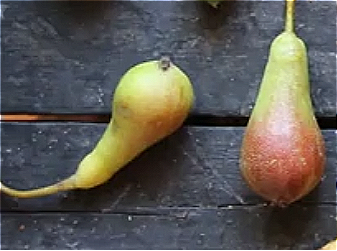
Valori nutrizionali indicativi (per 100 g, pera fresca – valori medi)
• Energia: 55–60 kcal
• Carboidrati: 12–15 g (di cui zuccheri 9–12 g)
• Fibre: 2,8–3,5 g (prevalenza di pectine; più elevate con buccia)
• Proteine: ~0,4 g
• Grassi: ~0,1 g — SFA (acidi grassi saturi; bene mantenerli contenuti), MUFA (monoinsaturi, favorevoli se sostituiscono i saturi) e PUFA (polinsaturi) trascurabili
• Sodio: <5 mg
• Potassio: 110–140 mg
• Vitamina C: 3–6 mg (sensibile a ossidazione/calore)
• Altri: tracce di folati e vitamina K
Principali sostanze contenute
• Zuccheri: fruttosio, glucosio, saccarosio (rapporto variabile per cultivar).
• Acidi organici: malico (prevalente), citrico (minore).
• Fibre solubili/insolubili: pectine, emicellulose e cellulosa; influenzano viscosità e sazietà.
• Polifenoli: acido clorogenico, catechine/procianidine, derivati della quercetina (maggiore nella buccia).
• Composti volatili: esteri fruttati, alcoli e aldeidi che guidano l’aroma.
• Sorbitolo naturale (poliolo fermentabile): rilevante per soggetti sensibili ai FODMAP.
• Componenti da controllare nei trasformati: patulina (da frutti ammuffiti), 5-HMF (processi termici troppo spinti), residui fitosanitari entro MRL.
Processo di produzione
• Selezione e preparazione: cernita dei frutti; lavaggio/spazzolatura; eventuale pelatura/decorticazione e mondata.
• Taglio e anti-imbrunimento: limitare l’ossidazione enzimatica (PPO) con deaerazione, pH, ascorbato/citrato ove consentito.
• Trasformazioni tipiche:
– Purea/cubetti: riscaldamento dolce, passatura o taglio, setacciatura; standardizzazione °Brix/viscosità.
– Succo/concentrato: pressatura, chiarifica/filtrazione (o stile torbido), evaporazione sottovuoto e recupero aromi.
– Sciroppati/confetture: cottura con zuccheri secondo categoria legale.
– Essiccati: aria calda o liofilizzazione.
• Stabilizzazione e confezionamento: pastorizzazione HTST o riempimento asettico; vasetti in retorta; pack barriera a luce/O₂ con headspace ridotto (azoto).
Proprietà sensoriali e tecnologiche
• Colore: da bianco-panna a giallo-paglierino; imbrunisce se ossidata.
• Texture: da croccante (pere asiatiche) a fondente; sclereidi responsabili della sensazione granulosa.
• Funzionalità: le pectine conferiscono corpo/gel; profilo zuccherino morbido utile in ripieni e dessert; acidità più bassa della mela → gusto più rotondo.
• Stabilità: sensibile a ossidazione (enzimatica e non); calore e ossigeno accelerano perdita di freschezza e colorazione bruna.
Impieghi alimentari
• Fresca da consumo, insalate e formaggi.
• Puree e preparazioni frutta per yogurt/dessert; ripieni bakery, confetture, sciroppati.
• Succhi/nettari e blend; essiccati/snack; fermentazioni tradizionali (perry/cidro di pera).
Nutrizione e salute
La pera è una fonte accessibile di fibre (specie con buccia), che favoriscono sazietà e modulano l’assorbimento dei carboidrati. Rispetto ai succhi, il frutto intero mantiene la matrice che rallenta la risposta glicemica; le puree si collocano in posizione intermedia (più rapide del frutto, più lente del succo chiarificato), con effetto legato a granulometria e contenuto di pectine.
Il contenuto di grassi è trascurabile, quindi l’impatto sul profilo lipidico della dieta è neutro. Il potassio contribuisce all’equilibrio elettrolitico; in diete con restrizione di potassio occorre considerare l’apporto complessivo. La vitamina C è presente in quantità modeste e sensibili ai processi: tecnologie delicate e pack idonei aiutano a preservarla nei trasformati.
Il sorbitolo e altri zuccheri fermentabili possono causare fastidi in soggetti sensibili ai FODMAP: è utile porzionare e testare la tolleranza individuale. Per salute orale, come per gli altri frutti, è preferibile consumare la pera ai pasti e limitare l’esposizione protratta agli zuccheri (succhi/smoothie sorseggiati).
Nota porzione: 1 pera media (≈160–180 g) come frutto; per trasformati, 100–150 g di purea o 200 ml di 100% succo, in sostituzione e non in aggiunta ad altre bevande zuccherate.
Qualità e specifiche (temi tipici)
• Identità/composizione: °Brix, pH, acidità (malico), rapporto Brix/acidità; per puree anche viscosità e granulometria.
• Aspetto: colore (CIELAB), assenza di imbrunimenti/precipitati; aroma fresco privo di note ossidate.
• Chimica: 5-HMF basso; patulina sotto limiti legali; metalli in specifica.
• Residui: fitosanitari ≤ MRL; solfiti da dichiarare se ≥10 mg/kg.
• Microbiologia: assenza patogeni/25 g; conte totali in specifica; nessuna fermentazione indesiderata.
• Prove funzionali: stabilità luce/O₂, shelf-life accelerata, comportamento in applicazione (es. sineresi in yogurt, bake-stability nei ripieni).
Conservazione e shelf-life
• Fresco: maturazione controllata (ETO/atmosfere controllate), conservare al fresco e consumare entro pochi giorni dal picco di maturazione.
• Trasformati: confezioni asettiche/retorta a temperatura ambiente; una volta aperti, refrigerare 0–4 °C e consumare in 3–5 giorni.
• Criticità: imbrunimento, perdita aromi, sineresi; shelf-life tipica 9–12 mesi (variabile per processo/pack).
Sicurezza e regolatorio
• Denominazioni: “pere” (fresco), “purea di pera”, “succo di pera/“da concentrato”, “nettare di pera” secondo categoria legale.
• Zuccheri aggiunti: non ammessi nei 100% frutta/“senza zuccheri aggiunti” (indicare “contiene naturalmente zuccheri”).
• Contaminanti: limiti per patulina e 5-HMF; requisiti pesticidi/metalli; processi in GMP/HACCP.
• Allergeni: non prioritari; solfiti da indicare se presenti ≥10 mg/kg.
• Claim: nutrizionali/salutistici solo se rispettate le soglie (es. “fonte di fibre” se ≥3 g/100 g).
Etichettatura
• Nome di vendita, lista ingredienti (es. “purea di pera”; “da concentrato” ove applicabile), eventuale acido ascorbico/aromi recuperati.
• Origine ove richiesta; lotto e TMC/data; istruzioni di conservazione e uso dopo apertura; claim “senza zuccheri aggiunti” solo se conforme.
Troubleshooting
• Imbrunimento a crudo/trasformato: eccesso O₂/PPO attiva → deaerare, pH/ascorbato, ridurre contatto con Cu/Fe.
• Sapore piatto: cultivar poco aromatica o eccesso di calore → selezione materia prima, ottimizzare profilo termico, recupero/ritorno aromi.
• Sineresi in puree/prep: pectine insufficienti o pH/ioni non ottimali → ritarare pectina, gestire Ca²⁺ e curva termica.
• Granulosità eccessiva: molte sclereidi o setacciatura grossa → calibrare fini/mesh e standardizzare la cultivar.
• Fermentazioni indesiderate: cariche residue/riempimento non idoneo → verificare pastorizzazione e igiene di linea.
Sostenibilità e filiera
• Frutteto: gestione integrata, riduzione perdite post-raccolta, valorizzazione dei calibri fuori standard nella trasformazione.
• Sottoprodotti: pastazzo per pectina/fibre, mangimistica o bioenergia.
• Impianto: recupero calore, riuso acque CIP, trattamento reflui verso target BOD/COD; pack riciclabili/leggeri.
• Sistemi: tracciabilità completa e sicurezza in GMP/HACCP con audit fornitori.
Conclusione
La pera è un ingrediente versatile e delicato, con dolcezza morbida, buona quota di fibre e buone prestazioni tecnologiche nelle applicazioni dolci. La qualità finale dipende da cultivar e maturazione, controllo di ossigeno/calore, gestione della pectina e confezionamento protettivo, privilegiando prodotti senza zuccheri aggiunti e porzioni adeguate.
Principali funzioni INCI (cosmesi)
• Pyrus Communis (Pear) Fruit Extract/Juice/Pulp: skin-conditioning, umettante, antiossidante leggero; la pectina agisce come gelificante/addensante in sistemi acquosi (uso/claim dipendono dalla normativa locale).
Mini-glossario
• SFA: acidi grassi saturi — assunzioni elevate possono aumentare l’LDL; meglio mantenerli contenuti.
• MUFA: acidi grassi monoinsaturi — favorevoli quando sostituiscono i saturi.
• PUFA: acidi grassi polinsaturi — includono famiglie n-6/n-3; benefici se bilanciati e protetti dall’ossidazione.
• ALA: acido α-linolenico (n-3 essenziale); irrilevante nelle pere.
• EPA/DHA: acidi grassi n-3 a lunga catena tipici di pesce/alga; assenti nelle pere.
• TFA: acidi grassi trans; trascurabili in frutta non idrogenata.
• MCT: trigliceridi a media catena; non rilevanti nelle pere.
• GMP/HACCP: good manufacturing practice / hazard analysis and critical control points — sistemi igienico-preventivi con CCP convalidati.
• BOD/COD: domanda biochimica/chimica di ossigeno — metriche per la gestione/trattamento dei reflui.
Bibliografia__________________________________________________________________________
Ribeiro J, Silva V, Igrejas G, Barros L, Heleno SA, Reis FS, Poeta P. Phenolic Compounds from Pyrus communis Residues: Mechanisms of Antibacterial Action and Therapeutic Applications. Antibiotics (Basel). 2025 Mar 8;14(3):280. doi: 10.3390/antibiotics14030280.
Abstract. Background/objectives: The food industry produces substantial amounts of fruit byproducts, which are often discarded despite their high content of bioactive compounds with potential therapeutic applications. Pyrus communis (pear) residues, which are particularly rich in phenolic compounds, represent a valuable yet underutilized resource. These byproducts have demonstrated significant antioxidant and antibacterial properties, suggesting their potential for medical and pharmaceutical applications. This review aims to provide a comprehensive analysis of the phenolic profile of P. communis byproducts, emphasizing their antioxidant and antibacterial mechanisms and their prospective use in combating oxidative stress and antibacterial resistance. Methods: A comprehensive review of the key phenolic compounds from P. communis residues was conducted using ScienceDirect and Google Scholar databases (from 2014 to 2024). Studies assessing antioxidant and antibacterial activities were reviewed, with a focus on their mechanisms of action against Gram-positive and Gram-negative bacterial pathogens. Results: A minimum of 14 distinct phenolic compounds were identified among P. communis residues. However, chlorogenic acid and catechin were identified as the primary contributors to the antioxidant activity of P. communis residues. Hydroquinone and chlorogenic acid exhibited strong antibacterial effects through membrane disruption, enzyme inhibition, and metabolic interference. Despite this potential, hydroquinone's cytotoxicity and regulatory concerns limit its direct pharmaceutical application. Conclusions: While P. communis phenolics show promise as natural antibacterial agents, future research should address bioavailability, extraction standardization, and safe formulation strategies. Investigating their synergy with conventional antibiotics and improving stability for cosmetic applications are key steps toward their practical use. In vivo and clinical studies are crucial to validating their therapeutic potential and ensuring regulatory approval.
He W, Laaksonen O, Tian Y, Haikonen T, Yang B. Chemical Composition of Juices Made from Cultivars and Breeding Selections of European Pear (Pyrus communis L.). J Agric Food Chem. 2022 Apr 27;70(16):5137-5150. doi: 10.1021/acs.jafc.2c00071.
Abstract. The phenolic profiles and other major metabolites in juices made from fruits of 17 cultivars and selections of European pears were investigated using UHPLC-DAD-ESI-QTOF-MS and GC-FID, respectively. A total of 39 phenolic compounds were detected, including hydroxybenzoic acids, hydroxycinnamic acids, flavan-3-ols, procyanidins, flavonols, and arbutin. Among these compounds, 5-O-caffeoylquinic acid was the most predominant, accounting for 14-39% of total quantified phenolic contents (TPA) determined in this study. The variations were mainly cultivar dependent. The genetic background effect on the chemical compositions is complex, and breeding selections from the same parental cultivars varied dramatically in chemical compositions. Putative perry pears contained more 4-O-caffeoylquinic acid, 5-O-caffeoylquinic acid, caffeoyl N-trytophan, caffeoylshikimic acid, coumaroylquinic acid isomer, syringic acid hexoside, procyanidin dimer B2, (+)-catechin, and malic acid, whereas putative dessert pears had higher esters, alcohols, and aldehydes. The results will be helpful in providing industry with phytochemical compositional information, assisting pear selections in commercial utilization.
Akagić A, Oras A, Gaši F, Meland M, Drkenda P, Memić S, Spaho N, Žuljević SO, Jerković I, Musić O, Hudina M. A Comparative Study of Ten Pear (Pyrus communis L.) Cultivars in Relation to the Content of Sugars, Organic Acids, and Polyphenol Compounds. Foods. 2022 Sep 30;11(19):3031. doi: 10.3390/foods11193031.
Abstract. Traditional pear cultivars are increasingly in demand by consumers because of their excellent taste, the possibility of use in sustainable food production systems, convenience as raw materials for obtaining products of high nutritional quality, and perceived health benefits. In this study, individual sugars, organic acids, and polyphenols in the fruits of nine traditional and one commercial pear cultivar during two growing seasons were determined by HPLC. A significant influence of cultivars, growing years, and their interaction on the content of analyzed primary and secondary metabolites was determined. The commercial pear cultivar 'Président Drouard' and traditional cultivars 'Dolokrahan', 'Budaljača', and 'Krakača' had a lower content of all analyzed sugars. Overall, traditional pear cultivars had higher total polyphenols in the peel and pulp than 'Président Drouard', with the exception 'Takiša' and 'Ahmetova'. High polyphenol content detected in 'Budaljača', 'Dolokrahan', and 'Krakača' shows the utilization value of traditional pear germplasm. The obtained data can serve as practical supporting data for the use of traditional pears in the neutraceutical, pharmaceutical, and food industries.
Konarska A. The relationship between the morphology and structure and the quality of fruits of two pear cultivars (Pyrus communis L.) during their development and maturation. ScientificWorldJournal. 2013 Nov 13;2013:846796. doi: 10.1155/2013/846796.
Abstract. The flavour and nutritional values of pears are appreciated by consumers worldwide, who, however, demand specific fruit quality, that is, attractive appearance, firmness and flavour, and health safety as well as long-term shelf life and storability. Pear cultivars differ in terms of the above-mentioned traits; therefore, we undertook investigations to demonstrate the differences in structure of fruits of two pear cultivars that determine fruit quality in its broadest sense. The micromorphology, anatomy, and ultrastructure of "Clapp's Favourite" and "Conference" fruits in the fruit set stage and in the harvest maturity stage were investigated under light microscope and scanning and transmission electron microscopes. The fruits of "Clapp's Favourite" and "Conference" in the fruit set stage exhibited distinct differences in the values of anatomical parameters only. Substantial differences in fruit structure were observed in the harvest maturity stage. The analyses indicate that firmness and durability of pear fruits are largely influenced by the presence of russeting, the proportion of closed lenticels and number of stone cells, and the content of starch grains and tannin compounds. The thickness of the cuticle and presence of epicuticular waxes as well as the number of lenticels and the number and depth of microcracks play a minor role.
Sroka Z, Zgórka G, Żbikowska B, Sowa A, Franiczek R, Wychowaniec K, Krzyżanowska B. High Antimicrobial Efficacy, Antioxidant Activity, and a Novel Approach to Phytochemical Analysis of Bioactive Polyphenols in Extracts from Leaves of Pyrus communis and Pyrus pyrifolia Collected During One Vegetative Season. Microb Drug Resist. 2019 May;25(4):582-593. doi: 10.1089/mdr.2018.0149.
Abstract. Dried leaf samples of Pyrus communis L. var. 'Conference' and Pyrus pyrifolia Burm. f. (Nakai) var. 'Shinseiki' were subjected to the successful extraction procedures using various solvents, followed by filtering and/or drying liquid plant preparations under reduced pressure. As a result of this, for each Pyrus leaf sample examined, four dried residues were obtained, including methanolic (EA), ethyl acetate (EC), water (EB), and the residue obtained from aqueous solution (ED). Antiradical activity of these preparations was measured using the ABTS+• assay, and antimicrobial activity was examined using various strains of bacteria and yeasts. The highest antiradical activity was observed for EC from leaves of P. communis var. 'Conference' collected in May, but the highest average antibacterial activity was noted for EC residues from P. pyrifolia var. 'Shinseiki' collected in May. Antibacterial activity positively correlated with concentration of hydroquinone in extracts. No antifungal activity was observed for any extract. In addition, qualitative and quantitative analyses of active polyphenolic components in extracts from Pyrus were performed. Hydroquinone and hydroxycinnamic acid derivatives were analyzed using a new optimized method comprising reversed-phase high-performance liquid chromatography (RP-LC) coupled with simultaneous photodiode-array and fluorescence detection.
Khiljee T, Akhtar N. Investigation of antiaging and skin rejuvenation potential of phyto-constituents from Pyrus communis loaded topical emulgel. Pak J Pharm Sci. 2019 Jan;32(1(Supplementary)):293-300.
Abstract. Pyrus communis fruit is traditionally used for improving the skin color and texture. The current study was designed to investigate Pyrus communis fruit phytoconstituents and their in-vivo rejuvenation effects on human skin by developing a stable emulgel formulation. Hydro-alcoholic extract of Pyrus communis was subjected to phytochemical analysis (TPC, TFC, antioxidant activity and anti-tyrosinase activity). A stable emulgel formulation loaded with 5% (w/w) Pyrus communis fruit extract was developed. Afterwards, this stable emulgel formulation was tested for effects on skin parameters and compared these with placebo (without fruit extract) by employing them on healthy human volunteers (n=13) for 3 months. Investigated in-vivo skin parameters were skin erythema, melanin, moisture, sebum and elasticity. Pyrus communis fruit extract showed excellent antioxidant and anti-tyrosinase activities. The developed formulation was stable in varying conditions of temperature and humidity for a period of 12 weeks. The active formulation showed statistically significant (p<0.05) decrease in skin melanin, erythema and sebum level while increase in skin elasticity and moisture content when compared with placebo. From findings it is concluded that Pyrus communis fruit extract loaded emulgel possesses antiaging potential with improvement in skin tone and elasticity, ameliorated skin moisture and showed skin whitening potential.




