



Dried onion (Allium cepa)
Description
Dehydrated ingredient made from peeled, trimmed fresh onions that are sliced/diced and dried; available as flakes, minced/granulated, and powder, including toasted or caramelized variants.
Sensory profile: sweet–sulfurous aroma with umami and roasted notes (if toasted); color white–cream to straw yellow.
Positioning: clean-label flavor base for seasonings, soups/sauces, snacks, and ready meals; convenient alternative to fresh onion.
Caloric value (per 100 g dry product)
~320–360 kcal; carbohydrates ~70–85 g (including sugars and fructans), fiber ~8–15 g, protein ~8–12 g, fat <1.5 g, sodium low. Typical use levels are modest (≈0.2–5% of recipe).
Key constituents
Sulfur precursors: cysteine sulfoxides (e.g., isoalliin). With alliinase, they form volatile sulfides and the lachrymatory factor (syn-propanethial-S-oxide).
Thermal sulfur compounds: thiosulfinates, sulfides, thiols; pyrazines and Maillard notes in toasted types.
Carbohydrates: fructans (FOS, FODMAP), glucose/fructose, sucrose.
Phenolics/flavonoids: quercetin (higher in darker varieties).
Minerals: notably potassium, manganese; moisture typically ≤5–7% in spec.
Production process
Raw prep: sorting, peeling, trimming, slicing/dicing.
Drying: low-temperature hot air with controlled airflow; optional light toasting/caramelization for “roasted/sweet” profiles.
Milling: calibrated into flakes/granules/powder; cooled/cryogenic milling may be used to retain volatiles.
Decontamination: steam treatment or irradiation where permitted; possible anticaking agents (silicon dioxide, tricalcium phosphate) must be declared.
QC: moisture/a_w, particle size (mesh), color (L, a, b*)**, micro load, residues.
Sensory and technological properties
Rehydration: fast water uptake; 1 g dry yields ~5–8 g rehydrated; fresh equivalence ~7–9:1 by weight.
Flavoring power: high and standardizable; powder disperses uniformly in dry blends.
Process stability: good at low a_w; extended heat reduces sharp sulfur notes and boosts sweet/roasted tones.
Color development: prone to Maillard browning in matrices rich in reducing sugars + amino acids (manage pH/time/temp).
Food applications
Seasonings/rubs: for snacks, meats/plant-based, dry sauces.
Soups, sauces, ready meals: clean-label base (flakes/granules provide piece identity).
Bakery/savory: onion breads, crackers, grissini (monitor Maillard and color).
Cured/plant-based meats: powder adds umami and natural sweetness; can aid binding with proteins/fibers.
Snacks & extrusion: post-cook seasoning; compatible with plant milks and creamy sauces.
Nutrition and health
Source of fiber (partly fructans) and flavonoids (e.g., quercetin).
FODMAP: fructans may cause bloating in sensitive consumers → control dose or use natural onion-type flavors designed low-FODMAP where needed.
Sodium: naturally low (watch blended seasonings for added salt).
Fat profile
Total fat is negligible; first occurrence: SFA — saturated fatty acids (best kept moderate overall); MUFA — monounsaturated fatty acids (often neutral/beneficial); PUFA — polyunsaturated fatty acids (beneficial when balanced). For dried onion, lipid impact is trivial.
Quality and specifications (typical topics)
Moisture ≤5–7%, low a_w, mesh to application (e.g., 40–80 mesh for powder).
Microbiology: pathogens absent/25 g; controlled TAMC/yeasts/molds (steam-treated options available).
Residues/contaminants: pesticides/metals within limits; sulfites if used must be declared.
Sensory: no mold/musty notes, clean aroma; uniform color without scorching.
Storage and shelf life
Store cool, dry, dark, in airtight, moisture-barrier packs; avoid odors and humidity (caking).
Typical shelf life 18–24 months unopened; once opened, reseal and use within a few weeks.
Allergens and safety
Not a major allergen, though Alliaceae sensitivities exist.
Declare sulfites where present as preservers/anti-browning agents.
Gluten-free by nature; manage cross-contact in facilities.
INCI functions in cosmetics (where applicable)
INCI: Allium Cepa Bulb Powder / Allium Cepa Bulb Extract.
Roles: antioxidant/skin-conditioning; consider odor and potential sensitization in leave-on formats.
Troubleshooting
Caking/lumps: upgrade moisture barrier, use anticaking (e.g., SiO₂) or agglomerated powder.
“Raw” note in sauces: toast lightly in fat before adding water, or choose toasted grade.
Excess browning in bakery: reduce time/temperature, adjust pH, or swap powder for granules.
Burn specks on snacks: lower frying temp, improve seasoning distribution, select finer mesh.
Sustainability and supply chain
Dehydration reduces food waste and transport mass/volume, valorizing seasonal surpluses.
In-plant: improve drying energy efficiency/heat recovery, manage effluents toward BOD/COD targets, use recyclable packaging, and maintain robust GMP/HACCP and traceability.
Labelling
Name: “dried onion” with form (flakes/granules/powder) and any treatment (toasted, steam-treated).
Additives: declare anticaking agents or sulfites where present; organic origin when applicable.
Allergens: none specific, but sulfites >10 mg/kg (as SO₂) must be labeled.
Conclusion
Dried onion delivers concentrated flavor, ease of use, and stable performance across seasonings to shelf-stable meals. Selecting the right cut, toast level, and mesh, together with careful moisture and heat management, ensures sensory consistency, safety, and a clean label.
Mini-glossary
FODMAP: Fermentable carbohydrates that may cause bloating (here mainly fructans).
FOS (fructo-oligosaccharides): Short-chain fructans with prebiotic effects; useful yet problematic for low-FODMAP diets.
a_w (water activity): Measure of “free” water; lower values improve stability and safety of dry goods.
Mesh: Particle-size index (sieve rating); higher number = finer particles.
L, a, b*:** CIELAB color coordinates: L* (lightness), a* (green↔red), b* (blue↔yellow).
TAMC: Total aerobic mesophilic count; general hygiene indicator (with yeasts/molds and pathogen absence).
GMP/HACCP: Good manufacturing practice / hazard analysis and critical control points—preventive food-safety systems with defined CCPs.
BOD/COD: Biochemical/chemical oxygen demand—wastewater impact metrics guiding treatment.
SiO₂ (silicon dioxide): Anticaking agent used in powders; must be declared if present.
SO₂ / sulfites: Preservers/anti-browning agents; mandatory labeling above regulatory thresholds.
SFA — saturated fatty acids; MUFA — monounsaturated fatty acids; PUFA — polyunsaturated fatty acids. (Fat is negligible in dried onion.)
Studies
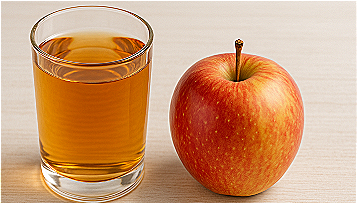
Apple has antioxidant properties (1) especially on the fats of the cell membrane and therefore helps to combat vascular diseases such as atherosclerosis and other forms of cardiovascular problems.
Another important function is to regulate the balance of blood sugar, stimulating the cells of the pancreas to produce the right dose of insulin (2).
Other studies have shown the effectiveness of apples in reducing the risks of asthma and aging.
Raw or cooked apples are also an excellent digestive aid.
Phlorizin , a glucoside compound found in the bark of apples, in quantities of 100ug/ml has demonstrated a protective antioxidant effect on DNA damage and cellular apoptosis (3).
Among the polyphenols present, cyanidin-3-galactoside, catechin, epicatechin and proanthocyanidin in an apple extract reduced free radicals by inducing apoptosis of cancer cells. Among the apples varieties, red apples were most effective against BGC-803 cancer cells (4).
Phldz (phloretin 2′-O-glucose), a phenylpropanoid found only in apples, and Phlor, a direct derivative thereof, exert an anti-inflammatory function in the intestine, improving the symptoms of intestinal inflammation (5).
In a crossover study involving 30 participants, a high intake of apples improved endothelial function, blood pressure and arterial rigidity both acutely and chronically (6). The cardioprotective role of the apple can therefore be confirmed.

