



Macis (Myristica fragrans arillo)
Nome comune: Macis
(arillo essiccato che circonda il seme di noce moscata)
Pianta di origine (noce moscata)
Regno: Plantae
Clado: Angiosperme
Clado: Eudicotiledoni
Ordine: Magnoliales
Famiglia: Myristicaceae
Genere: Myristica
Specie: Myristica fragrans Houtt.
Nota: Il macis è la parte membranosa (arillo) che avvolge il seme della noce moscata (Myristica fragrans). Dopo l’essiccazione viene commercializzato in lamine o macinato, con aroma più delicato e floreale rispetto alla noce moscata.
Coltivazione e condizioni di crescita della pianta di noce moscata
Clima:
Predilige climi tropicali caldi e umidi.
Richiede piogge ben distribuite durante l’anno e non tollera le gelate.
Esposizione:
Preferisce pieno sole leggermente mitigato o mezz’ombra, specie nelle fasi giovanili.
In coltura viene spesso inserita in sistemi agroforestali con altre piante ombreggianti.
Terreno:
Ideali suoli profondi, ben drenati, ricchi di sostanza organica.
Tende a svilupparsi bene in terreni da leggermente acidi a neutri.
Soffre i ristagni idrici prolungati.
Irrigazione:
In aree con piogge regolari può bastare l’acqua meteorica.
In condizioni più secche sono necessarie irrigazioni di supporto, specialmente per le piante giovani.
Temperatura:
Crescita ottimale indicativamente tra 20 e 30 °C.
Temperature troppo basse e venti freddi possono danneggiare foglie e fiori.
Concimazione:
Beneficia di apporti regolari di compost o letame ben maturo.
Utili fertilizzanti equilibrati (azoto, fosforo, potassio) per sostenere crescita vegetativa e fruttificazione.
Cure colturali:
Potature leggere per mantenere una chioma equilibrata e aerata.
Controllo delle infestanti alla base delle piante, soprattutto nei primi anni.
Raccolta:
I frutti maturi vengono raccolti quando si aprono spontaneamente mostrando il seme e l’arillo rosso.
Il macis viene staccato dal seme, disteso e fatto essiccare fino a diventare friabile e di colore arancio-rossastro/bruno.
Moltiplicazione:
Principalmente tramite seme fresco, che germina meglio se non eccessivamente disseccato.
Possibile anche la propagazione vegetativa (innesto, talee) per mantenere caratteristiche varietali, ma è meno comune in coltivazione tradizionale.
Descrizione
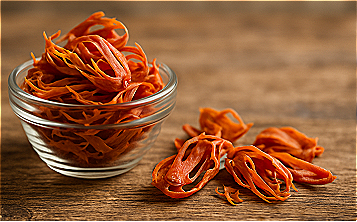
Spezia aromatica ricavata dall’arillo reticolato che avvolge il seme di noce moscata; essiccata in “lamelle/blades” oppure macinata in polvere fine.
Profilo sensoriale: caldo, dolce–speziato con note agrumate–floreali e finale leggermente pepato; più delicato e luminoso rispetto alla noce moscata.
Ruolo culinario: classico in prodotti da forno, salse cremose, zuppe, salumi, sottaceti e blend di spezie (es. garam masala). Dosaggi tipici 0,05–0,30%.
Valore calorico (per 100 g di spezia)
~450–520 kcal; carboidrati ~40–55 g (incluse fibre), grassi ~30–36 g (prevalente olio fisso), proteine ~5–8 g, sodio basso. Le porzioni d’uso sono molto piccole.
Composizione chimica e struttura
Olio essenziale (7–15%): terpeni (sabinene, α/β-pinene, limonene, terpinene) e fenilpropanoidi (myristicina, elemicina, tracce di safrolo, eugenolo).
Olio fisso (triacilgliceroli) 20–35% con acido miristico, palmitico, oleico, linoleico.
Lignani/neolignani: es. macelignano, associati a stabilità aromatica e attività antiossidante.
Minerali/vitamine: manganese, rame, potassio; vitamine B a livelli modesti.
Proprietà fisiche
Forma: lamelle intere (arilli sottili e fragili) o polvere.
Colore: arancio–ambra fino a rosso–dorato; in polvere giallo–arancio.
Umidità: tipicamente ≤10–12%; a_w controllata per prevenire muffe.
Solubilità: olio essenziale solubile in etanolo e grassi; insolubile in acqua (si disperde come aroma).
Granulometria (macinato): comunemente 20–60 mesh, su misura per l’applicazione.
Processo di produzione
Raccolta e separazione: frutti maturi di noce moscata aperti; arillo (macis) rimosso dal seme, lavato e rifilato.
Appiattimento ed essiccazione: arilli distesi e pressati in lamelle; essiccazione al sole o ad aria calda fino all’umidità target con ricambio d’aria.
Selezione e pulizia: classificazione per dimensione/colore, rimozione impurezze; opzionale sterilizzazione a vapore per ridurre la carica microbica.
Macinazione e confezionamento: macinazione refrigerata/ criogenica per trattenere i volatili; imballi barriera a ossigeno e luce.
Estratti (opzionali): olio essenziale per distillazione in corrente di vapore o estratto CO₂ supercritico.
Proprietà sensoriali e tecnologiche
Rilascio aromatico: rapide note di testa da monoterpeni, coda calda e persistente da fenilpropanoidi.
Effetto colore: dona riflesso dorato ai dosaggi tipici.
Sensibilità di processo: calore, luce e ossigeno causano perdita di olio/ossidazione → preferire aggiunte tardive, tappi ermetici, stoccaggio fresco.
Impieghi alimentari
Dolci e bakery: torte, ciambelle, creme, riso al latte, confetture.
Salato: béchamel/salse bianche, zuppe (patate, zucca), pesce, pâté, salsicce bianche.
Bevande e confetteria: cordiali, liquori, sciroppi, cioccolato/praline.
Condimenti: mix spezie, sottaceti, rub con cannella, coriandolo, pepe bianco.
Nutrizione e salute
Costituenti antiossidanti (es. lignani, eugenolo) supportano stabilità aromatica; effetti fisiologici limitati ai dosaggi culinari.
Eccessi possono causare nausea, capogiri e sintomi neurotossici legati soprattutto a myristicina/elemicina; in cucina i livelli sono molto inferiori.
Privo di sodio per natura; aiuta la riduzione del sale grazie all’intensità aromatica.
Profilo dei grassi
L’olio fisso contiene **SFA** (acidi grassi saturi, soprattutto miristico/palmitico), **MUFA** (monoinsaturi, principalmente oleico) e **PUFA** (polinsaturi, linoleico).
Nota salute: mantenere **SFA** moderati; **MUFA** spesso neutri/favorevoli; **PUFA** benefici se bilanciati. Con le micro-porzioni di macis, l’impatto lipidico è trascurabile. **TFA**/**MCT** trascurabili.
Qualità e specifiche (temi tipici)
Identità/purezza: lamelle o macinato uniformi, senza corpi estranei, colore omogeneo.
Umidità: ≤10–12%; olio essenziale in specifica (più alto = aroma più intenso).
Chimica: perossidi/anisidina bassi (ossidazione), ceneri e ceneri insolubili in acido nei limiti; pesticidi/metalli conformi.
Microbiologia: patogeni assenti/25 g (es. Salmonella negativo); TAMC/lieviti/muffe controllati; disponibile trattamento a vapore.
Antifrode: microscopia, GC–MS del fingerprint dell’olio essenziale, profilo colore/fibre.
Conservazione e shelf-life
Conservare al fresco (≤20 °C), asciutto, al buio, in imballi ermetici e barriera O₂; evitare calore/luce.
Shelf-life: lamelle 18–24 mesi; macinato 12–18 mesi (l’aroma decade più rapidamente).
Evitare umidità per prevenire caking/muffe.
Allergeni e sicurezza
Non è tra i maggiori allergeni, ma possibili allergie alle spezie.
Tossicità ad alti dosaggi: composti come myristicina/safrolo richiedono moderazione; rispettare eventuali limiti regionali per safrolo/metileugenolo negli alimenti.
Gravidanza/farmaci: evitare eccessi; potenziali interazioni a dosi farmacologiche.
Naturalmente senza glutine; gestire cross-contact secondo buone pratiche.
Funzioni INCI in cosmesi (ove applicabile)
INCI: Myristica Fragrans (Mace) Extract, Myristica Fragrans (Mace) Oil.
Ruoli: fragrance, supporto antiossidante/skin-conditioning in oli, balsami, saponi; valutare sensibilizzazione/fotosicurezza; seguire le linee guida IFRA per i leave-on.
Troubleshooting
Note di muffa/stantio: essiccazione o stoccaggio scadenti → verificare umidità/a_w, preferire forniture sterilizzate a vapore.
Aroma debole: raccolto vecchio, eccesso di macinazione o ossidazione → specificare minimo di olio essenziale, richiedere date di confezionamento fresche, usare milling criogenico.
Caking: ingresso di umidità → migliorare barriera/essiccanti, ridurre headspace.
Puntinature in salse chiare: usare macinato più fine o infusione in grasso con successiva filtrazione.
Sostenibilità e filiera
Origini principali Indonesia, Sri Lanka, India, Grenada; preferire forniture tracciabili, senza deforestazione e con pratiche di lavoro eque.
In stabilimento: essiccazione efficiente, sterilizzazione a vapore, valorizzazione scarti (es. residui/“meal”) e reflui gestiti verso target **BOD/COD**; mantenere **GMP/HACCP** e tracciabilità robuste.
Etichettatura
Denominazione ingrediente: “macis” (distinto da “noce moscata”).
Indicare Paese d’origine, forma (intero/macinato) e processo (sterilizzato a vapore) ove rilevante; conformità a eventuali limiti su safrolo/metileugenolo.
Conclusione
Il macis è una spezia calda e raffinata che dona complessità dolce–speziata a bassi dosaggi. La specifica su olio essenziale, una lavorazione pulita e asciutta e la protezione da ossidazione e rischi microbiologici preservano il suo profilo caratteristico e la qualità clean-label in bakery, piatti salati e bevande/confetteria.
Mini-glossario
**SFA** — acidi grassi saturi: da mantenere moderati nella dieta; presenti nell’olio fisso del macis.
**MUFA** — acidi grassi monoinsaturi (es. oleico): spesso neutri/favorevoli; quota minore nel macis.
**PUFA** — acidi grassi polinsaturi (es. linoleico): benefici se bilanciati; più ossidabili; quota minore nel macis.
**TFA** — acidi grassi trans: trascurabili nelle spezie.
**MCT** — trigliceridi a media catena: non significativi nel macis.
IFRA — International Fragrance Association: standard di sicurezza per l’uso fragrance in cosmetica.
**GMP/HACCP** — good manufacturing practice / hazard analysis and critical control points: sistemi igienico–preventivi con CCP convalidati.
**BOD/COD** — domanda biochimica/chimica di ossigeno: metriche per trattamento reflui e conformità ambientale.

