

Ciao, Visitatore!


🔍
RECENSIONE

Recensione

Al222
Al222 (25514 pt) 05-Nov-2025 16:49

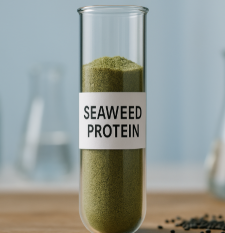
Proteina da alghe (macroalghe)

Descrizione

  • Ingredienti proteici ottenuti da alghe commestibili (macroalghe) dei tre gruppi: brune (Phaeophyceae: Laminaria/Kombu, Ascophyllum, Fucus), rosse (Rhodophyta: Porphyra/Nori, Palmaria palmata/Dulse) e verdi (Chlorophyta: Ulva/lattuga di mare).

  • Tenore proteico (s.s.) tipico: alghe rosse/verdi ~20–40%, alghe brune ~7–20% (specie e stagione dipendono); i concentrati/isolati commerciali standardizzano a ≥50–80% di proteine.

  • Profilo sensoriale: note marine–umami, talora salmastre/fenoliche; colore dal verde smeraldo al bruno–rosso, secondo specie e processo.
Valore calorico (per 100 g, polvere)

  • Concentrato proteico (50–65%): ~320–380 kcal; proteine 50–65 g, carboidrati 15–30 g (prevalenza fibre/polisaccaridi solubili), grassi 1–5 g; sodio variabile (desalting lo riduce).

  • Isolato proteico (≥80%): ~330–410 kcal; proteine 80–90 g, carboidrati 1–10 g, grassi 1–4 g.

Principali sostanze contenute

  • Proteine/peptidi: proteine strutturali; nelle rosse presenti ficobiliproteine (es. ficoeritrina) con colore e potenziale antiossidante.

  • Aminoacidi liberi: glutammato/aspartato → contributo umami.

  • Polisaccaridi co-estratti: alginati/fucoidani (brune), agar/carragenine (rosse), ulvani (verdi) → impatto su viscosità/gelificazione.

  • Minerali/micronutrienti: iodio (elevato soprattutto nelle kelp), potassio, calcio, ferro; vitamine del gruppo B variabili.

Processo di produzione

  • Raccolta & pretrattamento: cernita, lavaggio, eventuale sbollentatura/desalinizzazione per ridurre sabbia/sali/iodio.

  • Essiccazione & macinazione: aria/sole/tamburo/spray-dry, poi milling alla granulometria target.

  • Concentrazione/isolamento proteico:

    • Disgregazione parete (meccanica, enzimatica, ultrasuoni/PEF) per aumentare estraibilità/digeribilità.

    • Solubilizzazione alcalina → precipitazione isoelettrica o filtrazione a membrana per ottenere concentrati/isolati.

    • Idrolisi enzimatica/fermentazione per ridurre note marine e migliorare solubilità/bioaccessibilità.

  • Finitura: decolorazione/deodorizzazione se necessaria, spray-dry, setacciatura, standardizzazione.

Proprietà sensoriali e tecnologiche

  • Solubilità: dipendente dal pH; gli idrolizzati mostrano maggiore solubilità e minore torbidità.

  • Emulsione/schiuma: proteine algali e polisaccaridi co-estratti sinergizzano stabilizzando emulsioni e schiume.

  • Gel/viscosità: interazioni con alginati/carragenine/ulvani forniscono corpo e tenuta a salse e ripieni.

  • Aroma: umami intrinseco utile per riduzione del sale; eventuali off-notes mitigabili con desalinizzazione, carboni attivi o fermentazione.

Impieghi alimentari

  • Carni/seafood vegetali: legante, emulsionante e texture aid; supporto a estrusione in blend con cereali/legumi.

  • Zuppe, salse, dressing: addensamento naturale/emulsione con spinta umami.

  • Bakery/snack: arricchimento proteico in cracker/chips/barre salate; gestione di colore/aroma via blend.

  • Bevande & nutrition: idrolizzati in RTD/brodi (ottimizzare chiarezza e gusto).

Nutrizione e salute

  • Qualità proteica: buona lisina; amminoacidi solforati talvolta limitanticomplementare con cereali/semi. PDCAAS/DIAAS migliorano con disgregazione parete/idrolisi.

  • Fibre & minerali: co-forniscono fibre solubili e minerali; l’iodio può essere elevato nei materiali da kelpdosare e dichiarare.

  • Bioattivi: ficobiliproteine/peptidi con potenziale antiossidante/ACE-inibente (dipende da matrice/processo).

Profilo dei grassi

  • Grassi totali bassi; lipidi per lo più fosfolipidi di membrana con tracce di **PUFA** (anche n-3 a catena lunga in traccia). Per l’uso alimentare tipico il contributo lipidico è trascurabile; **MUFA** e **SFA** minori; **TFA**/**MCT** non rilevanti.

Qualità e specifiche (temi tipici)

  • Proteine (N×fattore): usare un fattore N→proteina adeguato alle alghe (~5,0–5,13 anziché 6,25) per la quota di azoto non proteico.

  • Umidità/a_w, ceneri (sali marini), sodio/iodio (dichiarare/controllare), metalli (As, Cd, Pb, Hg) nei limiti, con arsenico inorganico basso (evitare fonti hijiki).

  • Microbiologia: patogeni assenti/25 g; lieviti/muffe bassi; verificare amine biogene se fermentato.

  • Funzionalità: solubilità vs pH, indici emulsione/schiuma, gel strength/viscosità, colore (L, a, b*)**, particle size.

  • Sensoriale: minimizzare note marine/fenoliche; assenza di granelli/sabbia.

Conservazione e shelf-life

  • Conservare al fresco, asciutto, al buio, in pack ermetico/barriera; proteggere da umidità (caking) e odori.

  • Shelf-life: tipicamente 12–24 mesi per polveri; idrolizzati liquidi refrigerati hanno vita più breve.

Allergeni e sicurezza

  • Non tra i maggiori allergeni, ma possibile cross-contact con crostacei/pesce in impianti condivisi.

  • Iodio/tiroide: ingredienti ricchi di kelp possono superare l’assunzione giornaliera se sovradosati → formulare ed etichettare responsabilmente.

  • Arsenico inorganico: garantire origini conformi e analitica routinaria; in alcune giurisdizioni è sconsigliata l’alga hijiki.

  • Naturalmente senza glutine; gestire cross-contact secondo **GMP/HACCP**.

Funzioni INCI in cosmesi (ove applicabile)

  • INCI: Hydrolyzed Algae Protein, Algae Extract o specifico di specie (es. Laminaria Digitata Extract, Ascophyllum Nodosum Extract, Ulva Lactuca Extract).

  • Ruoli: filmogeno, skin/hair conditioning, ritenzione idrica, supporto antiossidante in sieri, shampoo, maschere.

Troubleshooting

  • Odori/sapore marini o amaro: applicare desalinizzazione, carboni attivi o fermentazione; scegliere specie/tagli a basso fenolico.

  • Colore troppo scuro/verde: decolorazione (lavaggi etanolici/adsorbenti) o blend con proteine chiare.

  • Bassa solubilità o granuloso: aumentare idrolisi, regolare pH/forza ionica, ridurre granulometria, aggiungere chelanti per gestire ioni bivalenti.

  • Sodio/iodio elevati: desalting, selezione specie, limiti di specifica; dichiarare iodio per porzione ove opportuno.

  • Gel/emulsione deboli: sfruttare sinergie con alginati/carragenine/ulvani o aggiungere amidi/idrocolloidi.

Sostenibilità e filiera

  • Acquacoltura di alghe: zero suolo arabile, niente acqua dolce o fertilizzanti, può assorbire nutrienti e offrire habitat.

  • Assicurare raccolta responsabile, biosicurezza e tracciabilità; ottimizzare acqua/energia di processo, trattare i reflui verso target **BOD/COD**; usare pack riciclabili e mantenere **GMP/HACCP**.

Etichettatura

  • Denominazioni: “concentrato/isolato di proteine da alghe” con indicazione specie (es. da Porphyra/Ulva/Laminaria).

  • Indicare % proteine (fattore N→proteina), sodio/iodio se rilevanti, origine/lotto; claim vegano/senza glutine solo se conformi.

Conclusione

Le proteine da alghe offrono una piattaforma a basso impatto e ricca di umami, con funzionalità utili (solubilità, emulsione, gel in sinergia con polisaccaridi) e l’apporto di fibre/minerali. Il successo dipende da scelta di specie, miglioramento di estraibilità/digeribilità (disgregazione parete, idrolisi/fermentazione) e controllo accurato di iodio/metalli/off-notes per ottenere gusto pulito, texture stabili e conformità normativa.

Mini-glossario

  • PDCAAS/DIAAS — indici di qualità proteica basati su digeribilità/amminoacidi essenziali; migliorano con idrolisi/fermentazione.

  • Fattore N→proteina — moltiplicatore per convertire azoto in proteina; per le alghe tipicamente ~5,0–5,13 (più basso di 6,25).

  • Ficobiliproteinecromoproteine idrosolubili (es. ficoeritrina) delle alghe rosse, con colore e attività antiossidante.

  • **PUFA**grassi polinsaturi: potenzialmente benefici se bilanciati; presenti in traccia nelle polveri proteiche di alghe.

  • **MUFA**grassi monoinsaturi: spesso neutri/favorevoli; quota minore qui.

  • **SFA**grassi saturi: da mantenere moderati nella dieta; minori nelle proteine algali.

  • **TFA**acidi grassi trans: trascurabili negli ingredienti algali.

  • **MCT**trigliceridi a media catena: non rilevanti nelle macroalghe.

  • **GMP/HACCP**good manufacturing practice / hazard analysis and critical control points: sistemi igienico–preventivi con CCP convalidati.

  • **BOD/COD**domanda biochimica/chimica di ossigeno: metriche per il trattamento reflui e l’impatto ambientale.

Bibliografia__________________________________________________________________________

Echave J, Fraga-Corral M, Garcia-Perez P, Popović-Djordjević J, H Avdović E, Radulović M, Xiao J, A Prieto M, Simal-Gandara J. Seaweed Protein Hydrolysates and Bioactive Peptides: Extraction, Purification, and Applications. Mar Drugs. 2021 Aug 31;19(9):500. doi: 10.3390/md19090500. 

Abstract. Seaweeds are industrially exploited for obtaining pigments, polysaccharides, or phenolic compounds with application in diverse fields. Nevertheless, their rich composition in fiber, minerals, and proteins, has pointed them as a useful source of these components. Seaweed proteins are nutritionally valuable and include several specific enzymes, glycoproteins, cell wall-attached proteins, phycobiliproteins, lectins, or peptides. Extraction of seaweed proteins requires the application of disruptive methods due to the heterogeneous cell wall composition of each macroalgae group. Hence, non-protein molecules like phenolics or polysaccharides may also be co-extracted, affecting the extraction yield. Therefore, depending on the macroalgae and target protein characteristics, the sample pretreatment, extraction and purification techniques must be carefully chosen. Traditional methods like solid-liquid or enzyme-assisted extraction (SLE or EAE) have proven successful. However, alternative techniques as ultrasound- or microwave-assisted extraction (UAE or MAE) can be more efficient. To obtain protein hydrolysates, these proteins are subjected to hydrolyzation reactions, whether with proteases or physical or chemical treatments that disrupt the proteins native folding. These hydrolysates and derived peptides are accounted for bioactive properties, like antioxidant, anti-inflammatory, antimicrobial, or antihypertensive activities, which can be applied to different sectors. In this work, current methods and challenges for protein extraction and purification from seaweeds are addressed, focusing on their potential industrial applications in the food, cosmetic, and pharmaceutical industries.

Brown ES, Allsopp PJ, Magee PJ, Gill CI, Nitecki S, Strain CR, McSorley EM. Seaweed and human health. Nutr Rev. 2014 Mar;72(3):205-16. doi: 10.1111/nure.12091.

Abstract. Seaweeds may have an important role in modulating chronic disease. Rich in unique bioactive compounds not present in terrestrial food sources, including different proteins (lectins, phycobiliproteins, peptides, and amino acids), polyphenols, and polysaccharides, seaweeds are a novel source of compounds with potential to be exploited in human health applications. Purported benefits include antiviral, anticancer, and anticoagulant properties as well as the ability to modulate gut health and risk factors for obesity and diabetes. Though the majority of studies have been performed in cell and animal models, there is evidence of the beneficial effect of seaweed and seaweed components on markers of human health and disease status. This review is the first to critically evaluate these human studies, aiming to draw attention to gaps in current knowledge, which will aid the planning and implementation of future studies.

Pereira L, Cotas J, Gonçalves AM. Seaweed Proteins: A Step towards Sustainability? Nutrients. 2024 Apr 10;16(8):1123. doi: 10.3390/nu16081123. 

Abstract. This review delves into the burgeoning field of seaweed proteins as promising alternative sources of protein. With global demand escalating and concerns over traditional protein sources' sustainability and ethics, seaweed emerges as a viable solution, offering a high protein content and minimal environmental impacts. Exploring the nutritional composition, extraction methods, functional properties, and potential health benefits of seaweed proteins, this review provides a comprehensive understanding. Seaweed contains essential amino acids, vitamins, minerals, and antioxidants. Its protein content ranges from 11% to 32% of dry weight, making it valuable for diverse dietary preferences, including vegetarian and vegan diets. Furthermore, this review underscores the sustainability and environmental advantages of seaweed protein production compared to traditional sources. Seaweed cultivation requires minimal resources, mitigating environmental issues like ocean acidification. As the review delves into specific seaweed types, extraction methodologies, and functional properties, it highlights the versatility of seaweed proteins in various food products, including plant-based meats, dairy alternatives, and nutritional supplements. Additionally, it discusses the potential health benefits associated with seaweed proteins, such as their unique amino acid profile and bioactive compounds. Overall, this review aims to provide insights into seaweed proteins' potential applications and their role in addressing global protein needs sustainably.

Gunathilake T, Akanbi TO, Suleria HAR, Nalder TD, Francis DS, Barrow CJ. Seaweed Phenolics as Natural Antioxidants, Aquafeed Additives, Veterinary Treatments and Cross-Linkers for Microencapsulation. Mar Drugs. 2022 Jul 7;20(7):445. doi: 10.3390/md20070445.

Abstract. Driven by consumer demand and government policies, synthetic additives in aquafeed require substitution with sustainable and natural alternatives. Seaweeds have been shown to be a sustainable marine source of novel bioactive phenolic compounds that can be used in food, animal and aqua feeds, or microencapsulation applications. For example, phlorotannins are a structurally unique polymeric phenolic group exclusively found in brown seaweed that act through multiple antioxidant mechanisms. Seaweed phenolics show high affinities for binding proteins via covalent and non-covalent bonds and can have specific bioactivities due to their structures and associated physicochemical properties. Their ability to act as protein cross-linkers means they can be used to enhance the rheological and mechanical properties of food-grade delivery systems, such as microencapsulation, which is a new area of investigation illustrating the versatility of seaweed phenolics. Here we review how seaweed phenolics can be used in a range of applications, with reference to their bioactivity and structural properties.

Sharifuddin Y, Chin YX, Lim PE, Phang SM. Potential Bioactive Compounds from Seaweed for Diabetes Management. Mar Drugs. 2015 Aug 21;13(8):5447-91. doi: 10.3390/md13085447. 

Abstract. Diabetes mellitus is a group of metabolic disorders of the endocrine system characterised by hyperglycaemia. Type II diabetes mellitus (T2DM) constitutes the majority of diabetes cases around the world and are due to unhealthy diet, sedentary lifestyle, as well as rise of obesity in the population, which warrants the search for new preventive and treatment strategies. Improved comprehension of T2DM pathophysiology provided various new agents and approaches against T2DM including via nutritional and lifestyle interventions. Seaweeds are rich in dietary fibres, unsaturated fatty acids, and polyphenolic compounds. Many of these seaweed compositions have been reported to be beneficial to human health including in managing diabetes. In this review, we discussed the diversity of seaweed composition and bioactive compounds which are potentially useful in preventing or managing T2DM by targeting various pharmacologically relevant routes including inhibition of enzymes such as α-glucosidase, α-amylase, lipase, aldose reductase, protein tyrosine phosphatase 1B (PTP1B) and dipeptidyl-peptidase-4 (DPP-4). Other mechanisms of action identified, such as anti-inflammatory, induction of hepatic antioxidant enzymes' activities, stimulation of glucose transport and incretin hormones release, as well as β-cell cytoprotection, were also discussed by taking into consideration numerous in vitro, in vivo, and human studies involving seaweed and seaweed-derived agents.