



Faba beans (broad/fava beans) (Vicia faba)
Description
Edible pulses with a savory, nutty flavor and creamy–meaty bite when cooked; main market types: broad/major (large seeds for human food), minor/equina (smaller; food/feed).
Culinary range: excellent purées (e.g., bissara, purée di fave), stews (e.g., ful medames), salads, roasted snacks, and as flour or protein concentrates for gluten-free and plant-based products.
Note on “aquafaba”: faba cooking liquor can foam/emulsify, similar to chickpea aquafaba.
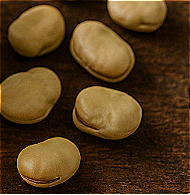
Caloric value (per 100 g)
Dry (as sold): ~330–360 kcal.
Cooked in water, no salt: ~85–105 kcal, protein 6–9 g, carbohydrates 17–20 g (of which fiber 5–8 g), fat 0.5–1.5 g.
Canned (drained): broadly similar to cooked; sodium varies (rinsing lowers sodium).
Key constituents
Proteins (~25–30% dry basis): storage proteins vicilin/7S and legumin/11S; sulphur amino acids (methionine/cysteine) limiting → complement with cereals.
Carbohydrates: starch (↑ RS3 — resistant starch after cooling), soluble/insoluble fibers.
Phytochemicals: vicine/convicine (pyrimidine glycosides), tannins, phenolics, saponins, phytate.
Minerals/vitamins: good folate, potassium, magnesium, phosphorus, iron; B-vitamins (e.g., B1) vary by processing.
Production process
Dry beans: cleaning → grading → (optional) dehulling/splitting → drying to spec → barrier packaging.
Canned/ready-to-eat: soaking (or rapid hydration) → boiling/pressure cooking to tenderness → filling in brine (optional CaCl₂ firming) → seaming/retort sterilisation → cooling.
Flour/semolina/protein: milling of whole/dehulled seeds; air classification for protein concentrates; optional heat treatment to tame beany notes and antinutrients.
Sensory and technological properties
Creamy texture with good puréability; dehulling reduces bitterness/astringency.
High water absorption and starch gelation give body in soups, sauces, and fillings.
Aquafaba-like functionality from soluble proteins/polysaccharides/saponins enables foaming/emulsification.
Food applications
Traditional: ful medames, bissara, koukia preparations, fave e pecorino (fresh young beans).
Modern: roasted faba snacks, legume pasta, plant-based burgers/balls, dairy alternatives (with faba protein).
Flour uses: flatbreads, batters, thickeners, gluten-free blends (often 10–30% with cereal flours).
Nutrition and health
Source of plant protein, fiber, and folate; GI typically low–medium, further reduced by cooling (↑ RS) and pairing with fat/protein.
Other components: Salicylic acid (1), iron and zinc (2), The flavonol glycosides phenolic compounds found in common beans possess antimicrobial, anti-inflammatory and ultraviolet radiation (UVR) protective properties (3),
High fiber supports satiety and glycaemic moderation; protein complements cereal amino-acid profiles.
Glycaemic response: typically low–moderate GI; cook–cool cycles increase RS3 and may lower effective GI.
Antinutrients: phytate, tannins, trypsin inhibitors decrease with soaking, cooking/pressure cooking, germination, fermentation.
Favism (G6PD deficiency): faba beans contain vicine/convicine that can trigger haemolysis in susceptible individuals; such individuals should avoid faba beans and products derived from them.
Fat profile
Very low total fat. Residual lipids are mainly PUFA — polyunsaturated fatty acids (potentially beneficial when balanced; more oxidation-prone) and MUFA — monounsaturated fatty acids (often neutral/beneficial), with minimal SFA — saturated fatty acids (best kept moderate overall). TFA — trans fatty acids negligible; MCT — medium-chain triglycerides not significant.
Quality and specifications (typical topics)
Dry beans: moisture ≤14–16%, uniform size, low defects (splits, insect damage), foreign matter minimal; verify variety and, where relevant, low-vicine/convicine (low-VC) cultivars.
Canned: drained weight in spec, firm yet tender texture, low turbidity, pH/salt targets; CaCl₂ declared if used.
Microbiology: commercial sterility for canned; pathogens absent/25 g for dry.
Contaminants: pesticides/metals/mycotoxins within limits; no foreign bodies.
Storage and shelf life
Dry: store cool, dry, dark; avoid heat/humidity (prevents hard-to-cook); protect from bruchid weevils.
Cooked/refrigerated: ≤4 °C, 3–4 days; freezable after draining.
Canned: ambient until date; once opened, refrigerate in liquid and use within a few days.
Allergens and safety
Not a major allergen in many jurisdictions, but legume allergies occur; possible cross-reactivity with peanut, lentil, pea, soy.
Favism risk: individuals with G6PD deficiency should avoid faba beans.
Lectins and inhibitors are inactivated by thorough boiling/retort; avoid undercooking.
Gluten-free by nature; manage cross-contact in mixed facilities.
INCI functions in cosmetics (when applicable)
Possible INCI: Vicia Faba Seed Extract / Seed Powder / Protein.
Roles: light skin-conditioning, antioxidant claim support (extracts), absorbent/mild abrasive (flours). Ensure safety/claim substantiation.
Troubleshooting
Prolonged/tough cooking (HTC): beans old or stored warm/humid → soak 8–12 h, pressure cook; a tiny baking soda (0.1–0.2%) can shorten time (may soften skins).
Bitterness/astringency: dehull, rinse after soak, or use younger beans; balance with acid/fat in recipes.
Skins separating: avoid thermal shock; keep a gentle simmer; salt during/after cooking; a touch of CaCl₂ improves firmness.
Gas/bloating: discard soak water, rinse canned, titrate portions; use carminatives (bay, cumin, fennel).
Sustainability and supply chain
Nitrogen-fixing legume that reduces fertiliser needs and improves rotations; GHG footprint far lower than animal proteins.
Improve with efficient water/energy in soak/cook, effluent management toward BOD/COD targets, recyclable packaging, and robust traceability under GMP/HACCP.
Labelling
Common names: “faba beans”, “broad beans”, “fava beans.”
For canned: declare drained weight, salt content, and any firming agents; include country of origin/lot.
Where relevant, some producers add a consumer advisory regarding G6PD deficiency (jurisdiction-dependent).
Conclusion
Faba beans are a nutrient-dense, versatile pulse delivering fiber, plant protein, and creamy–savory character to traditional and modern foods. Selecting quality stock, applying proper soaking/cooking (or rinsed canned options), and pairing with cereals and healthy fats optimises digestibility, nutrient availability, and sensory performance—while respecting G6PD-related safety.
Mini-glossary
RS3 — resistant starch (retrograded): Less-digestible starch formed on cooling; can moderate glycaemic response.
GI — glycaemic index: Relative blood-glucose impact; lowered by fiber, protein/fat pairing, and cook–cool cycles.
FODMAP — fermentable oligo-, di-, mono-saccharides and polyols: May cause GI discomfort; manage via portioning and processing/rinsing.
PUFA — polyunsaturated fatty acids: Potentially beneficial when balanced; more oxidation-prone.
MUFA — monounsaturated fatty acids: Often neutral/beneficial for lipid profiles.
SFA — saturated fatty acids: Best kept moderate overall.
TFA — trans fatty acids: Negligible in pulses.
MCT — medium-chain triglycerides: Not significant in faba beans.
GMP/HACCP — good manufacturing practice / hazard analysis and critical control points: Preventive food-safety systems with validated CCPs.
BOD/COD — biochemical/chemical oxygen demand: Effluent metrics guiding wastewater treatment and environmental impact.

