

Ciao, Visitatore!


🔍
RECENSIONE

Recensione

Al222
Al222 (25264 pt) 05-Nov-2025 09:00

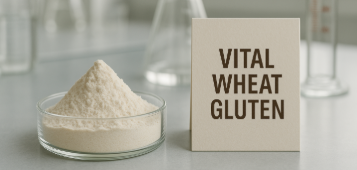
Glutine vitale  di frumento 

Descrizione

  • Proteina concentrata del frumento ottenuta idratando la farina di frumento, lavando via amido e solubili, quindi essiccando la massa glutinica in modo da preservarne la vitalità (funzionalità).

  • Profilo sensoriale/funzionale: gusto neutro, alta elasticità ed estensibilità, forte ritenzione dei gas e assorbimento d’acqua; in idratazione/impasto forma una rete viscoelastica.
Valore calorico (per 100 g, polvere secca)

  • ~360–380 kcal; proteine 70–82 g (N×5,7), carboidrati 8–15 g (amido residuo), grassi 1–3 g, fibre ~1–2 g, sodio basso salvo blend salati.

Principali sostanze contenute

  • Proteine di riserva (glutine): gliadine (→ estensibilità) e glutenine (→ elasticità); ricche di glutammina/glutammato, limitate in lisina, treonina, metionina.

  • Componenti minori: amido residuo, lipidi in tracce, minerali (ceneri basse), enzimi in gran parte inattivati in essiccazione.

  • Umidità in specifica tipica ≤8–10%.

Processo di produzione

  • Impasto e lavaggio: farina + acqua → sviluppo glutine → lavaggio per rimuovere amido/solubili (batch o continuo).

  • Separazione: setacci/centrifughe per il latte di amido; la massa glutinica viene disidratata.

  • Essiccazione: aria a bassa T (nastri/letto fluido) per mantenere la vitalità; quindi macinazione, setacciatura, eventuale agglomerazione/instant.

  • Finitura/CQ: % proteine, umidità, ceneri, granulometria, microbiologia (patogeni assenti/25 g), metal detection, pack barriera.

Proprietà sensoriali e tecnologiche

  • Idratazione & legame: elevata capacità di assorbimento (spesso 1,5–2,0× del proprio peso); migliora forza impasto, tolleranza e ritenzione gas.

  • Costruzione struttura: aumenta volume, masticabilità e affettabilità; in pasta/noodles migliora tenacità e riduce perdite in cottura.

  • Testurizzazione: in estrusione ad alta umidità crea strutture fibrose per analoghi carne; in seitan forma una matrice elastica con semplice impasto/cottura.

  • Sinergie: funziona con proteine di soia/pisello e idrossicolloidi per modulare mordente e succosità.

Impieghi alimentari

  • Panificazione: pani, bagel, rolls, flatbread; uso tipico 1–5% sulla farina (più alto con farine deboli).

  • Pasta/noodles: rafforza formulazioni con frumento tenero/semola, migliora bite e tolleranza di processo.

  • Plant-based & seitan: principale proteina strutturante; con grassi/spezie fornisce masticabilità “meaty”.

  • Snack/panature: binder e filmogeno; riduce rotture.

  • Carni processate (dove consentito): legante/ritentore d’acqua.

Nutrizione e salute

  • Ingrediente ad alto tenore proteico ma con profilo amminoacidico incompleto (lisina limitante) → abbinare con legumi/semi per migliorare gli EAA.

  • Impatto glicemico contenuto alle dosi d’uso (amido ridotto).

  • Non adatto a celiachia, sensibilità al glutine o allergia al frumento.

Profilo dei grassi

  • Grassi totali molto bassi; le tracce contengono soprattutto PUFA — grassi polinsaturi (potenzialmente benefici se bilanciati; più ossidabili) e MUFA — grassi monoinsaturi (spesso neutri/favorevoli), con quota minima di SFA — grassi saturi (da moderare nel complesso della dieta). TFA — acidi grassi trans trascurabili; MCT — trigliceridi a media catena non significativi.

Qualità e specifiche (temi tipici)

  • Proteine (N×5,7): ≥75% per grado vitale; premium ≥80%.

  • Umidità: ≤8–10%; ceneri: ≤1,0–1,5%; amido residuo: ≤10–12% (tal quale).

  • Funzionalità: assorbimento acqua (WAC/WHC), estensibilità/elasticità, gluten index (ove applicabile), stabilità impasto (Farinograph/Extensograph).

  • Micro: patogeni assenti, TAMC/lieviti/muffe in specifica; micotossine/metalli/pesticidi conformi.

  • Fisica: colore crema chiaro, granulometria (scorrevolezza), bulk density.

Conservazione e shelf-life

  • Conservare fresco, asciutto, ermetico, lontano da odori; proteggere da umidità (caking/grumi) e infestanti.

  • Shelf-life: tipicamente 12–24 mesi sigillato; dopo apertura richiudere bene e usare rapidamente.

Allergeni e sicurezza

  • Contiene frumento e glutine (allergeni maggiori).

  • Rischio polveri inalabili in manipolazione → adottare aspirazioni/PPE.

  • Gestire cross-contact con GMP/HACCP; per linee gluten-free necessaria rigorosa segregazione.

Funzioni INCI in cosmesi (contesto)

  • Il glutine vitale è poco comune nei cosmetici; correlati INCI (Hydrolyzed Wheat Protein, Wheat Amino Acids) sono usati come filmogeni/condizionanti; verificare policy allergeni dove previsto.

Troubleshooting

  • Impasto duro/sovraelastico: ridurre dosaggio, aumentare idratazione, aggiungere grassi/zuccheri, estendere riposo/autolisi.

  • Scarso volume panario: aumentare glutine o sviluppo in impasto; verificare attività enzimatica e lievito.

  • Seitan spugnoso: ridurre lievitazione/vapore, aggiungere olio/proteina di legume; impastare per allineare le fibre glutiniche prima della cottura.

Sostenibilità e filiera

  • Selezionare fornitori con tracciabilità, uso efficiente di acqua/energia; valorizzare i sottoprodotti amidacei.

  • Gestire reflui verso target BOD/COD; pack riciclabili; mantenere GAP fornitori e piena tracciabilità.

Etichettatura

  • Dichiarare “glutine vitale di frumento”/“glutine di frumento”.

  • Includere dichiarazioni allergeni (contiene frumento, glutine); indicare Paese d’origine, lotto/tracciabilità; eventuali claim solo se conformi.

Conclusione

Il glutine vitale di frumentoè una proteina funzionale che irrobustisce gli impasti, costruisce struttura e abilita texture fibrose nei sistemi plant-based. Idratazione, impastamento e dosaggio calibrati su forza della farina e processo garantiscono volume costante, masticabilità e affettabilità dal bakery alle alternative proteiche.

Mini-glossario

  • EAA — aminoacidi essenziali: Aminoacidi non sintetizzabili; il glutine è scarso di lisina, da complementare con legumi.

  • PDCAAS/DIAAS — indici di qualità proteica: Valutano amminoacidi digeribili; il glutine sale se complementato.

  • WHC/WAC — water-holding/absorption capacity: Capacità di trattenere/assorbire acqua; governa resa e lavorabilità.

  • GMP/HACCP — good manufacturing practice / hazard analysis and critical control points: Sistemi preventivi con CCP convalidati.

  • BOD/COD — domanda biochimica/chimica di ossigeno: Metriche per l’impatto dei reflui e il trattamento acque.

  • PUFA — grassi polinsaturi; MUFA — grassi monoinsaturi; SFA — grassi saturi; TFA — acidi grassi trans; MCT — trigliceridi a media catena: Classi lipidiche presenti solo in traccia nel glutine vitale di frumento.

Bibliografia__________________________________________________________________________

Pycia K, Kaszuba J, Posadzka Z, Juszczak L. Influence of the Addition of Vital Wheat Gluten on Thermal and Rheological Properties of Triticale Flour. Polymers (Basel). 2023 Apr 13;15(8):1870. doi: 10.3390/polym15081870. 

Abstract. The aim of this study was to evaluate the effect of the addition of vital wheat gluten to triticale flour on its thermal and rheological properties. In the tested systems (TG), triticale flour from Belcanto grain was replaced with vital wheat gluten in the amounts of 1%, 2%, 3%, 4% and 5%. Wheat flour (WF) and triticale flour (TF) were also tested. For the tested flours and mixtures with gluten, the falling number, gluten content, as well as the parameters of gelatinization and retrogradation characteristics using differential scanning calorimetry (DSC) and characteristics of pasting using a viscosity analyzer (RVA) were determined. In addition, viscosity curves were plotted, and viscoelastic properties of the obtained gels were also assessed. It was observed that there were no statistically significant differences between the TF and TG samples in terms of falling number. The average value of this parameter in TG samples was 317 s. It was found that the replacement of TF with vital gluten reduced the gelatinization enthalpy and increased the retrogradation enthalpy, as well as the degree of retrogradation. The highest viscosity was characterized by the WF paste (1784 mPa·s) and the lowest by the TG5% mixture (1536 mPa·s). Replacing TF with gluten resulted in a very visible decrease in the apparent viscosity of the systems. In addition, the gels based on the tested flours and TG systems had the character of weak gels (tan δ = G″/G' > 0.1), while the values of the parameters G' and G″ decreased as the share of gluten in the systems increased.

Apper-Bossard E, Feneuil A, Wagner A, Respondek F. Use of vital wheat gluten in aquaculture feeds. Aquat Biosyst. 2013 Nov 16;9(1):21. doi: 10.1186/2046-9063-9-21.

Abstract. In aquaculture, when alternative protein sources of Fish Meal (FM) in diets are investigated, Plant Proteins (PP) can be used. Among them, Vital Wheat Gluten (VWG) is a proteinaceous material obtained from wheat after starch extraction. "It is mainly composed of two types of proteins, gliadins and glutenins, which confer specific visco-elasticity that's to say ability to form a network providing suitable binding. This will lead to specific technological properties that are notably relevant to extruded feeds". Besides these properties, VWG is a high-protein ingredient with an interesting amino-acid profile. Whereas it is rather low in lysine, it contains more sulfur amino acids than other PP sources and it is high in glutamine, which is known to improve gut health and modulate immunity. VWG is a protein source with one of the highest nitrogen digestibility due to a lack of protease inhibitor activity and to the lenient process used to make the product. By this way, addition of VWG in diet does not adversely affect growth performance in many fish species, even at a high level, and may secure high PP level diets that can induce health damages.

Giannou V, Tzia C. Addition of Vital Wheat Gluten to Enhance the Quality Characteristics of Frozen Dough Products. Foods. 2016 Jan 6;5(1):6. doi: 10.3390/foods5010006. 

Abstract. The aim of this study was to enhance the quality and sensory characteristics of bread made from frozen dough. Both white and whole-wheat flour were used. In order to improve dough strength and stability during frozen storage, samples were supplemented with vital wheat gluten at the levels of 2%, 4%, 5%, and 6% of flour weight. The characteristics of baked samples were determined through weight loss, specific volume, crust, and crumb color, texture, and sensory evaluation. Dough behavior at sub-zero temperatures was further examined for control samples and samples with 6% gluten using Differential Scanning Calorimetry (DSC), while their low molecular sugar content (fructose, glucose, sucrose) was measured using High Pressure Liquid Chromatography (HPLC), as it can be associated with yeast viability and dough freezing point depression. The most stable samples were those with 4% and 6% gluten (for white flour) and those with 4% and 5% gluten (for whole-wheat flour). Gluten addition raised the freezing point of dough samples and preserved low molecular sugar generation after prolonged storage.

Luo D, Li X, Geng M, Zhang Y, Lan H, Li J, Qi C, Bai Z, Huang J. Effect of Arabinoxylan from Wastewater Generated during Vital Wheat Gluten Production on Liver Metabolism in Type 2 Diabetic Mice. Foods. 2023 Jul 8;12(14):2640. doi: 10.3390/foods12142640.

Abstract. Arabinoxylan (AX) is a dietary fiber that has been proven to have a significant antidiabetic effect. Liver metabolic disorders frequently coincide with the development of type 2 diabetes, but research on the hepatoprotective effects of AX in type 2 diabetic mice is lacking. As AX is abundant in the wastewater produced during vital wheat gluten protein production, this study used it as a raw material to evaluate its protective effect on liver function. The study employed an AX intervention in type 2 diabetic mice induced by a high-fat diet combined with streptozotocin and collected serum and liver tissue samples after 4 weeks. Serum and liver function indicators were measured using an automatic biochemistry analysis apparatus, and liver fat accumulation was observed using oil red O staining. Nontargeted metabolomics analysis of liver tissues was conducted using UHPLC-MS/MS. The results showed that AX significantly improved liver function indicators and histopathological damage, and regulated liver metabolic disorders by improving the differential metabolites of pantothenate and CoA biosynthesis, as well as purine metabolism. This study demonstrated that AX may exert a significant hepatoprotective effect by regulating metabolic disorders.

Olabarrieta I, Cho SW, Gällstedt M, Sarasua JR, Johansson E, Hedenqvist MS. Aging properties of films of plasticized vital wheat gluten cast from acidic and basic solutions. Biomacromolecules. 2006 May;7(5):1657-64. doi: 10.1021/bm0600973. 

Abstract. In order to understand the mechanisms behind the undesired aging of films based on vital wheat gluten plasticized with glycerol, films cast from water/ethanol solutions were investigated. The effect of pH was studied by casting from solutions at pH 4 and pH 11. The films were aged for 120 days at 50% relative humidity and 23 degrees C, and the tensile properties and oxygen and water vapor permeabilities were measured as a function of aging time. The changes in the protein structure were determined by infrared spectroscopy and size-exclusion and reverse-phase high-performance liquid chromatography, and the film structure was revealed by optical and scanning electron microscopy. The pH 11 film was mechanically more stable with time than the pH 4 film, the latter being initially very ductile but turning brittle toward the end of the aging period. The protein solubility and infrared spectroscopy measurements indicated that the protein structure of the pH 4 film was initially significantly less polymerized/aggregated than that of the pH 11 film. The polymerization of the pH 4 film increased during storage but it did not reach the degree of aggregation of the pH 11 film. Reverse-phase chromatography indicated that the pH 11 films were to some extent deamidated and that this increased with aging. At the same time a large fraction of the aged pH 11 film was unaffected by reducing agents, suggesting that a time-induced isopeptide cross-linking had occurred. This isopeptide formation did not, however, change the overall degree of aggregation and consequently the mechanical properties of the film. During aging, the pH 4 films lost more mass than the pH 11 films mainly due to migration of glycerol but also due to some loss of volatile mass. Scanning electron and optical microscopy showed that the pH 11 film was more uniform in thickness and that the film structure was more homogeneous than that of the pH 4 film. The oxygen permeability was also lower for the pH 11 film. The fact that the pH 4 film experienced a larger and more rapid change in its mechanical properties with time than the pH 11 film, as a consequence of a greater loss of plasticizer, was presumably due to its initial lower degree of protein aggregation/polymerization. Consequently, the cross-link density achieved at pH 4 was too low to effectively retain volatiles and glycerol within the matrix.

Taghvaei M, Smith B, Yazar G, Bean S, Tilley M, Ioerger B. Identification of gluten-like proteins in selected pod bearing leguminous tree seeds. PLoS One. 2021 Apr 5;16(4):e0249427. doi: 10.1371/journal.pone.0249427.

Abstract. The protein composition, molecular weight distribution, and rheological properties of honey locust, mesquite, Kentucky coffee tree, and carob seed germs were compared against wheat gluten. Polymeric and Osborne fractionation protocols were used to assess biochemical properties. Dynamic oscillatory shear tests were performed to evaluate protein functionality. All samples had similar ratios of protein fractions as well as high molecular weight disulfide linked proteins except for the Kentucky coffee tree germ proteins, which were found to have lower molecular weight proteins with little disulfide polymerization. Samples were rich in acidic and polar amino acids (glutamic acid and arginine,). Rheological analyses showed that vital wheat gluten had the most stable network, while Kentucky coffee seed proteins had the weakest. High molecular weight disulfide linked glutenous proteins are a common, but not universal feature of pod bearing leguminous trees.