



Giaco, Jackfruit (Artocarpus heterophyllus, famiglia Moraceae)
Descrizione
Frutto tropicale originario dell’Asia meridionale e sud-orientale, il più grande frutto arboreo commestibile (fino a 30–40 kg).
Morfologia: buccia spinescente, lattice appiccicoso; all’interno arilli (polpa) dolci che avvolgono i semi.
Stadi d’uso: verde/young (polpa neutra-fibrosa → uso salato/“pulled”), maturo/ripe (polpa dolce-fruttata), semi (sapore tipo castagna).
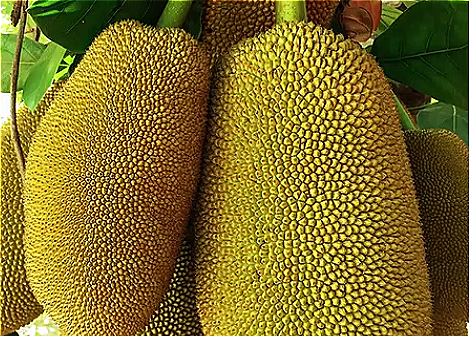
Nome comune: Giaco (jackfruit, giaca)
Regno: Plantae
Clado: Angiosperme
Clado: Eudicotiledoni
Ordine: Rosales
Famiglia: Moraceae
Genere: Artocarpus
Specie più nota: Artocarpus heterophyllus Lam. (giaco / jackfruit)
Coltivazione e condizioni di crescita
Clima:
Pianta tipicamente tropicale, sempreverde.
Predilige climi caldi e umidi, senza gelate; si adatta anche a microclimi subtropicali miti.
Esposizione:
Richiede pieno sole, in posizioni riparate dai venti forti.
In fase giovanile può beneficiare di una leggera ombreggiatura.
Terreno:
Preferisce suoli profondi, ben drenati, ricchi di sostanza organica.
Tollera un pH da leggermente acido a neutro; evitare terreni salini o soggetti a ristagni idrici.
Irrigazione:
Necessita di buona disponibilità idrica, soprattutto nei primi anni e nelle fasi di fioritura–ingrossamento dei frutti.
Una moderata tolleranza alla siccità, ma stress idrici prolungati riducono pezzatura e qualità dei frutti.
Temperatura:
Crescita ottimale indicativamente tra 20 e 30 °C.
Le basse temperature e soprattutto le gelate possono danneggiare seriamente la pianta.
Concimazione:
Apprezza apporti regolari di compost o letame ben maturo.
Utili concimazioni equilibrate (N–P–K) per sostenere crescita vegetativa e fruttificazione.
Cure colturali:
Potature contenute per arieggiare la chioma e facilitare la raccolta.
Eventuale diradamento dei frutti nelle piante molto produttive per migliorare qualità e dimensione.
Raccolta:
I frutti si raccolgono quando raggiungono dimensione e colorazione tipiche della varietà e diffondono il caratteristico profumo.
Data la grande pezzatura, la raccolta richiede attenzione e spesso il supporto di attrezzi o scale.
Moltiplicazione:
Per seme (con variabilità nelle caratteristiche dei frutti).
Spesso si usano tecniche di innesto o altre forme di propagazione vegetativa per mantenere le varietà selezionate.
Valore calorico (per 100 g)
Polpa matura, fresca (edibile): ~90–100 kcal, carboidrati 22–25 g (principalmente zuccheri), fibre 1,5–2,5 g, proteine 1–2 g, grassi ~0,3–0,6 g.
Young jackfruit in salamoia (sgocciolato): ~20–40 kcal, carboidrati 4–9 g, fibre 2–4 g, grassi ~0,2–0,5 g.
Semi cotti: ~120–150 kcal, carboidrati 25–30 g (quota di amido resistente), proteine 4–6 g, grassi 0,5–1,5 g, fibre 2–4 g.
Essiccato/chips: ~280–320 kcal (concentrazione zuccheri).
Principali sostanze contenute
Carboidrati: nei frutti maturi prevalgono zuccheri (saccarosio, glucosio, fruttosio); nei verdi prevale amido (con RS2/RS3 dopo cottura/raffreddamento).
Fibre alimentari (pectine, emicellulose) → corpo/viscosità.
Fitocomposti: carotenoidi (β-carotene, luteina), polifenoli (flavonoidi), lignani; tannini nelle parti immature.
Vitamine/minerali: vitamina C, folati, B6; potassio, magnesio, manganese.
Semi: amido, proteine con inibitori tripsinici (ridotti dalla cottura), minerali (K, P).
Processo di produzione
Fresco da taglio: selezione, sanificazione, pre-taglio (coltelli unti per il lattice), porzionamento, MAP e catena del freddo.
Conservato “young” in salamoia: taglio del frutto acerbo, sbollentatura, riempimento in brine (eventuale CaCl₂), chiusura, sterilizzazione a retorta (stabilità ambient).
In sciroppo/dolciario: polpa matura → sciroppo, retorta o pastorizzazione.
Essiccati/chips/farina: essiccazione ad aria o liofilizzazione; frittura sottovuoto per chips; macinazione per farina di jackfruit verde (basso GI).
Controlli tipici: °Brix (maturi), pH (≈ 4,8–5,6), texture (TPA), peso sgocciolato, NaCl, microbiologia, corpi estranei.
Proprietà sensoriali e tecnologiche
Profilo sensoriale:
Verde: gusto neutro-vegetale, fibrosità che replica carni sfilacciate.
Maturo: aroma tropicale (banana-ananas-mango), dolce e floreale.
Funzionalità tecnologica: alta WBC (water-binding), assorbimento salse, struttura fibrosa per pull-style; pectine → addensamento leggero.
Impieghi alimentari
Young in salamoia: tacos/pulled “pork”, curry, stufati, ragù veg, bao; ideale con marinate e spezie.
Maturo: dessert, smoothie, gelati, confetture, macedonie.
Semi: bolliti/arrosto, hummus/creme, milling in farina per bakery senza glutine (blend).
Farina di jackfruit verde: pasta, pane e tortillas a basso GI (sostituzione parziale della farina di frumento).
Nutrizione e salute
Fibre utili a sazietà e modulazione glicemica; GI più basso nei prodotti da frutto verde/farina (amido resistente RS3 dopo raffreddamento/cottura).
Vitamina C e potassio supportano funzione immunitaria e equilibrio elettrolitico.
Attenzione a carichi zuccherini nei prodotti maturi/essiccati.
CKD/nefropatie: valutare l’apporto di potassio.
Profilo dei grassi
Tenore lipidico molto basso; la quota residua contiene soprattutto PUFA — grassi polinsaturi (potenzialmente benefici se bilanciati) e MUFA — grassi monoinsaturi (spesso neutri/favorevoli), con SFA — grassi saturi minimi. TFA — acidi grassi trans trascurabili; MCT — trigliceridi a media catena non significativi.
Qualità e specifiche (temi tipici)
Materia prima: grado di maturazione uniforme, assenza di marciumi e ferite; latenza di lattice gestita.
Conservato: peso sgocciolato in specifica, tenore di sodio dichiarato, consistenza uniforme (evitare overcook), pH e vacuum/chiusura conformi.
Microbiologia: sterilità commerciale per i retort; patogeni assenti/25 g.
Residui/contaminanti: pesticidi/metalli entro limiti; assenza di corpi estranei.
Conservazione e shelf-life
Fresco: 8–12 °C, UR moderata; polpa tagliata refrigerata ≤4 °C, 2–4 giorni.
Conservato a scaffale: 18–36 mesi sigillato; dopo apertura ≤4 °C e consumo 2–3 giorni.
Congelato: polpa/spezzoni 6–12 mesi a –18 °C; possibile sinèresi alla scongelazione (legare con salse).
Allergeni e sicurezza
Assenza di glutine naturale (verificare cross-contact in impianto).
Possibile cross-reattività lattice-frutta (soggetti allergici al lattice possono reagire a jackfruit/banana/avocado).
Semi crudi: contengono inibitori enzimatici/lectine → cuocere accuratamente e rimuovere il tegumento.
Funzioni INCI in cosmesi
INCI: Artocarpus Heterophyllus Fruit Extract/Seed Extract.
Ruoli: antioxidant, skin-conditioning, masking in leave-on/rinse-off (uso limitato, verificare sicurezza/claim).
Troubleshooting
Sapore blando (young): risciacquo della salamoia, marinatura con acidi (lime/aceto) e spezie, rosolatura per Maillard.
Texture acquosa: pressare/scolare, addensare con fibre o amidi, ridurre in salsa.
Aderenza del lattice al taglio: ungere coltelli/mani e raffreddare il frutto prima del taglio.
Sodio elevato (conservato): scegliere versioni low-salt o risciacquare.
Sostenibilità e filiera
Albero resiliente al clima, alta resa per ettaro, utile contro insicurezza alimentare; impronta GHG per porzione inferiore alle proteine animali.
Ridurre sprechi (frutto voluminoso e deperibile) con trasformazione locale; gestione reflui verso BOD/COD; processi sotto GMP/HACCP; pack riciclabili.
Etichettatura
Distinguere “young jackfruit in brine” vs “ripe in syrup”; indicare peso sgocciolato, sale/zuccheri, pH/acidificanti ove applicabile.
Possibile avvertenza per soggetti con allergia al lattice.
Conclusione
Il jackfruit è un ingrediente poliedrico: in stadio verde offre texture fibrosa e bassa densità calorica per piatti salati/plant-based; maturo, apporta dolcezza tropicale e aromaticità. La corretta selezione dello stadio, la lavorazione (marinatura/rosolatura) e la gestione di acqua/salse permettono qualità sensoriale e nutrizionale elevate in un’ampia gamma di applicazioni.
Mini-glossario
GI — indice glicemico: misura la risposta glicemica; si riduce con fibre, grassi e con raffreddamento (↑ RS3).
RS3 — amido resistente da retrogradazione: frazione meno digeribile che attenua i picchi glicemici.
PUFA — grassi polinsaturi: potenzialmente benefici se bilanciati; più suscettibili a ossidazione.
MUFA — grassi monoinsaturi: spesso neutri/favorevoli e relativamente stabili.
SFA — grassi saturi: da moderare nella dieta complessiva; quota bassa nel jackfruit.
TFA — acidi grassi trans: trascurabili nei prodotti non idrogenati.
MCT — trigliceridi a media catena: non significativi nel jackfruit.
GMP/HACCP — good manufacturing practice / hazard analysis and critical control points: sistemi igienico-preventivi con CCP convalidati.
BOD/COD — domanda biochimica/chimica di ossigeno: indicatori dell’impatto dei reflui e dell’efficienza di trattamento.

