



Textured pea and bean protein (TPP/TVP)
Description
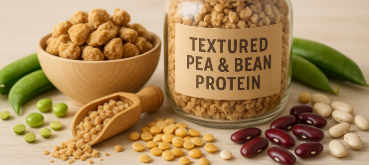
Plant-based protein ingredient made from pea (Pisum sativum) and bean (typically Phaseolus spp. or Vicia faba) that is textured by extrusion to create a fibrous structure that mimics meat.
Formats: granules/mince, flakes, chunks, strips/shreds; available as low-moisture TVP/TPE (dried) and high-moisture HMMA (refrigerated).
Sensory profile: neutral-to-beany base note (more evident in dry-fractionated concentrates), chew from tender to meaty depending on cut size and hydration.
Caloric value (per 100 g)
Dry TVP/TPE: ~320–360 kcal, protein 50–70 g, carbohydrates 15–25 g (fiber 5–15 g), fat 3–8 g.
Rehydrated/cooked (≈ 1 part TVP : 2.5–3 parts water): much lower kcal per 100 g (depends on hydration ratio).
Sodium is low if unseasoned; ready-to-eat variants may include salt and oils.
Key constituents
Proteins (pea vicilin/legumin; bean phaseolin/legumin). Sulfur amino acids are limiting → pair with cereals for a balanced profile.
Dietary fiber (soluble/insoluble) and residual starch (share of resistant starch rises after cooling).
Phytochemicals: phytates, saponins, tannins; minerals (iron, potassium, magnesium) and B-vitamins vary by process.
Major allergens: absent in the EU/US lists, but possible cross-reactivity in peanut/soy-allergic individuals.
Production process
Dehulling, milling, and fractionation:
Dry fractionation (air classification) → protein concentrates (~50–60%).
Wet fractionation → protein isolates (~80–85%).
Conditioning (target moisture 20–70%), optional defatting, pH/ionic adjustment, natural binders as needed.
Twin-screw HTST extrusion (≈120–180 °C):
Low-moisture → expansion + drying (TVP/TPE).
High-moisture with in-die cooling → protein alignment and long fibers (HMMA).
Cutting, drying, sieving/grading, barrier packaging.
Controls: protein (Kjeldahl/Dumas), moisture, particle size, WHC/OHC (water/oil-holding), TPA (texture profile), microbiology, metals/pesticides.
Sensory and technological properties
Fast rehydration and high WHC → high yield and juiciness; good OHC to retain fats during cooking.
Texture tuning via hydration, cut size, fat addition, and binders (e.g., citrus fiber, psyllium, starches; optional gluten where permitted).
Heat and shear stable; beany/green note reduces with warm pre-soak + marinade, acidity, and spices.
Food applications
Mince/chili/ragù, meatballs/burgers/loaves, taco/burrito fillings, chunks for stews.
Hybrid meat-plus-plant recipes to lower fat and emissions; ready meals and foodservice.
Long-fiber HMMA for strips, pulled-style items, and chicken-like applications.
Nutrition and health
High protein density with good PDCAAS/DIAAS for legumes; methionine/cysteine remain limiting → combine with grains.
Fiber supports satiety and glycaemic moderation; intrinsic fat is low.
Antinutrients (phytates, trypsin inhibitors, lectins) are reduced by extrusion/heat; cooling increases RS3.
Sodium can be high in seasoned convenience formats—check labels.
Fat profile
Low total fat; residual lipids are mainly PUFA — polyunsaturated fatty acids (e.g., linoleic n-6; potentially beneficial when balanced, but more oxidation-prone) and MUFA — monounsaturated fatty acids (e.g., oleic n-9; often neutral/beneficial), with minimal SFA — saturated fatty acids (best moderated in the overall diet).
Quality and specifications (typical topics)
Protein target, moisture, shape/size, WHC/OHC, rehydration index, colour/odour.
Low counts; pathogens absent/25 g; mycotoxins/metals within limits; no solvent residues for dry-fractionated lines.
Shelf stability: low aw for dried TVP; cold chain for HMMA.
Storage and shelf life
Dry TVP/TPE: store cool/dry/dark, airtight; avoid humidity and off-odours. Typical shelf life 12–18 months.
HMMA: keep refrigerated (0–4 °C) in barrier/MAP; short shelf life (days to weeks).
Allergens and safety
No major allergens by default; consider legume cross-reactivity (e.g., peanut/soy).
Lectins/inhibitors are inactivated by extrusion; follow cooking instructions for optimal digestibility and flavour.
Gluten-free unless co-formulated; verify cross-contact in mixed facilities.
INCI functions in cosmetics
Possible INCI: Pisum Sativum (Pea) Peptide/Protein, Hydrolyzed Vegetable Protein, Vicia Faba Seed Extract.
Roles: skin-conditioning, light film-forming, humectancy (claims require purity and safety support).
Troubleshooting
Rubbery/dry bite: under-hydration or oversized cut → increase water/oil, choose a finer cut, add binders.
Crumbing in cook: excessive shear or weak binders → add starches/fibres, raise hydrated protein, rest the mix.
Beany/green note: warm pre-soak, add acids (vinegar/lemon), spices, and encourage controlled Maillard in searing.
Low juiciness: boost WHC with citrus fiber/psyllium, use emulsified oil, or light brining.
Sustainability and supply chain
Nitrogen-fixing legumes reduce synthetic fertiliser needs and GHG footprint versus meat.
Favor HTST extrusion efficiency, heat recovery, effluent management toward BOD/COD targets; recyclable packaging.
Operate under GMP/HACCP with CCPs on moisture, microbiology, and foreign bodies.
Labelling
Names: “textured vegetable protein (pea/bean)”, “textured pea and bean protein”, “TVP/TPE (pea/bean)”; declare any co-processed allergens.
Potential claims: “high protein” and/or “source of fibre” when analytical thresholds are met.
Conclusion
Textured pea and bean proteins deliver high yield, customisable chew, and a favourable nutrition profile with a lower environmental footprint. Cut selection, protein grade, hydration management, and savvy seasoning drive juiciness, bite, and overall consumer liking.
Mini-glossary
TVP/TPE — Textured vegetable/plant protein: low-moisture extruded proteins for shelf-stable use.
HMMA — High-moisture meat analogue: extruded at high moisture to form long fibers and meaty bite.
WHC/OHC — Water/oil-holding capacity: key for yield, juiciness, and fat retention.
PDCAAS — Protein digestibility-corrected amino acid score: classic protein-quality metric based on AA pattern and digestibility.
DIAAS — Digestible indispensable amino acid score: modern ileal-based protein-quality index.
RS3 — Retrograded resistant starch: less digestible starch formed on cooling; can blunt glycaemic response.
SFA — Saturated fatty acids: advisable to moderate in total diet.
MUFA — Monounsaturated fatty acids: often neutral/beneficial; aid stability.
PUFA — Polyunsaturated fatty acids: potentially beneficial when balanced; more oxidation-prone.
GMP/HACCP — Good manufacturing practice / hazard analysis and critical control points: preventive hygiene systems with validated CCPs.
BOD/COD — Biochemical/chemical oxygen demand: wastewater impact indicators for process effluents.

