



Poblano pepper (fresh poblano; Capsicum annuum L., family Solanaceae)
(when dried: “ancho”; long, dark maturation: “mulato”)
Description
Mexican cultivar with mild–moderate heat (~1,000–2,000 SHU), large green fruits that ripen to red–brown.
Fresh profile: green/herbaceous, earthy, lightly bitter; roasted: smoky, sweeter, more complex.
Dried (ancho): notes of raisin/prune, cocoa, tobacco with low pungency.
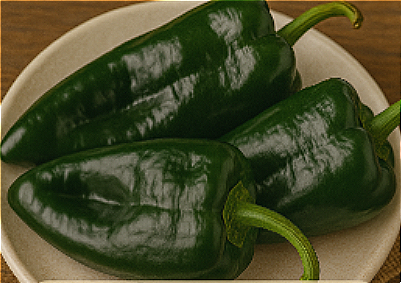
Common name: Poblano pepper
Source plant: Capsicum annuum L. (family Solanaceae)
Kingdom: Plantae
Clade: Angiosperms
Clade: Eudicots
Order: Solanales
Family: Solanaceae
Genus: Capsicum
Species: Capsicum annuum L.
Note: Poblano is a Mexican chili pepper characterized by large, fleshy, cone-shaped fruits with low pungency and a rich, vegetal–aromatic flavour. When fully ripe it turns dark red; once dried it is known as ancho. It is one of the key chilies in traditional Mexican cuisine.
Cultivation and growing conditions of poblano chili pepper
Climate:
Prefers warm, temperate climates.
Sensitive to frost, especially at early growth stages.
Needs a relatively long growing season so fruits can fully develop and ripen.
Exposure:
Requires full sun (6–8 hours per day).
Shade reduces productivity and delays ripening.
Soil:
Thrives in fertile, deep, well-drained, medium-textured soils.
Ideal pH is slightly acidic to neutral (about 6–7).
Does not tolerate waterlogging, which favours root rot and other soil-borne diseases.
Watering:
Needs regular irrigation, especially during flowering and fruit enlargement.
Avoid strong alternation between drought and excess water, which can cause:
flower drop
fruit cracking
irregular fruit development
Slightly reduced irrigation in the final weeks supports more uniform ripening.
Temperature:
Optimal seed germination: 20–25 °C.
Optimal growth: 20–30 °C.
Temperatures below about 12–14 °C significantly slow growth.
Fertilization:
Requires a good supply of organic matter (compost or well-rotted manure).
Phosphorus and potassium support flowering, fruit set and fruit quality.
Nitrogen should be applied in moderation to avoid excessive vegetative growth at the expense of fruiting.
Crop management:
Early weed control is important during the initial growth period.
Mulching helps conserve soil moisture and limit weed competition.
Vigorous plants often benefit from light staking.
Light pinching can be used to enhance branching.
Harvest:
Poblanos are usually harvested green, when fruits are large, thick-walled and fleshy.
If left on the plant, they ripen to red, becoming more aromatic and slightly hotter.
Fully red fruits destined for drying become ancho chilies.
Propagation:
By seed, usually sown in protected seedbeds and later transplanted once outdoor temperatures are consistently mild.
Caloric value (per 100 g)
Fresh: ~20–30 kcal; carbs ~6 g, sugars ~2–4 g, fiber ~1–2 g, protein ~1 g, fat ~0.2 g.
Dried (whole/powder): ~250–320 kcal (solids concentrated).
Sodium naturally low.
Key constituents
Capsaicinoids (mainly capsaicin and dihydrocapsaicin) at low levels.
Carotenoids (capsanthin/capsorubin in red-ripe fruits), chlorophylls in green (prone to pheophytinization on cooking).
Vitamin C (high when fresh), provitamin A (from carotenoids), potassium; minor polyphenols.
Analytical markers: SHU, capsaicinoids by HPLC, color (Lab* or ASTA for powders), moisture/aw (dried).
Production process
Harvest at green or red maturity → sorting → fresh use: washing, grading, packing; dry use: low-temperature drying (air/sun/kiln) with aw control, optional light toasting → shipped whole/flakes/powder.
Roasted (culinary): char skin → peel → remove placenta/seeds → use.
Operate under GMP/HACCP with foreign-matter and pest control.
Sensory and technological properties
Gentle heat suits family-friendly dishes.
Aroma and natural sugars concentrate during drying; rehydration (15–30 min) restores flesh for sauces/moles.
Color sensitive to light/oxygen/pH; carotenoids oxidize, chlorophylls turn olive in acid/prolonged heat.
Food uses
Fresh: chiles rellenos, rajas con crema, green salsas, stews, grill/roast.
Dried (ancho/mulato): mole poblano, adobo, red salsas, marinades, rub/snack powders.
Typical dosages: powder 0.2–1.0%; rehydrated 5–15% in sauces; roasted to taste in fillings/sides (validate with pilot tests).
Nutrition and health
Low energy when fresh; vitamin C is heat-labile → prefer short cooks/some raw use to preserve it.
Capsaicin at moderate levels may irritate sensitive skin/mucosa.
Avoid unauthorized health claims.
Lipid profile
Total fat negligible; only trace SFA, MUFA, PUFA—no meaningful impact at culinary portions.
Health note: generally, relatively higher MUFA/PUFA vs SFA is favorable/neutral for blood lipids, but not material here.
Quality and specifications (typical topics)
Fresh: size, uniform color, firmness, freedom from defects (sunscald, molds); pesticide/metals within limits.
Dried/powder: moisture (≤10–12%), aw (≤0.60–0.65), pest-free, ASTA color, capsaicinoids by HPLC, compliant microbiology; control mycotoxins (aflatoxins/ochratoxin) and foreign matter.
Storage and shelf-life
Fresh: refrigerate 4–7 °C, high relative humidity; use within 7–10 days.
Dried/powder: cool/dry/dark in barrier packs; 12–24 months if protected; reclose to limit oxidation and aroma loss.
Apply FIFO.
Allergens and safety
Capsicum is not a major EU allergen; rare cross-reactions (e.g., latex–fruit syndrome).
Spicy dusts: use PPE in production; prevent cross-contact with other allergens.
Capsaicin is irritant: indicate heat level and recommend responsible use.
INCI functions in cosmetics
Listings: Capsicum Annuum Fruit Extract / Capsicum Annuum (Pepper) Extract.
Roles: rubefacient/warming, fragrance; mind pH and concentration (irritancy risk).
Troubleshooting
Tough/bitter skins after roasting: char and peel fully; remove seeds/placenta.
Flat ancho sauces: toast chiles briefly, rehydrate, and blend with strained soak liquid; balance with acid (vinegar/citrus), salt, and sweetness (raisins).
Mold in dried goods: verify aw and pack integrity; discard compromised product.
Dull color: reduce light/oxygen exposure; prefer fresher lots; add late in cooking.
Sustainability and supply chain
Annual crop suited to IPM; culls (cores/seeds) valorized for seed oil or feed.
In processing: manage effluents to BOD/COD targets; use recyclable packaging; traceability under GMP/HACCP.
Conclusion
Poblano delivers versatility and gentle heat, excellent fresh-roasted and as ancho in complex sauces. Tight control of quality, moisture/aw, and thermal handling ensures stable, repeatable performance in kitchens and industry.
Mini-glossary
SHU — Scoville heat units: pungency scale (poblano ~1,000–2,000).
HPLC — High-performance liquid chromatography: quantifies capsaicinoids and identity markers.
ASTA — American Spice Trade Association color: standardized color index for spices/chiles.
aw — Water activity: ≤0.60–0.65 in dried products limits microbial growth and molds.
SFA — Saturated fatty acids: excessive intake may raise LDL; trace here.
MUFA — Monounsaturated fatty acids (e.g., oleic): generally favorable/neutral; trace here.
PUFA — Polyunsaturated fatty acids (n-6/n-3): beneficial when balanced; trace here.
GMP/HACCP — Good Manufacturing Practice / Hazard Analysis and Critical Control Points: hygiene and preventive-safety frameworks with defined CCP.
BOD/COD — Biochemical/Chemical oxygen demand: indicators of effluent impact.
FIFO — First in, first out: stock rotation using the oldest lots first.

