



Fungo shiitake (shiitake mushroom; Lentinula edodes)
Descrizione
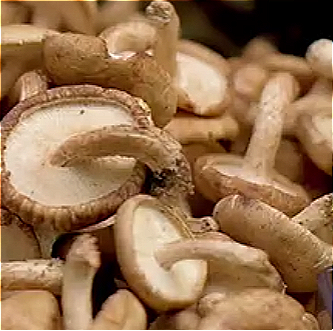
• Basidiomicete commestibile coltivato su tronchi di latifoglie o substrati sterilizzati (segatura arricchita). Cappello bruno, lamelle chiare, peduncolo corto.
• Profilo sensoriale: umami marcato, note fungine-terrose, legnose e leggermente agliacee; l’essiccazione intensifica 5′-nucleotidi e aroma.
• Formati: fresco, essiccato intero a cappelli, a scaglie, polvere, estratti (acquosi/idroalcolici).
Valore calorico (per 100 g di prodotto)
• Fresco: circa 30–40 kcal/100 g (acqua elevata).
• Secco: circa 250–320 kcal/100 g (concentrazione di solidi).
• Indicativo (fresco): proteine ~2–3 g, carboidrati ~6–8 g (con fibre ~2–3 g), grassi ~0,3–0,5 g; sodio naturale basso.
Principali sostanze contenute
• 5′-nucleotidi: 5′-GMP (guanosinato), sinergico con il glutammato → umami.
• β-glucani: lentinano (β-1,3;1,6-glucano) e altri polisaccaridi della parete.
• Aminoacidi liberi (glutammato, alanina), peptidi sapidi.
• Composti solforati volatili (contributo all’aroma), ergosterolo (precursore di vitamina D₂ se esposto a UV), L-ergotioneina.
• Micronutrienti: rame, selenio, niacina (B3), riboflavina (B2), acido pantotenico (B5).
• Marcatori: umidità/aw (per secco), 5′-GMP (HPLC), carica microbica (CFU), metalli.
Processo di produzione
• Coltivazione: inoculo di spawn su tronchi o blocchi di segatura sterilizzata → incubazione → induzione fruttificazione (T°, umidità, luce) → raccolta.
• Essiccazione: aria calda o liofilizzazione → selezione/criblaggio → confezionamento barriera; per estratti: decozione (acqua calda), filtrazione, concentrazione e spray-drying/polverizzazione.
• Controlli sotto GMP/HACCP: corpi estranei, umidità, metalli/pesticidi, microbiologia.
Proprietà sensoriali e tecnologiche
• Aumenta umami e rotondità; il secco apporta più 5′-GMP e aromi “arrosto”.
• Reidratazione del secco rilascia estratto ricco: l’acqua di ammollo è utilizzabile come brodo.
• Contribuisce colore ambrato alle preparazioni; sinergie con soia, kombu, pomodoro, carni bianche.
Impieghi alimentari
• Zuppe/ramen, risotti, salse e fondi, ripieni, ragù vegetali, condimenti per snack; polvere come esaltatore naturale (umami booster).
• Dosaggi tipici: polvere 0,1–0,6%; estratto 0,05–0,30%; secco reidratato secondo resa (tenore di solidi/tempo di ammollo).
Nutrizione e salute
• Basso apporto calorico da fresco; fibre e β-glucani contribuiscono al saziante.
• Alcuni soggetti possono sviluppare dermatite da shiitake (rash flagellato) dopo consumo crudo o poco cotto (associata a lentinano): cuocere adeguatamente.
• Polioli (es. mannitolo) possono dare FODMAP in sensibili; evitare claim salutistici non autorizzati.
• Vitamina D₂ aumentabile mediante esposizione UV del fungo post-raccolta.
Profilo dei grassi
• Grassi totali bassi; pattern prevalente insaturo (MUFA/PUFA) con SFA minori; impatto nutrizionale trascurabile alle dosi d’uso.
• Nota salute: una quota relativamente maggiore di MUFA/PUFA rispetto agli SFA è in genere favorevole/neutrale per i lipidi ematici.
Qualità e specifiche (temi tipici)
• Umidità (secco tipicamente ≤12–13%), aw, pezzatura/granulometria, carica microbica (TVC, lieviti/muffe), metalli pesanti (Pb, Cd), pesticidi.
• Autenticità: assenza di spezie/coloranti aggiunti; assenza di solfiti se non dichiarati.
• Sensoriale: assenza di muffa, irrancidimento, odori terrosi sgradevoli.
Conservazione e shelf-life
• Secco: al fresco/asciutto, al riparo da luce/odori; chiudere bene (rischio caking). Shelf-life tipica 18–24 mesi.
• Fresco: refrigerato (0–4 °C), consumare in 3–5 giorni; evitare condensa.
• Applicare FIFO e imballi barriera.
Allergeni e sicurezza
• Non è allergene maggiore UE, ma può causare reazioni cutanee o GI in predisposti.
• Cottura consigliata per inattivare fattori termolabili e migliorare digeribilità.
• In produzione: DPI contro polveri, prevenire cross-contamination.
Funzioni INCI in cosmesi
• Denominazioni: Lentinus Edodes Extract / Lentinula Edodes (Shiitake) Extract.
• Ruoli: antioxidant/skin conditioning (apporto ergotioneina/polisaccaridi); rispettare buone pratiche e limiti d’uso.
Troubleshooting
• Aroma debole: preferire secco di qualità o polvere; prolungare ammollo (20–40 min) e usare il liquido.
• Note amare: sovraestrazione/ossidazione → ridurre tempi/temperatura, filtrare.
• Torbidità eccessiva in brodi chiari: chiarifica/filtrazione fine.
• Muffe nel secco: migliorare aw/imballo, usare essiccanti.
Sostenibilità e filiera
• Coltivazione su sottoprodotti legnosi (segatura) → upcycling; il substrato esausto è compostabile.
• Reflui con carico BOD/COD moderato da gestire; preferire imballi riciclabili e fornitori tracciati (GMP/HACCP).
Conclusione
Lo shiitake è un potente vettore di umami e complessità aromatica. Con materia prima di qualità, corretta reidratazione/cottura e adeguata standardizzazione (5′-GMP, umidità, microbiologia), offre prestazioni stabili in zuppe, salse e applicazioni gastronomiche moderne.
Mini-glossario
• 5′-GMP — 5′-guanosinato: nucleotide sapido che potenzia il glutammato (umami).
• UV — ultravioletto: l’esposizione post-raccolta può aumentare vitamina D₂ (da ergosterolo).
• CFU — colony-forming units: unità formanti colonia; misura di carica microbica.
• SFA — grassi saturi: in eccesso possono aumentare LDL; negli shiitake sono bassi.
• MUFA — grassi monoinsaturi (es. oleico): in genere favorevoli/neutrali per i lipidi ematici.
• PUFA — grassi polinsaturi (n-6/n-3): benefici se bilanciati; quantità basse nello shiitake.
• ALA — acido α-linolenico (n-3): precursore di EPA/DHA; conversione umana limitata.
• EPA/DHA — n-3 a lunga catena: positivi per il profilo cardiometabolico; irrilevanti nei funghi.
• MCT — trigliceridi a media catena: non caratteristici dei funghi.
• GMP/HACCP — good manufacturing practice / hazard analysis and critical control points: quadri igienico-preventivi con CCP definiti.
• BOD/COD — domanda biochimica/chimica di ossigeno: indicatori dell’impatto dei reflui.
• FIFO — first in, first out: rotazione scorte che usa prima i lotti più vecchi.

