



Semi di sedano (Apium graveolens L.; fam. Apiaceae)
Descrizione
• Spezia ottenuta dai semi maturi ed essiccati di Apium graveolens, interi o macinati (fine/grossolana) e usata anche per produrre sale al sedano e olio essenziale.
• Profilo sensoriale aromatico, verde–erbaceo, speziato, con note terpeniche e fondo amaricante; intensità elevata a basse dosi.
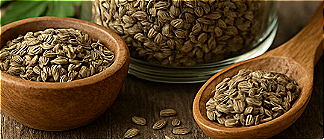
• Aspetto: semi piccoli, bruno–olivastri, con solchi longitudinali; polvere di colore bruno–giallastro.
Valore calorico (per 100 g di prodotto)
• Tipicamente ~380–420 kcal/100 g (varia per umidità e grado di macinazione).
• Indicativo: carboidrati ~30–45 g, proteine ~15–20 g, grassi ~20–30 g, fibre ~10–15 g; sodio naturalmente basso.
Principali sostanze contenute
• Olio essenziale (≈ 1,5–3,0 %): monoterpeni (limonene), sesquiterpeni (β-selinene), ftalidi (sedanolide/sedanenolide) responsabili del carattere “sedano”.
• Polifenoli e flavonoidi (derivati dell’apigenina e apiina).
• Furanocumarine (es. bergaptene/psoraleni) in tracce variabili → potenziale fotosensibilizzazione in estratti concentrati.
• Olio fisso (trigliceridi) con quota prevalente di MUFA e PUFA; minerali (potassio) e fibre.
Processo di produzione
• Raccolta delle ombrelle mature → essiccazione controllata → battitura/pulizia (selezione, setacciatura, deferrizzazione).
• Vaporizzazione/trattamenti di sanitizzazione per riduzione carica microbica.
• Confezionamento in imballi barriera; eventuale macinazione a specifica granulometrica o distillazione per l’olio essenziale.
• Controlli in GMP/HACCP.
Proprietà sensoriali e tecnologiche
• Aroma intenso e persistente; piccola dose conferisce forte caratterizzazione.
• Funzionalità: eccellente in decapaggio, salamoie e rub; gli ftalidi apportano note umami-speziate e mascherano leggere note ossidative.
• Solubilità: componenti volatili lipofili → migliore resa in fasi grasse/alcoliche o dopo blooming in olio.
Impieghi alimentari
• Pickles, salamoie, salse e condimenti (Bloody Mary con sale al sedano), mix spezie (curry, ras el hanout, ecc.).
• Prodotti da forno salati (pane di segale), insalate di patate/cole slaw, zuppe, carni e legumi.
• Dosaggi tipici: 0,05–0,5 % (semi macinati) o q.b.; valutare prove pilota per controllare l’amaro.
Nutrizione e salute
• Fonte di fibre e fitocomposti aromatici; apporto calorico rilevante solo a dosi elevate (non usuali).
• Allergene UE: sedano → obbligo di dichiarazione; possibili reazioni in soggetti sensibili e cross–reattività.
• Le furanocumarine possono contribuire a fotosensibilizzazione (soprattutto in estratti/oli): prudenza nell’uso concentrato; evitare claim salutistici non autorizzati.
Profilo dei grassi (olio fisso dei semi)
• SFA (grassi saturi) ~10–15 % (palmitico/stearico) — da moderare in generale.
• MUFA (grassi monoinsaturi) ~50–70 % (prevalenza di oleico e petroselinico) — in genere favorevoli/neutrali per il profilo lipidico.
• PUFA (grassi polinsaturi) ~15–30 % (linoleico n-6 con ALA n-3 in tracce) — benefici se bilanciati vs n-6.
• TFA/MCT: solo tracce non significative ai normali consumi.
Qualità e specifiche (temi tipici)
• Umidità, purezza (assenza di materiali estranei), granulometria (se macinato), olio essenziale %, colore/odore.
• Microbiologia (TVC, lieviti/muffe), metalli/pesticidi entro limiti; controllo micotossine nelle spezie.
• Possibile monitoraggio furanocumarine per estratti/oli.
Conservazione e shelf-life
• Conservare al fresco, asciutto, al riparo da luce/ossigeno; richiudere bene dopo l’uso.
• Semi interi: 18–24 mesi; macinati: 12–18 mesi (più sensibili a perdita di aroma/irrancidimento).
• Evitare umidità (rischio caking); applicare FIFO.
Allergeni e sicurezza
• Sedano = allergene maggiore UE (inclusi semi e derivati: oli/estratti).
• In oli/estratti: attenzione a fotosensibilizzanti (furanocumarine) e possibili interazioni con farmaci fotosensibilizzanti.
• Gestione igienica e tracciabilità secondo HACCP; dichiarare eventuali antiagglomeranti.
Funzioni INCI in cosmesi
• Voci tipiche: Apium Graveolens (Celery) Seed Oil/Extract/Powder.
• Ruoli: fragrance/aroma, masking, leggero skin conditioning; per l’olio essenziale attenersi alle linee guida IFRA (furanocumarine).
Troubleshooting
• Aroma debole (lotti vecchi/luce): usare imballi barriera, ridurre O₂, ruotare (FIFO).
• Amaro eccessivo: overdose o macinazione troppo fine → ridurre dose, usare semi interi tostati leggermente.
• Caking: umidità → essiccanti nel contenitore; aggiungere antiagglomerante consentito nelle miscele.
• Infestazioni da insetti delle spezie: migliorare pulizia, setacciatura e stoccaggio a bassa T°.
Sostenibilità e filiera
• Possibile upcycling di scarti per estrazioni (olio, aromi); gestione reflui verso target BOD/COD.
• Imballaggi riciclabili; audit e tracciabilità fornitori in GMP/HACCP.
• Coltivazioni con rotazioni Apiaceae a favore della biodiversità e del suolo.
Conclusione
I semi di sedano offrono un impatto aromatico elevato e una versatilità notevole in salamoie, salse e miscele spezie. Per risultati puliti e costanti, curare qualità e freschezza, gestire dose e amaro, proteggere da luce/ossigeno e rispettare l’etichettatura allergeni.
Mini-glossario
• SFA — Grassi saturi: da moderare; eccessi possono aumentare LDL.
• MUFA — Grassi monoinsaturi (es. oleico/petroselinico): in genere favorevoli o neutri per i lipidi ematici.
• PUFA — Grassi polinsaturi (n-6/n-3): utili se bilanciati; ALA è l’n-3 vegetale in tracce nei semi di sedano.
• ALA — Acido α-linolenico (n-3): precursore di EPA/DHA; conversione umana limitata.
• TFA — Grassi trans: presenti solo in tracce naturali; evitare quelli industriali.
• MCT — Trigliceridi a media catena: non rilevanti nei semi di sedano.
• aw — Attività dell’acqua: più è bassa, maggiore è la stabilità microbica.
• GMP — Good manufacturing practice: buone pratiche per igiene e coerenza di processo.
• HACCP — Hazard analysis and critical control points: sistema preventivo con CCP definiti.
• IFRA — International fragrance association: emette standard per la sicurezza degli ingredienti fragranti.
• GC–MS — Gas-cromatografia/spettrometria di massa: profila i volatili (olio essenziale).
• HPLC — Cromatografia liquida ad alta prestazione: quantifica marker (es. furanocumarine, flavonoidi).
• BOD/COD — Domanda biochimica/chimica di ossigeno: indicatori dell’impatto dei reflui.
• FIFO — First in, first out: rotazione scorte che usa per primi i lotti più vecchi.
Studi
I suoi semi svolgono azione antinfiammatoria ed effetti positivi sull'ipertensione arteriosa (1).
I risultati di questo studio confermano che i composti fenolici e i flavonoidi presenti nelle foglie del sedano, quali apigenina e luteolina, esercitano attività antiossidante (2).
Uno studio di 8 mesi con somministrazione di estratto di foglie di sedano ha dimostrato di ridurre i livelli di glucosio nel sangue, tuttavia è stata riscontrata una mancanza di associazione tra i livelli di glucosio nel sangue e i livelli plasmatici di insulina in anziani pre-diabetici (3).
Una miscela di sedano ed ajowan ha dimostrato efficacità nel ridurre la frequenza ed i sintomi della dispepsia (4).
Allergia
Il sedano è tra i principali alimenti che possono innescare reazioni allergiche (5).

