Lemon verbena (Aloysia citrodora Paláu)
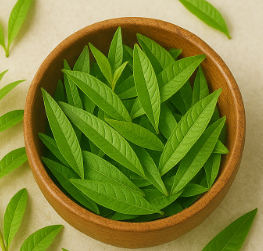
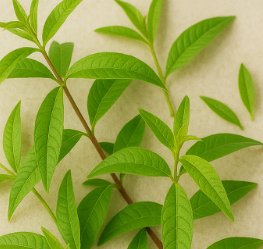
Lemon verbena is a deciduous shrub species belonging to the Verbenaceae family, cultivated and valued in many regions with warm temperate and Mediterranean climates. It shows a bushy growth habit, with flexible branches and opposite, lanceolate leaves of bright green colour, with a slightly rough surface. When crushed, the leaves release a characteristic lemon-like aroma, due to specific volatile compounds. The flowers are small, whitish to pale lilac, and are grouped in terminal panicle-like inflorescences.
From a cultivation standpoint, lemon verbena prefers full sun exposure, mild climates and well-drained soils, ranging from medium-textured to slightly sandy. Once established, it can tolerate short periods of water deficit, but it is sensitive to severe or prolonged frosts, which can damage the aerial parts. Regular pruning supports the production of new shoots and helps maintain a compact crown. Leaf harvesting is usually carried out in spring and summer, when the aromatic content tends to be higher. The composition and intensity of the aroma are influenced by genotype, light exposure, soil fertility and climatic conditions.
Chemically, the leaves of lemon verbena contain a relevant fraction of water, essential oils and terpenoid compounds responsible for the aroma, primarily citral, along with limonene, geraniol and other minor components. Small amounts of flavonoids, organic acids and trace levels of minerals such as potassium and calcium are also present. The concentration and ratio of these constituents depend on genetic factors, leaf maturity, soil characteristics and crop management practices.
From a food and technological perspective, lemon verbena is used mainly as an aromatising ingredient in herbal infusions, beverages, syrups, desserts and other preparations, thanks to its distinctive fresh lemon scent. Fresh or dried leaves can also be employed as an aromatic component in culinary applications and selected processed products. In the herbal and technical sectors, extracts and essential oil fractions may be incorporated into formulations of plant-based products with an aromatic function.
The quality assessment of lemon verbena focuses on aroma intensity and purity, colour uniformity of the leaves, essential oil content, integrity of the leaf tissues, and absence of defects or contamination. Careful attention to harvest stage, handling and drying procedures is essential to preserve the natural fragrance and the technological properties of the leaves.
Botanical classification (APG IV system)
Common name: Lemon verbena
Botanical name: Aloysia citrodora Paláu
Kingdom: Plantae
Clade: Angiosperms → Eudicots → Asterids
Order: Lamiales
Family: Verbenaceae
Genus: Aloysia
Species: Aloysia citrodora Paláu
Indicative nutritional values per 100 g (dried leaves)
| Component | Approx. value per 100 g* |
|---|
| Energy | ~ 320–350 kcal |
| Total carbohydrates | ~ 60–70 g |
| — of which sugars | ~ 4–6 g |
| Dietary fibre | ~ 35–45 g |
| Proteins | ~ 8–12 g |
| Total fats | ~ 3–5 g |
| — of which saturated fatty acids (SFA) | part of total lipid fraction |
| Sodium | very low |
| Potassium | ~ 400–500 mg |
* Values refer to dried leaves and may vary depending on cultivar, agricultural conditions and degree of dehydration.
Mini-glossary of acronyms
SFA = Saturated fatty acids. When they prevail over unsaturated fats in the diet, they are generally considered less favourable for cardiovascular health.
MUFA = Monounsaturated fatty acids. When present, they are generally regarded as more favourable than saturated fats.
PUFA = Polyunsaturated fatty acids. Include omega-6 and omega-3; essential in small amounts and involved in cellular structure and inflammatory balance.
Plant characteristics
Habit: Perennial semi-woody shrub (1.5–3 m tall) with erect, flexible branches, light foliage, and strong lemon scent.
Leaves: Opposite or whorled in threes, lanceolate (5–8 cm), finely serrated, light green; emit a strong lemon aroma when crushed.
Flowers: Small, white to pale lilac, grouped in slender terminal spikes; blooming period June–September.
Fruits: Small ovoid nutlets, each containing a single seed.
Roots: Taprooted and branched, adapted to well-drained soils.
Fragrance: Fresh, citrusy, sweet, and persistent — similar to lemon peel.
Chemical composition (main constituents of leaves and essential oil)
Essential oil (0.2–0.5%): citral (neral and geranial), limonene, geraniol, 1,8-cineole, nerol, and β-caryophyllene.
Flavonoids: luteolin, apigenin, diosmetin — with antioxidant and soothing effects.
Iridoids: verbenalin, hastatoside — contribute to mild sedative and anti-inflammatory action.
Phenylpropanoids: eugenol — provides gentle antispasmodic effects.
Triterpenes and tannins: confer protective and tonic properties.
Cultivation and growing conditions
Climate: Prefers mild temperate climates; sensitive to frost and requires protection in winter.
Exposure: Full sun — essential for optimal essential oil production.
Soil: Light, well-drained, neutral to slightly alkaline; avoid waterlogging.
Irrigation: Regular but moderate; tolerates short dry periods.
Pruning: After flowering to encourage new shoots and maintain compact shape.
Propagation: By summer cuttings or root division in spring.
Pests and diseases: Generally resistant; may occasionally attract aphids or scale insects.
Uses and benefits (traditional and supported by preliminary scientific evidence)
Digestive and carminative: Promotes digestion and relieves bloating or mild intestinal spasms.
Calming and relaxing: Helps reduce nervous tension, mild anxiety, and insomnia.
Antioxidant and anti-inflammatory: Due to flavonoids and phenolic compounds.
Refreshing and tonic: Common ingredient in herbal teas and aromatic beverages.
Antispasmodic: Eases mild abdominal or muscular cramps.
Preliminary studies support the sedative and antioxidant properties of lemon verbena, though more clinical evidence is needed to confirm its therapeutic effects.
Applications
Herbal medicine: Infusions, dry or fluid extracts, essential oil; used as digestive and relaxing remedy.
Culinary: Fresh or dried leaves to flavor desserts, teas, jams, and beverages.
Cosmetics: Oils and extracts used in perfumes, lotions, and creams for their toning and refreshing effects.
Aromatherapy: Essential oil used for stress relief and to promote restful sleep.
Ornamental: Decorative aromatic shrub for gardens and terraces.
Harvesting and processing
Harvesting: Leaves and flowering tops collected at full bloom in summer.
Drying: In shade, in a dry, ventilated area to preserve aroma and active compounds.
Storage: In airtight containers, away from light and humidity.
Extraction: Steam distillation of leaves for essential oil production.
Environmental considerations
Aloysia citrodora is a low-impact crop suitable for poor and arid soils. It attracts bees and other pollinators, thus supporting local biodiversity. When essential oil is extracted using sustainable methods, it represents a renewable natural resource with high aromatic value.
Safety, contraindications, interactions
Generally regarded as safe at traditional doses.
Side effects: Rare; may cause mild gastric irritation in sensitive individuals.
Essential oil: Should always be diluted; undiluted use may irritate skin or mucous membranes.
Pregnancy and lactation: Moderate culinary use is considered safe; avoid concentrated preparations.
Interactions: No significant drug interactions reported.
Common preparations (general, non-therapeutic use)
Infusion: 1–2 g of dried leaves in 200 ml of hot water; steep 5–10 minutes.
Relaxing tea: Combined with Melissa officinalis and Tilia spp..
Essential oil: 2–3 drops in a diffuser or diluted in carrier oil for relaxing massages.
Culinary use: Fresh leaves to flavor drinks, sorbets, or liqueurs.
References__________________________________________________________________________
Rashid HM, Mahmod AI, Afifi FU, Talib WH. Antioxidant and Antiproliferation Activities of Lemon Verbena (Aloysia citrodora): An In Vitro and In Vivo Study. Plants (Basel). 2022 Mar 16;11(6):785. doi: 10.3390/plants11060785.
Abstract. This research aimed to study the chemical composition of Aloysia citrodora methanolic extract and its biological activities as an antioxidant, and its antibacterial, antifungal and anti-inflammatory activities based on four bioclimatic collection stages. The contents of total phenols, total flavonoids and total tannins were determined. Nine phenolic compounds were identified by LC-DAD-ESI-MS/MS. The major compound was acteoside, a phenylpropanoid which represented about 80% of the methanolic fraction in the various regions. The antioxidant activities of different locations were measured by different analytical assays, such as DPPH, ABTS and iron reducing power. The results showed that phenolic compounds and antioxidant activities varied with climatic and environmental factors. Moreover, there was a significant dependency between regions and biological activities. The use of a principal component analysis showed that there was a close relationship among phenylpropanoids, phenolic compounds and the studied biological activities.
Tammar S, Salem N, Aidi Wannes W, Limam H, Bourgou S, Fares N, Dakhlaoui S, Hammami M, Khammassi S, Re GD, Hessini K, Msaada K. Chemometric Profiling and Bioactivity of Verbena (Aloysia citrodora) Methanolic Extract from Four Localities in Tunisia. Foods. 2021 Nov 24;10(12):2912. doi: 10.3390/foods10122912.
Abstract. This research aimed to study the chemical composition of Aloysia citrodora methanolic extract and its biological activities as an antioxidant, and its antibacterial, antifungal and anti-inflammatory activities based on four bioclimatic collection stages. The contents of total phenols, total flavonoids and total tannins were determined. Nine phenolic compounds were identified by LC-DAD-ESI-MS/MS. The major compound was acteoside, a phenylpropanoid which represented about 80% of the methanolic fraction in the various regions. The antioxidant activities of different locations were measured by different analytical assays, such as DPPH, ABTS and iron reducing power. The results showed that phenolic compounds and antioxidant activities varied with climatic and environmental factors. Moreover, there was a significant dependency between regions and biological activities. The use of a principal component analysis showed that there was a close relationship among phenylpropanoids, phenolic compounds and the studied biological activities.
Salama Y, Jaradat N, Hattori K, Heissig B. Aloysia Citrodora Essential Oil Inhibits Melanoma Cell Growth and Migration by Targeting HB-EGF-EGFR Signaling. Int J Mol Sci. 2021 Jul 29;22(15):8151. doi: 10.3390/ijms22158151.
Abstract. Patients diagnosed with melanoma have a poor prognosis due to regional invasion and metastases. The receptor tyrosine kinase epidermal growth factor receptor (EGFR) is found in a subtype of melanoma with a poor prognosis and contributes to drug resistance. Aloysia citrodora essential oil (ALOC-EO) possesses an antitumor effect. Understanding signaling pathways that contribute to the antitumor of ALOC-EO is important to identify novel tumor types that can be targeted by ALOC-EO. Here, we investigated the effects of ALOC-EO on melanoma growth and tumor cell migration. ALOC-EO blocked melanoma growth in vitro and impaired primary tumor cell growth in vivo. Mechanistically, ALOC-EO blocked heparin-binding-epidermal growth factor (HB-EGF)-induced EGFR signaling and suppressed ERK1/2 phosphorylation. Myelosuppressive drugs upregulated HB-EGF and EGFR expression in melanoma cells. Cotreatment of myelosuppressive drugs with ALOC-EO improved the antitumor activity and inhibited the expression of matrix metalloproteinase-7 and -9 and a disintegrin and metalloproteinase domain-containing protein9. In summary, our study demonstrates that ALOC-EO blocks EGFR and ERK1/2 signaling, with preclinical efficacy as a monotherapy or in combination with myelosuppressive drugs in melanoma.
Shirzad H, Alirezalu A, Alirezalu K, Yaghoubi M, Ghorbani B, Pateiro M, Lorenzo JM. Effect of Aloysia citrodora Essential Oil on Biochemicals, Antioxidant Characteristics, and Shelf Life of Strawberry Fruit during Storage. Metabolites. 2021 Apr 21;11(5):256. doi: 10.3390/metabo11050256.
Abstract. Strawberry fruits are highly susceptible to cold burning, resulting in low storage periods at low temperatures. Plant extracts or essential oils (EOs) can potentially be used as preservatives in fruits throughout the refrigerated period. In the present study, the biochemicals, antioxidant characteristics, and shelf life of treated strawberries with Aloysia citrodora essential oil (ACEOs) were evaluated during keeping time. The treatments were produced as follows: T1, control; T2, 250 ppm ACEOs; T3, 500 ppm ACEOs; and T4, 750 ppm ACEOs. Total soluble solids (TSS), weight loss, titratable acidity (TA), antioxidant activity (DPPH assay), total phenolic (TPC), flavonoid and anthocyanin contents (TFC), and enzymes activity (peroxidase and ascorbate peroxidase) were evaluated during the refrigerated period (5 °C with relative humidity of 85-90% for 20 days). The results revealed that weight loss and TA were reduced in all treatments during storage, being that the rates were lower in samples treated with ACEOs. TPC, TFC, TSS, antioxidant, and enzymes activity were higher in treated fruits than control.
Taboada T, Alvarenga NL, Galeano AK, Arrúa WJ, Campuzano-Bublitz MA, Kennedy ML. In Vivo Antidepressant-Like Effect Assessment of Two Aloysia Species in Mice and LCMS Chemical Characterization of Ethanol Extract. Molecules. 2022 Nov 13;27(22):7828. doi: 10.3390/molecules27227828.
Abstract. Medicinal plants belonging to the Verbenaceae family demonstrated antidepressant effects in preclinical studies. Depression is one of the largest contributors to the global health burden of all countries. Plants from the Aloysia genus are traditionally used for affective disorders, and some of them have proven anxiolytic and antidepressant activity. The aim of this work was to evaluate the antidepressant effect of the ethanolic extract of Aloysia gratissima var. gratissima (Agg) and Aloysia virgata var. platyphylla (Avp) in mice. A tail suspension test (TST) and forced swimming test (FST) were conducted after three doses in a period of 24 h and after 7 days of treatment. Imipramine was used as an antidepressant drug. The main results demonstrated that Agg extract reduced the immobility time in mice treated orally for 7 consecutive days when compared to the control group (reduced by about 77%, imipramine 70%). Animals treated with three doses of Avp in a 24-h period had reduced immobility time in the FST (60%), and after 7 days of treatment the reduction was greater (Avp 50, 100, and 200 about 85%; Avp 400, 96.5%; p < 0.0001, imipramine, 77%). LCMS analysis showed the presence of verbascoside, hoffmaniaketone, and hoffmaniaketone acetate in both, A. virgata var. platyphylla and A. gratissima var gratissima. The flavonoids nepetin and 6-hydroxyluteolin were also found in Agg. Both tested extracts demonstrated promising antidepressant-like activity in mice.
Cadenillas LF, Hernandez C, Bailly S, Billerach G, Durrieu V, Bailly JD. Role of Polyphenols from the Aqueous Extract of Aloysia citrodora in the Inhibition of Aflatoxin B1 Synthesis in Aspergillus flavus. Molecules. 2023 Jun 30;28(13):5123. doi: 10.3390/molecules28135123.
Abstract. Aflatoxin B1 (AFB1) is a mycotoxin considered a potent carcinogen for humans that contaminates a wide range of crops. Various strategies have been established to reduce or block the synthesis of AFB1 in food and feed. The use of aqueous extracts derived from plants with high antioxidant activity has been a subject of study in recent years due to their efficacy in inhibiting AFB1. In this study, we assessed the effect of Aloysia citrodora aqueous extract on Aspergillus flavus growth and on AFB1 production. A bio-guided fractionation followed by High Performance Liquid Chromatography (HPLC) and Mass spectrometry analysis of the active fraction were applied to identify the candidate molecules responsible for the dose-effect inhibition of AFB1 synthesis. Our results revealed that polyphenols are the molecules implicated in AFB1 inhibition, achieving almost a total inhibition of the toxin production (99%). We identified luteolin-7-diglucuronide as one of the main constituents in A. citrodora extract, and demonstrated that it is able to inhibit, by itself, AFB1 production by 57%. This is the first study demonstrating the anti-Aflatoxin B1 effect of this molecule, while other polyphenols surely intervene in A. citrodora anti-AFB1 activity.
Mohammadhosseini M, Frezza C, Venditti A, Mahdavi B. An overview of the genus Aloysia Paláu (Verbenaceae): Essential oil composition, ethnobotany and biological activities. Nat Prod Res. 2022 Oct;36(19):5091-5107. doi: 10.1080/14786419.2021.1907576.
Abstract. Aloysia Paláu is an important herbal genus from the Verbenaceae family and possesses numerous remedial properties in the folk medicine of Asian, European, and, in particular, South American countries. Only a few reports have discussed some phytochemical characteristics associated with Aloysia species. Right the lack of an exhaustive report prompted us to organize this review article. Accordingly, besides the ethnobotanical knowledge of Aloysia species, their essential oil profiles, phytochemistry of the polar isolated fractions, and the relevant biological activities are discussed in detail.