Passiflora incarnata L. (Passiflora, Fiore della passione)
Descrizione
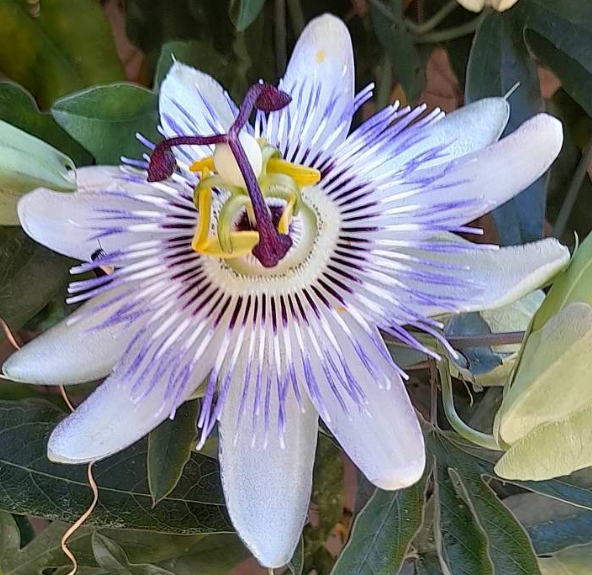
Passiflora incarnata (famiglia Passifloraceae), nota come passiflora o fiore della passione, è una pianta rampicante perenne originaria del sud-est degli Stati Uniti e oggi coltivata in molte regioni temperate e subtropicali. È apprezzata per i suoi fiori spettacolari, complessi e aromatici, con corone di filamenti violacei, e per i suoi frutti eduli. In fitoterapia, le parti aeree sono impiegate per le loro proprietà sedative, ansiolitiche e spasmolitiche. La pianta è simbolo di calma e armonia, largamente usata come rimedio naturale contro l’insonnia e lo stress.
Nome comune: Maracuja (frutto della passione)
Pianta di origine: Passiflora edulis Sims
Regno: Plantae
Clade: Angiosperms
Ordine: Malpighiales
Famiglia: Passifloraceae
Genere: Passiflora
Specie: P. incarnata
Coltivazione e condizioni di crescita
Clima:
La maracuja predilige un clima tropicale o subtropicale, caldo e umido. Non sopporta temperature inferiori a 0 °C. Cresce al meglio in regioni con estati lunghe e calde e inverni miti. In ambiente mediterraneo può essere coltivata nelle zone più calde e riparate.
Esposizione:
Richiede piena esposizione solare per sviluppare una fioritura intensa e una fruttificazione regolare. La luce diretta aumenta la concentrazione zuccherina e aromatica del frutto. In aree molto calde può beneficiare di una leggera ombreggiatura nelle ore più afose.
Terreno:
Predilige terreni ben drenati, ricchi di sostanza organica e di medio impasto. Il pH ottimale è compreso tra 6,0 e 7,0. I ristagni idrici devono essere evitati perché favoriscono marciumi radicali e malattie fungine.
Irrigazione:
Ha esigenze idriche elevate, specialmente durante fioritura e sviluppo dei frutti. Richiede un’irrigazione regolare, mantenendo il terreno umido ma mai saturato. L’irrigazione irregolare può provocare caduta dei fiori e riduzione della produzione.
Temperatura:
Crescita ideale: 20–28 °C
Sensibile al freddo sotto i 5 °C
Soffre temperature eccessive sopra i 35 °C, che possono ridurre fioritura e allegagione
Concimazione:
La maracuja risponde bene a una fertilizzazione equilibrata:
Azoto: favorisce la vegetazione, ma in eccesso riduce la fruttificazione.
Fosforo: utile per radici e fiori.
Potassio: essenziale per lo sviluppo e la qualità dei frutti.
Un apporto di sostanza organica migliora la struttura del terreno e la capacità idrica.
Cure colturali:
Necessita di tutoraggio o supporti di arrampicata (graticci, pergolati, reti), essendo una pianta rampicante.
Potature leggere per favorire l’arieggiamento e stimolare la produzione di nuovi tralci fruttiferi.
Controllo di parassiti come afidi, cocciniglie e mosca della frutta.
Monitoraggio di malattie fungine, soprattutto in condizioni di elevata umidità.
Raccolta:
I frutti maturano quando assumono il colore caratteristico della varietà (giallo o viola) e iniziano a raggrinzire leggermente, segno che la polpa è divenuta più aromatica e zuccherina. La raccolta avviene in più riprese, poiché i frutti non maturano simultaneamente.
Moltiplicazione:
La maracuja si moltiplica per seme o per talea.
La semina richiede semi freschi o ben conservati, con germinazione lenta ma efficace.
La moltiplicazione per talea permette di mantenere fedeli le caratteristiche della pianta madre e velocizza l’entrata in produzione.
Il trapianto si effettua in primavera.
Caratteristiche della pianta
Portamento: pianta rampicante erbacea perenne, con fusti sottili e flessibili, provvisti di viticci ascellari per l’arrampicata; può raggiungere 6–9 m di lunghezza.
Foglie: alterne, trilobate, margine finemente dentato; verdi lucide sulla pagina superiore, più chiare inferiormente; lunghezza 6–12 cm.
Fiori: giugno–settembre; grandi (5–9 cm di diametro), bianchi o violacei, con una caratteristica corona di filamenti blu-porpora; molto ornamentali e leggermente profumati.
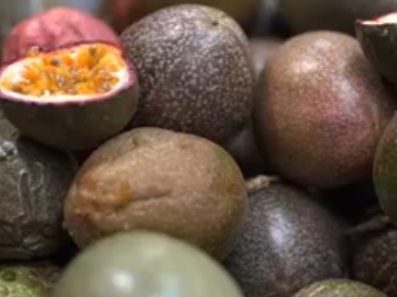
Frutti: bacche ovali giallo-arancio (chiamate “maypop”), contenenti numerosi semi immersi in una polpa gelatinosa e aromatica.
Radici: fascicolate e legnose, profonde e resistenti.
Longevità: perenne; richiede sostegni per crescere correttamente.
Composizione chimica (principali costituenti nelle parti aeree)
Flavonoidi: vitexina, isovitexina, orientina, apigenina, luteolina (responsabili dell’attività ansiolitica e sedativa).
Alcaloidi indolici: harmano, harmol, harmine, harmalina (tracce; potenziano l’effetto calmante).
Fitosteroli: β-sitosterolo, stigmasterolo.
Glicosidi e saponine: con effetto spasmolitico e rilassante della muscolatura liscia.
Mucillagini e acidi fenolici: lenitivi e antiossidanti.
Coltivazione e condizioni di crescita
Clima: preferisce climi temperato-caldi; resiste fino a –10 °C; necessita di esposizione soleggiata e protezione dai venti freddi.
Esposizione: pieno sole o mezz’ombra luminosa.
Suolo: fertile, sciolto, ben drenato; tollera anche terreni sabbiosi o leggermente argillosi.
Impianto: primavera; prevedere supporti verticali (reti o pergole).
Irrigazione: regolare nei primi anni; moderata in seguito, poiché tollera brevi periodi di siccità.
Potatura: annuale, dopo la fioritura, per stimolare nuovi germogli produttivi.
Parassiti e malattie: può essere colpita da afidi, cocciniglie e ragnetto rosso; sensibile ai ristagni idrici.
Usi e benefici (tradizionali e supportati da evidenze scientifiche preliminari)
Sedativa e ansiolitica: indicata per agitazione nervosa, insonnia lieve, tensione emotiva.
Spasmolitica: utile contro spasmi gastrointestinali e tensioni muscolari.
Lieve ipnotica: favorisce l’addormentamento senza effetti di dipendenza.
Antiossidante: i flavonoidi contrastano lo stress ossidativo.
Cardiotonica lieve: può contribuire alla regolazione del ritmo cardiaco in situazioni di ansia.
Le evidenze cliniche preliminari indicano un’efficacia moderata nel ridurre ansia e migliorare la qualità del sonno; tuttavia, l’uso resta di supporto e non sostitutivo delle terapie farmacologiche. Consultare un medico.
Applicazioni
Erboristeria: infusi, estratti secchi, tinture madri e capsule.
Fitoterapia moderna: combinazioni con Valeriana officinalis, Melissa officinalis e Tilia spp. per disturbi del sonno e ansia lieve.
Cosmetica: estratti calmanti in creme e tonici per pelli sensibili.
Ornamentale: pianta da giardino o da balcone per la bellezza dei fiori e la capacità di attrarre impollinatori.
Raccolta e lavorazione
Raccolta: parti aeree (fusti, foglie, fiori) durante la piena fioritura estiva.
Essiccazione: rapida all’ombra, in luogo ventilato, per conservare l’attività dei flavonoidi.
Conservazione: in contenitori ben chiusi, al riparo da luce e umidità.
Estrazione: macerazione idroalcolica o infusione per uso erboristico.
Considerazioni ambientali
La Passiflora incarnata è utile per la biodiversità, offrendo fiori nettariferi che attirano api e farfalle. È una pianta rustica e poco esigente, indicata per coltivazioni a basso impatto ambientale. Il frutto è commestibile e favorisce un uso completo della pianta, minimizzando gli scarti.
Sicurezza, controindicazioni, interazioni
Generalmente considerata sicura alle dosi erboristiche usuali.
Effetti collaterali: rari; in soggetti sensibili può causare lieve sonnolenza o vertigini.
Controindicazioni: evitare l’assunzione con farmaci sedativi, ansiolitici o ipnotici per possibile potenziamento dell’effetto.
Gravidanza/allattamento: sconsigliato l’uso prolungato senza parere medico.
Allergie: rare, legate a ipersensibilità individuale.
Preparazioni comuni (uso generale, non terapeutico)
Infuso: 1,5–2 g di parte aerea essiccata in 200 ml di acqua calda, 1–3 volte al giorno; preferibilmente la sera.
Tintura madre: 30–40 gocce in poca acqua, 2–3 volte al giorno.
Estratto secco: titolato in flavonoidi, 200–400 mg al giorno.
Combinazioni: con Valeriana e Melissa per sinergia rilassante.
Bibliografia__________________________________________________________________________
Akhondzadeh S, Naghavi HR, Vazirian M, Shayeganpour A, Rashidi H, Khani M. Passionflower in the treatment of generalized anxiety: a pilot double-blind randomized controlled trial with oxazepam. J Clin Pharm Ther. 2001 Oct;26(5):363-7. doi: 10.1046/j.1365-2710.2001.00367.x.
Abstract. Objective: Passionflower (Passiflora incarnata) is a folk remedy for anxiety. A double-blind randomized trial compared the efficacy of Passiflora incarnata extract with oxazepam in the treatment of generalized anxiety disorder. Methods: The study was performed on 36 out-patients diagnosed with GAD using DSM IV criteria. Patients were allocated in a random fashion: 18 to the Passiflora extract 45 drops/day plus placebo tablet group, and 18 to oxazepam 30 mg/day plus placebo drops for a 4-week trial. Results: Passiflora extract and oxazepam were effective in the treatment of generalized anxiety disorder. No significant difference was observed between the two protocols at the end of trial. Oxazepam showed a rapid onset of action. On the other hand, significantly more problems relating to impairment of job performance were encountered with subjects on oxazepam. Conclusion: The results suggest that Passiflora extract is an effective drug for the management of generalized anxiety disorder, and the low incidence of impairment of job performance with Passiflora extract compared to oxazepam is an advantage. A large-scale trial is justified.
Janda K, Wojtkowska K, Jakubczyk K, Antoniewicz J, Skonieczna-Żydecka K. Passiflora incarnata in Neuropsychiatric Disorders-A Systematic Review. Nutrients. 2020 Dec 19;12(12):3894. doi: 10.3390/nu12123894. P
Abstract. Background: Stress is a natural response of the body, induced by factors of a physical (hunger, thirst, and infection) and/or psychological (perceived threat, anxiety, or concern) nature. Chronic, long-term stress may cause problems with sleep, concentration, and memory, as well as affective disorders. The passionflower (Passiflora incarnata) is a perennial plant with documented therapeutic properties. The literature data suggest that the passionflower itself, as well as its preparations, helps reduce stress and can therefore be helpful in the treatment of insomnia, anxiety, and depression. The objective of this systematic review was to evaluate Passiflora incarnata in terms of its neuropsychiatric effects. Methods: The scientific databases PubMed, ClinTrials.gov, and Embase were searched up to 22 October 2019. The search identified randomized clinical trials describing the effects of Passiflora incarnata in neuropsychiatric disorders. Results: The systematic review included nine clinical trials. The duration of the studies included in the analysis varied widely, from one day up to 30 days. Study participants were no less than 18 years old. In each of the papers, the effects of passionflower were measured by using a number of different tests and scales. The majority of studies reported reduced anxiety levels following the administration of Passiflora incarnata preparations, with the effect less evident in people with mild anxiety symptoms. No adverse effects, including memory loss or collapse of psychometric functions, were observed. Conclusion: Passiflora incarnata may be helpful in treating some symptoms in neuropsychiatric patients.
Lee J, Jung HY, Lee SI, Choi JH, Kim SG. Effects of Passiflora incarnata Linnaeus on polysomnographic sleep parameters in subjects with insomnia disorder: a double-blind randomized placebo-controlled study. Int Clin Psychopharmacol. 2020 Jan;35(1):29-35. doi: 10.1097/YIC.0000000000000291.
Abstract. The purpose of the present double-blind randomized placebo-controlled clinical study was to investigate the effects of Passionflower on polysomnographic sleep parameters in subjects with insomnia disorder. A total number 110 adult participants (mean age = 40.47 ± 11.68, Female = 53.6%) met the inclusion criteria of insomnia disorder according to the DSM-5 (Diagnostic and Statistical Manual of Mental Disorders). After randomization, patients received either the Passionflower extract or the placebo for 2 weeks. Patients underwent an overnight polysomnography and completed sleep diaries, Insomnia Severity Index, and Pittsburgh Sleep Quality Index. Within group comparisons were analyzed with paired t-tests or Wilcoxon's signed rank tests, and between-group comparisons were analyzed with independent t-tests or Mann-Whitney U Tests, as appropriate. Total sleep time (TST) was significantly increased in the Passionflower group compared with placebo (Passionflower vs placebo, 23.05 ± 54.26 vs -0.16 ± 53.12; P = 0.049). Sleep efficiency and wake after sleep onset (WASO) significantly improved after 2 weeks in the Passionflower group but there was no difference compared with the placebo group. The current study demonstrated the positive effects of Passionflower on objective sleep parameters including TST on polysomnography in adults with insomnia disorder. Further study is needed to investigate the clinical efficacy of Passionflower on insomnia.
Mourvaki E, Gizzi S, Rossi R, Rufini S. Passionflower fruit-a "new" source of lycopene? J Med Food. 2005 Spring;8(1):104-6. doi: 10.1089/jmf.2005.8.104.
Abstract. Many population studies have established a link between dietary intake of the carotenoid antioxidant lycopene and a reduced risk of chronic diseases. Unlike most carotenoids, lycopene occurs in a few places in the diet. Besides tomatoes and tomato products, major sources of lycopene, other lycopene-rich foods include watermelon, pink grapefruit, pink guava, and papaya. Dried apricots and pureed rosehips contain relatively large amounts, too. In our study we found that passionflower fruit (skin and pericarp) contains a great amount of lycopene, whereas the content of other carotenoids is very low, and almost inexistent. This edible fruit could be an alternative source of a potential important nutrient for those people who do not eat tomatoes and tomato products.
Wohlmuth H, Penman KG, Pearson T, Lehmann RP. Pharmacognosy and chemotypes of passionflower (Passiflora incarnata L.). Biol Pharm Bull. 2010;33(6):1015-8. doi: 10.1248/bpb.33.1015.
Abstract. Passionflower (Passiflora incarnata L.) is used in phytotherapy as a mild sedative and anxiolytic agent. In the literature it is clear this plant shows considerable qualitative and quantitative variability with respect to its content of C-glycosyl flavones, some of which are used as marker compounds for extracts. Analysis of plant material cultivated in Australia revealed two chemically distinct groups; hence an investigation was carried out to determine whether distinct intraspecific chemotypes exist in this species. Eleven P. incarnata samples were analysed by HPLC, LC-MS and two different TLC methods. The samples fell into two distinct groups with respect to their C-glycosyl flavone profile, with little within-group variation. One chemotype was dominated by isovitexin and schaftoside/isoschaftoside, as is most widely reported in the literature for this species. The other chemotype was characterized by a high level of swertisin, with low levels of schaftoside/isoschaftoside. The two chemotypes are readily identified by both HPLC and TLC. Although the compounds responsible for the therapeutic activity of P. incarnata are yet to be identified, phytomedicines should be made with the accepted isovitexin chemotype until the pharmacological implications of chemotypical differences are understood.
Dhawan K, Dhawan S, Sharma A. Passiflora: a review update. J Ethnopharmacol. 2004 Sep;94(1):1-23. doi: 10.1016/j.jep.2004.02.023.
Abstract. This review describes the morphology, microscopy, traditional and folklore uses, phyto-constituents, pharmacological reports, clinical applications and toxicological reports of the prominent species of the genus Passiflora. Flavonoids, glycosides, alkaloids, phenolic compounds and volatile constituents have been reported as the major phyto-constituents of the Passiflora species. A few species of Passiflora have been used for curing various ailments, the most important being Passiflora incarnata Linneaus which possesses significant CNS depressant properties. The studies performed by the authors with the newly isolated benzoflavone (BZF) moiety from P. incarnata have been discussed. In the concluding part, various virgin areas of research on the species of this genus have been highlighted with a view to explore, isolate and identify the medicinally important phyto-constituents which could be utilized to alleviate various diseases affecting the mankind.
Leite MMR, Bobrowski Rodrigues D, Brison R, Nepomuceno F, Bento ML, Oliveira LL. A Scoping Review on Carotenoid Profiling in Passiflora spp.: A Vast Avenue for Expanding the Knowledge on the Species. Molecules. 2024 Apr 2;29(7):1585. doi: 10.3390/molecules29071585.
Abstract. The Passiflora genus is recognised for its ethnopharmacological, sensorial, and nutritional significance. Yet, the screening of its dietary and bioactive molecules has mainly targeted hydrophilic metabolites. Following the PRISMA-P protocol, this review assessed the current knowledge on carotenoid composition and analysis within Passiflora, examining 968 records from seven databases and including 17 studies focusing on carotenoid separation and identification in plant parts. Those publications originated in America and Asia. P. edulis was the most frequently examined species of a total of ten, while pulp was the most studied plant part (16 studies). Carotenoid analysis involved primarily high-performance liquid chromatography separation on C18 columns and detection using diode array detectors (64.71%). Most studies identified the provitamin A β-carotene and xanthophylls lutein and zeaxanthin, with their geometric configuration often neglected. Only one study described carotenoid esters. Besides the methodology's insufficient description, the lack of use of more accurate techniques and practices led to a high risk of bias in the carotenoid assignment in 17.65% of the articles. This review highlights the opportunity to broaden carotenoid studies to other species and parts within the diverse Passiflora genus, especially to wild, locally available fruits, which may have a strategic role in enhancing food diversity and security amidst climatic changes. Additionally, it urges the use of more accurate and efficient analytical methods based on green chemistry to better identify Passiflora carotenoids.