



Syrah grape (Vitis vinifera L.)
Syrah (ampelographic synonym “Shiraz”) is a wine grape variety belonging to the species Vitis vinifera, in the botanical family Vitaceae. The bunches are usually compact, with small to medium berries, a thick dark blue-violet skin and juicy pulp. It is grown in many countries (notably France, Australia, South Africa and Mediterranean wine regions) and adapts well to warm or temperate climates, producing wines with good structure.
As a food “ingredient”, Shiraz grapes are primarily intended for winemaking and are used to produce deeply colored red wines, often showing notes of dark fruits (blackberry, plum), spices (black pepper) and, depending on terroir and ageing, balsamic, toasted or chocolate hints. The berries, like those of other wine grapes, contain sugars, organic acids, polyphenols (including tannins and resveratrol) and small amounts of vitamins and minerals. Fresh consumption is less common than for table grapes, but they can occasionally be used in small quantities in culinary preparations paired with Shiraz wines, such as sauces, reductions or meat dishes.
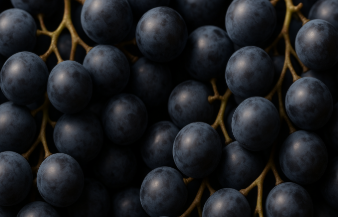
Common name: Syrah grape (also known as Shiraz)
Parent plant: Vitis vinifera L.
Kingdom: Plantae
Clade: Angiosperms
Clade: Eudicots
Order: Vitales
Family: Vitaceae
Genus: Vitis
Species: Vitis vinifera L.
Cultivar: Syrah (Shiraz)
Cultivation and growth conditions
Climate:
Syrah adapts very well to warm and temperate climates, where it can fully develop its aromatic profile. It is widely cultivated in Mediterranean regions, mild continental areas, and locations with strong sun exposure. It is sensitive to excessive humidity and waterlogging, which favor fungal diseases. It shows good tolerance to drought.
Sun exposure:
It requires full sun. Plenty of light ensures optimal skin maturation, which is crucial for color, tannins, and aromatic complexity. Well-ventilated hillsides are ideal to reduce moisture accumulation around the clusters.
Soil:
Syrah performs best in well-drained soils, especially:
Clay-limestone soils, which provide structure and freshness.
Gravelly or sandy soils, which enhance drainage and concentration of flavors.
The ideal pH is between 6.0 and 7.5. Heavy or waterlogged soils increase the risk of root diseases.
Irrigation:
Generally low-maintenance, Syrah still benefits from moderate irrigation during key stages such as fruit set and veraison, especially in very arid environments. Excessive water lowers fruit quality and dilutes aromatic compounds.
Temperature:
Budbreak: 10–12 °C
Optimal growth: 20–30 °C
Frost damage risk below –2 °C during flowering
High summer temperatures (even above 35 °C) can promote sugar accumulation but may cause premature ripening if not properly managed.
Fertilization:
Syrah requires balanced and moderate fertilization:
Nitrogen: essential but must be carefully dosed to prevent excess vegetative growth.
Phosphorus: supports flowering and fruit set.
Potassium: crucial for sugar accumulation, color development, and phenolic maturity.
Organic matter improves soil structure and water retention.
Crop care:
Winter and green pruning to regulate yield and improve canopy aeration.
Canopy management to increase light exposure and reduce disease pressure.
Monitoring for powdery mildew, downy mildew, and botrytis, to which Syrah can be sensitive.
Control of grape moths and other pests when necessary.
Harvest:
Harvest generally occurs between late summer and early autumn, when the grapes reach full sugar and phenolic maturity. Clusters develop a deep, dark color, with skins rich in polyphenols and aromas of black fruits and spices.
Propagation:
Syrah is propagated mainly by cuttings or by grafting onto resistant rootstocks, selected according to soil type and climate. Grafting ensures controlled vigor and resistance to phylloxera.
Caloric value (fresh berries, 100 g)
Approximately 65–75 kcal per 100 g (dominated by simple sugars; during winemaking these ferment to ethanol).
Key constituents
Fermentable sugars: glucose and fructose (typical harvest °Brix ≈ 22–25).
Organic acids: tartaric (predominant) and malic; must pH generally 3.3–3.7, TA ≈ 5–7 g/L expressed as tartaric acid.
Polyphenols: anthocyanins (malvidin-3-glucoside predominant), flavonols (quercetin), and tannins from skins and seeds.
Aroma/precursors: minor terpenes and norisoprenoids; rotundone (sesquiterpene linked to black-pepper notes); trace sulfur compounds.
Yeast nutrients: YAN (yeast-assimilable nitrogen) varies and is critical for healthy fermentation kinetics.
Production process
Viticulture: canopy management for sugar/acid balance and sunburn control; targeted leaf removal to influence phenolics and cluster health; moderate yields for concentration.
Harvest: timed by °Brix, pH, TA, and phenolic maturity (seed/skin); hand or machine harvest with sorting.
Red vinification: destemming and optional crushing; controlled sulfiting; yeast inoculation; skin maceration (several days to >20) with pump-overs or délestage; temperature management; optional post-fermentation maceration; pressing/racking; malolactic fermentation as desired.
Maturation: stainless/concrete for fruit-driven styles; oak (barrique, tonneau, large casks) for tannin integration and complexity; oxygen management with attention to TPO.
Alternative styles: rosé via saignée; historic co-fermentation with small portions of white grapes in some regions to stabilize color and lift aromatics.
Bottling: tartaric/protein stability, filtration, final sulfiting, and control of dissolved oxygen (DO).
Sensory and technological properties
Color: deep ruby-purple due to high anthocyanin content.
Aromas: blackberry, plum, violet; black pepper (rotundone) is more evident in cooler sites; warmer climates emphasize ripe dark fruit, licorice, and occasional chocolate notes.
Palate: medium- to full-bodied, medium-to-firm tannins; moderate acidity; potential alcohol 13–15.5% ABV depending on ripeness.
Technology: strong extractive capacity; maceration time/temperature balance color and tannin; micro-oxygenation or oak aids polymerization and integration.
Food applications
Predominantly red still wines across a broad stylistic range; rosé; blending with other varieties; pomace distillates; wine vinegars; culinary use of must/wine in reductions and sauces.
Nutrition and health
Grapes provide water, simple sugars, and polyphenols; in wine, alcohol content necessitates responsible consumption. Polyphenols drive color and astringency; nutritional impact depends on portion and dietary context.
Quality and specification themes
Grapes: target °Brix 22–25 with coherent TA/pH, microbiological soundness, residues within limits; intact skins and seeds.
Must/wine: color (anthocyanin indices), TPI (total polyphenol index), YAN, fermentation kinetics; SO₂ free/total; turbidity/filtration index; DO/TPO under control; tartaric stability.
Compliance with appellation/production standards, full traceability, and cellar GMP.
Storage and shelf life
Grapes: pre-processing cold chain, protection from oxidation/contamination; minimal delay between harvest and crushing.
Wine: stable temperature, darkness, low DO; suitable glass and closures; ongoing SO₂ monitoring.
Allergens and safety
Grapes are not listed as major allergens; wines contain sulfites (added or endogenous) and must be labeled accordingly. Cellar hygiene should prevent spoilage organisms (e.g., Brettanomyces and volatile phenols).
Cosmetic (INCI) functions
Common grape-derived entries include Vitis Vinifera (Grape) Seed Oil (emollient/occlusive) and Vitis Vinifera (Grape) Fruit/Leaf/Skin Extract (antioxidant, skin conditioning, mild astringent). Grape-seed oil is appreciated for its PUFA/MUFA profile and tocopherols; skin/seed extracts for proanthocyanidins.
Troubleshooting
Muted pepper note: over-ripe fruit or warm ferments → advance harvest slightly, cool fruit/must, manage reductively to retain rotundone.
Hard/astringent tannins: over-extraction or unripe seeds → shorten maceration, avoid seed breakage, consider oak integration or micro-oxygenation.
Sluggish/stuck fermentation: low YAN or sub-optimal temperature → supplement nutrients and manage inoculation/thermal profile.
Premature oxidation: elevated DO/TPO → improve inert-gas practices, headspace control, and oxygen barriers.
Animal/phenolic faults: Brett contamination → barrel sanitation, adequate SO₂, and strict hygiene.
Sustainability and supply chain
Integrated/organic viticulture, careful water/energy management, reduced copper/sulfur inputs, by-product valorization (skins, seeds), and effluent control against BOD/COD targets reduce footprint. Lightweight/recyclable packaging and efficient logistics further lower emissions.
Conclusion
Syrah delivers stylistic versatility and a distinctive sensory signature—deep color, spice, and dark fruit. Quality hinges on technological and phenolic ripeness, disciplined maceration and oxygen management, and well-chosen maturation; with these controls, stable, expressive, and age-worthy wines are achievable.
Mini-glossary
°Brix — Percent soluble solids in must; proxy for sugar ripeness.
pH — Measure of acidity affecting color stability, extraction, and microbial ecology.
TA — Titratable acidity (as tartaric g/L); gauges acid backbone.
YAN — Yeast-assimilable nitrogen; key nutrient pool for fermentation.
TPI — Total polyphenol index; spectrophotometric estimate of phenolic load/structure.
SO₂ — Sulfur dioxide (free/total); antioxidant and antimicrobial in oenology.
DO — Dissolved oxygen; oxygen in wine prior to or separate from packaging.
TPO — Total package oxygen; oxygen present at bottling in wine plus headspace.
ABV — Alcohol by volume; volumetric alcohol content of wine.
PUFA/MUFA — Poly/monounsaturated fatty acids; lipid classes relevant to grape-seed oil.
BOD/COD — Biochemical/chemical oxygen demand; indicators of effluent organic load and environmental impact.
GMP — Good manufacturing practice; cellar process and hygiene standards.
INCI — International Nomenclature of Cosmetic Ingredients; standardized cosmetic ingredient naming.
Sulfites — Sulfur-based preservatives/antioxidants in wine; labeling required where present.

