



Sodium carrageenan
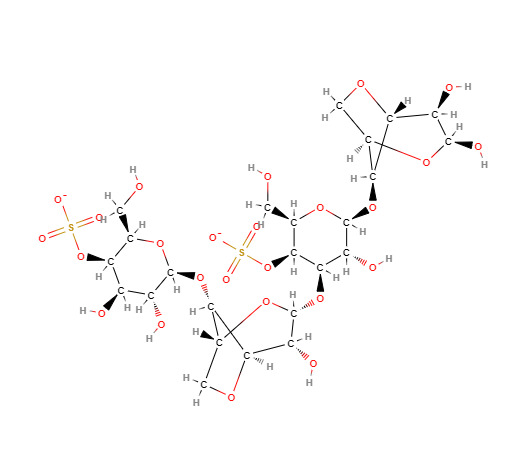
Sodium carrageenan is the sodium salt of carrageenan, a family of sulfated galactans extracted from red seaweeds (notably Kappaphycus, Eucheuma, Chondrus). It functions primarily as a thickener, gelling agent, and stabilizer. Performance depends on carrageenan type—κ (kappa), ι (iota), or λ (lambda)—and on the system’s ionic balance.
Caloric value (dry product, 100 g)
Approximately 200–250 kcal per 100 g (typical ≈ 200 kcal/100 g, assuming fermentable dietary fiber at ~2 kcal/g; food-use levels are low, usually 0.05–1.0%).
Structure and types
Kappa forms strong, brittle gels promoted by monovalent cations (especially K⁺) and shows synergy with LBG.
Iota forms soft, elastic, freeze–thaw-tolerant gels promoted by divalent cations (especially Ca²⁺).
Lambda does not gel and acts as a cold-soluble thickener that stabilizes foams and emulsions.
The sodium form improves solubility and viscosity but produces weaker gels unless potassium or calcium is introduced.
Key constituents
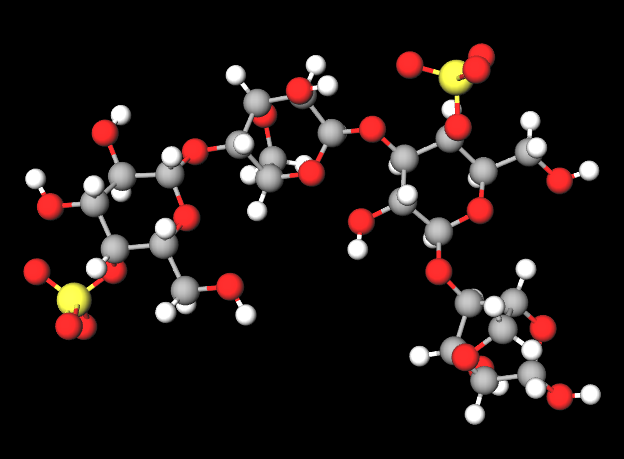
Sulfated galactan matrix built from D-galactose and 3,6-anhydro-D-galactose units bearing sulfate groups.
Sodium ions (Na⁺) as predominant counterions; traces of K⁺/Ca²⁺/Mg²⁺ depending on processing.
Ash/sulfate within food-grade specifications; low acid-insoluble matter; controlled moisture.
High-molecular-weight fractions typical of food grades (distinct from degraded, low-molecular-weight poligeenan).
Minor residual seaweed cell-wall components (cellulose/hemicelluloses) depending on refinement level.
Production process
Seaweed sourcing (cultivated or wild) → cleaning, drying, size reduction.
Hot-water extraction (often mildly alkaline) to solubilize sulfated galactans.
Clarification/filtration to remove fibers; optional alkaline treatment to increase 3,6-anhydrogalactose (especially for κ/ι).
Precipitation (e.g., isopropanol) or gel-press with salts, followed by washing.
Conversion/standardization to the sodium form (neutralization/ion exchange), adjustment of ionic profile (K⁺/Ca²⁺) as needed.
Controlled drying, milling, and particle-size classification; optional blending of κ/ι/λ to target performance.
Quality controls: moisture, ash/sulfate, viscosity under defined conditions, κ/ι gel strength, acid-insoluble matter, microbiology.
Packaging in barrier materials with full lot traceability under GMP/HACCP and defined CCPs.
Hydration, solubility, and ionic effects
Most grades hydrate at 70–85 °C; λ-rich and some refined sodium grades can hydrate cold under sufficient shear.
Gelation is thermoreversible; set/melt temperatures depend on concentration, type (κ/ι/λ), and added salts.
Acid plus heat accelerates depolymerization; maintain pH above ~3.8 during thermal steps.
K⁺ strengthens κ-gels and reduces syneresis; Ca²⁺ strengthens ι-gels; excess Na⁺ favors viscosity over gel firmness.
Functional properties
Low-dose viscosity building with shear-thinning flow.
Protein reactivity that stabilizes dairy/cocoa beverages, limiting sedimentation and wheying-off.
Synergy with LBG (κ + locust bean gum) to enhance elasticity and reduce syneresis.
Compatibility with starches and proteins for heat-stable textures in custards, puddings, and fillings.
Food applications
Dairy and plant-based beverages (cocoa suspension, chocolate milk), cultured/processed cheeses, gel desserts, water binding in cooked meats and deli items, confectionery gels, sauces and glazes, ice cream/soft-serve stabilization, and plant-based analogs. Typical use: 0.03–0.5% in beverages; 0.2–1.0% in gels and processed meats, depending on type and ions.
Cosmetic (INCI) functions
Listed as INCI “Sodium Carrageenan.” Typical functions: viscosity-increasing agent (aqueous), film forming, emulsion stabilizing, binder, and skin/hair conditioning (sensory slip and light moisturization by water structuring).
Nutrition and health
Food-grade carrageenan (including sodium salts) is a high-molecular-weight hydrocolloid used at low levels and contributes fiber-like energy via colonic fermentation. It is distinct from degraded “poligeenan,” which is not permitted in foods. Individual tolerance varies by matrix and dose.
Quality and specification themes
Moisture typically ≤12–15%; ash/sulfate within grade spec; low acid-insoluble matter; particle size tuned for target hydration.
Microbiological criteria suitable for dry gums; contaminants within legal limits.
Functional testing: viscosity at specified shear/temperature, gel strength for κ/ι types, and clarity/color indices.
Traceability and process hygiene under GMP/HACCP with defined CCPs.
Processing and formulation guidance
Disperse into a vortex or dry-premix with other powders to avoid fisheyes; hydrate with appropriate time/temperature and shear.
Adjust pH after hydration when feasible; avoid prolonged heating at low pH.
Tune the cation profile: add KCl for κ-gels, CaCl₂ for ι-gels; blend κ with LBG for elasticity and reduced syneresis.
Limit excess sodium if a firm gel is desired; sodium favors viscosity rather than rigidity.
Troubleshooting
Weak/brittle gel: insufficient K⁺/Ca²⁺, low solids, or harsh acid/heat history → raise dose, add KCl/CaCl₂, adjust pH/thermal profile.
Phase separation in beverages: inadequate hydration or protein interaction → raise hydration temperature/time, tune pH/salt, include κ-rich grade with LBG synergy.
Lumps (“fisheyes”): poor dispersion → increase shear, dry-premix with sugar, or slurry in oil/glycerin before addition.
Grainy set or syneresis: suboptimal κ:ι:λ ratio or ionic mismatch → rebalance type blend and cation profile.
Storage and shelf life
Store cool and dry in sealed, moisture-barrier packaging; control ambient RH to prevent caking and performance loss.
Avoid strong odors and direct light; apply FIFO rotation. Properly stored powders remain functional for many months.
Sustainability and supply chain
Derived from cultivated or wild-harvested red seaweeds. Responsible aquaculture and traceable sourcing support coastal livelihoods and biodiversity. Processing facilities should manage effluents against BOD/COD targets and operate under GMP/HACCP.
Conclusion
Sodium carrageenan is a versatile hydrocolloid whose performance hinges on type selection, dispersion/hydration, pH, and ionic balance. With informed formulation—especially potassium or calcium addition and κ–LBG synergy—it delivers dependable thickening, gelling, and stabilization across beverages, gels, dairy, meat, plant-based foods, and cosmetic systems.
Mini-glossary
pH — Measure of acidity/alkalinity; low pH plus heat accelerates carrageenan depolymerization.
LBG — Locust bean gum; synergistic with κ-carrageenan to strengthen gels and reduce syneresis.
INCI — International Nomenclature of Cosmetic Ingredients; standardized naming and function mapping for cosmetic ingredients.
GMP — Good Manufacturing Practice; hygiene and process controls ensuring consistency, traceability, and quality.
HACCP — Hazard Analysis and Critical Control Points; preventive food-safety system defining hazards and controls.
CCP — Critical control point; a step where control prevents, eliminates, or reduces a food-safety hazard to acceptable levels.
RH — Relative humidity; higher RH promotes caking and reduced powder performance.
FIFO — First in, first out; inventory rotation to use older lots first.
BOD/COD — Biochemical/Chemical oxygen demand; indicators of organic load in effluents for environmental management.
Medical
Phytochemical analysis of carrageenan has shown the presence of alkaloids, saponins, steroids, gums, mucilages and carbohydrates in both native and commercial carrageenan with antioxidant activities (1).
Food
In European food additives it is labelled with the number E407 as a thickener. Used as a stabiliser, gelling agent, binder and thickener in processed meat and poultry products. It improves the freeze-thaw ratio, stability, flavour and cuttability in poultry products.
Carrageenan has the property of maintaining the organoleptic and structural values of fat-free cheese and can replace casein in cheese imitations and stabilise the structure in cheese-like products (2).
Lightening agent in beverages. Incorporated into confectionery products such as gummy sweets, ice cream and food jelly it can replace agar, pectin and gelatine.
Safety
A rather debated ingredient in recent years by toxicology studies and chronic toxicological tests (3).
A 2024 study warns about the risk of developing cancer with high intakes of emulsifiers, (including E440, Pectin, E471 mono- and diglycerides of fatty acids, carrageenan, E407, sodium carbonate E500) (4).
Typical commercial product characteristics Carrageenan
| Appearance | White powder |
| pH | 8- 11 (1% solution) |
| PSA | 394.53000 |
| Sulfate | 15- 40% |
| Loss on drying | 12 Max% |
| Viscosity (1.5%, 75°C, mPa.s ) | 5 min |
| Gel Strength (1.5% w/w, 0.2% KCl, 25°C, g/cm2) | 1500 min |
| Transparency | 75 min |
| Plate Count | 5000cfu/g max |
| Total ash | 15%~40% |
| Acid insoluble ash | 1.0% Max |
| Acid Insoluble matter | 5.0% Max |
| Lead | 5 mg/kg Max |
| Arsenic | 3 mg/kg Max |
| Mercury | 1 mg/kg Max |
| Cadmium | 1 mg/kg Max |
| Total Heavy Metals (as Pb) | 10 mg/kg Max |
| Yeasts & Moulds | 300 cfu/g Max |
| Safety | 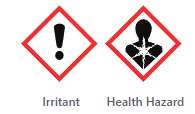 |
 |  |
 |  |
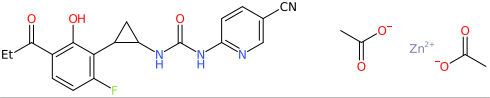
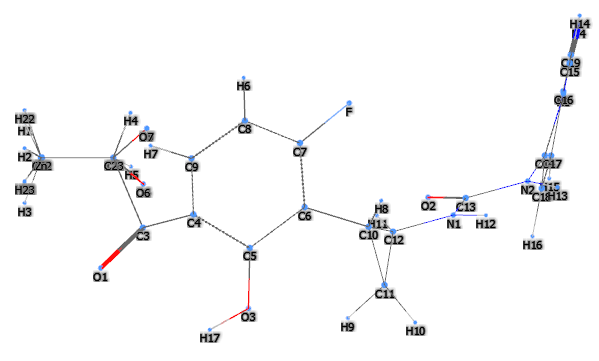
- Molecular Formula C23H23Fn4O7Zn
- Molecular Weight 788.65
- Exact Mass 788.09900
- CAS 9000-07-1 11114-20-8
- UNII DV181E4639
- EC Number 232-524-2
- DSSTox Substance ID DTXSID3020255
- IUPAC zinc;1-(5-cyanopyridin-2-yl)-3-[(1S,2S)-2-(6-fluoro-2-hydroxy-3-propanoylphenyl)cyclopropyl]urea;diacetate
- InChI=1S/C19H17FN4O3.2C2H4O2.Zn/c1-2-15(25)11-4-5-13(20)17(18(11)26)12-7-14(12)23-19(27)24-16-6-3-10(8-21)9-22-16;2*1-2(3)4;/h3-6,9,12,14,26H,2,7H2,1H3,(H2,22,23,24,27);2*1H3,(H,3,4);/q;;;+2/p-2/t12-,14+;;;/m1.../s1
- InChl Key UHVMMEOXYDMDKI-JKYCWFKZSA-L
- SMILES CCC(=O)C1=C(C(=C(C=C1)F)C2CC2NC(=O)NC3=NC=C(C=C3)C#N)O.CC(=O)[O-].CC(=O)[O-].[Zn+2]
- MDL number MFCD00081480
- PubChem Substance ID
- FEMA 2596
- RTECS FI0704000
Synonyms
- kappa-Carrageenan
- k-Carrageenan
- Carrageenan Kappa Refined
- Carrageenan Kappa Semi-refined

