



Walnuts
Walnut (Juglans regia)
Parts & commercial forms: shelled kernels (whole/pieces; raw/roasted; salted/unsalted), walnut flour/paste (incl. partially defatted), walnut oil (virgin or refined).
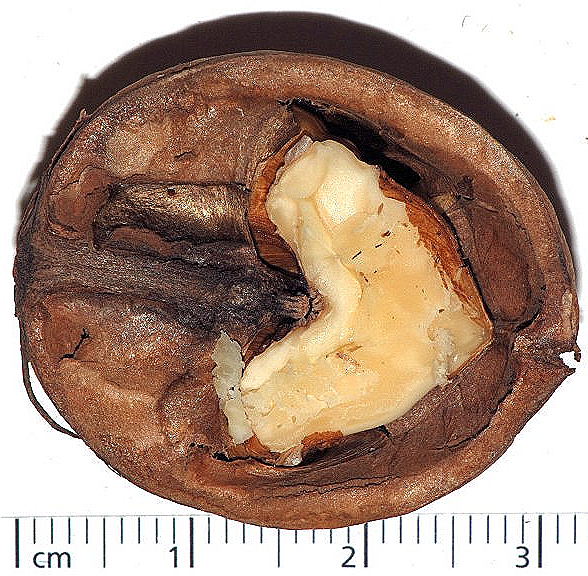
Common name: Walnut (European/Persian walnut)
Parent plant: Juglans regia L. — common walnut or European walnut
Kingdom: Plantae
Clade: Angiosperms
Clade: Eudicots
Order: Fagales
Family: Juglandaceae
Genus: Juglans
Species: Juglans regia L.
Cultivation and growth conditions
Climate:
European walnut requires a temperate climate with warm, dry summers and cool winters.
It tolerates winter cold down to about –10/–15 °C during dormancy.
It is sensitive to late frosts, which can damage young shoots and inflorescences.
It prefers well-ventilated environments, not prone to persistent atmospheric humidity.
Sun exposure:
Walnut requires full sun, which is essential for:
good photosynthetic activity,
proper hull (husk) development,
correct nut ripening.
Shade and insufficient light reduce yield and nut quality.
Soil:
Walnut grows best in soils that are:
deep (the taproot penetrates very deeply),
well drained,
medium-textured or slightly sandy,
rich in organic matter,
with pH between 6.5 and 7.5.
Heavy, clayey soils with waterlogging increase the risk of root diseases and reduce vigor.
Irrigation:
Water requirement is medium, especially:
in spring (vegetative regrowth),
during nut filling (summer).
Excess water causes nut drop, rots, and defects in the hull; water shortage can halt kernel development.
Temperature:
Germination: 10–20 °C
Optimal vegetative growth: 20–30 °C
Flowers damaged below –1/–2 °C
Heat stress above 38–40 °C
Strong temperature fluctuations negatively affect nut quality.
Fertilization:
Walnut responds well to balanced fertilization:
Nitrogen: applied in moderate quantities to avoid excessive vegetative growth.
Phosphorus: supports root development and flowering.
Potassium: crucial for kernel quality, aroma, and storability.
The addition of organic matter improves soil structure and water-holding capacity.
Crop care:
Formative pruning in the first years and light maintenance pruning later on.
Removal of dead branches and suckers.
Monitoring of major pests, such as:
walnut husk fly (Rhagoletis completa),
codling moth and other Lepidoptera,
mites.
Control of key diseases:
bacterial blight,
collar and root rots,
anthracnose.
Good canopy aeration reduces disease pressure.
Harvest:
Harvest takes place between late summer and early autumn, when:
the green hull (husk) splits and begins to detach,
the shell has hardened,
the kernel reaches its characteristic light color and full flavor.
Timely harvest is important to prevent darkening, off-odors, and quality loss caused by decomposing hulls.
After removal of the hull, walnuts are washed, dried, and graded.
Propagation:
Walnut is propagated by:
seed (to produce rootstocks),
grafting (to maintain cultivar characteristics and improve productivity).
Fruit cultivars are grafted onto selected rootstocks chosen for vigor, adaptability, and disease resistance.
Caloric value (dry kernels)
~650–660 kcal per 100 g (typical ≈ 654 kcal/100 g; varies with moisture/roast).
Average composition (per 100 g)
Fat: ~60–65 g
Protein: ~14–15 g
Carbohydrate: ~13–14 g (of which fiber ~6–7 g, sugars ~2–3 g)
Water: ~2–4 g
Micronutrients: high Mn and Cu; plus Mg, P, Zn, K; folate; vitamin E (predominantly γ-tocopherol); polyphenols (incl. ellagitannins → gut-derived urolithins in capable individuals).
Fatty-acid profile (indicative, % of total fat)
PUFA (PolyUnsaturated Fatty Acids—beneficial but balance overall): linoleic C18:2 Ω-6 ~35–50%; ALA C18:3 Ω-3 ~8–15% → strong plant Ω-3 source.
MUFA (MonoUnsaturated Fatty Acids—generally heart-friendly): oleic C18:1 ~15–25%.
SFA (Saturated Fatty Acids—best in moderation): palmitic C16:0 ~5–8%, stearic C18:0 ~1–3%.
Health note: the meaningful ALA (Ω-3) supports cardiometabolic health; diet-wide Ω-6:Ω-3 balance still matters.
Sensory & technological properties
Texture: crisp, then friable-buttery in mouth.
Flavor: nutty-woody with sweet-lactic tones; roasting (110–150 °C) intensifies Maillard notes but raises oxidation susceptibility.
Functionality: granules for toppings, flour for gluten-free bakery (needs binders), base for pestos/creams.
Walnut oil (brief)
Virgin/cold-pressed: pronounced aroma; smoke point ~160–180 °C → best raw.
Refined (RBD): milder flavor; smoke point ~220–230 °C → suitable for moderate heat.
High PUFA → excellent for dressings, less ideal for prolonged frying.
Food applications
Snacks (raw/roasted; honey/chocolate coated).
Bakery/confectionery: brownies, cakes, cookies, nougat, pralines.
Culinary: salads, pastas, herb-cheese pestos; plant beverages/creams with other nuts.
Nutrition & health (highlights)
ALA (Ω-3): roughly 2–2.5 g per 30 g serving (~a small handful).
May support a favorable lipid profile when walnuts replace fats high in SFA within a balanced dietary pattern.
Fiber and polyphenols (ellagitannins → urolithins) contribute to satiety and gut functions (bioactivation varies by microbiota).
Suggested portion: ~30 g/day; consider total calories.
Allergens & safety
Tree-nut allergen → potential IgE-mediated reactions (can be severe): strict labeling and cross-contact control.
Oxidation: high PUFA makes walnuts prone to rancidity (paint-like/pungent odor). Minimize light/heat/oxygen.
Mycotoxins: manage moisture and shell integrity; rely on controlled drying/storage supply chains.
Quality & specifications (typical themes)
Kernel moisture ≤3–4% for crunch and stability.
Low peroxide/anisidine numbers (no rancid notes).
Grading by size and defects (breaks, browning).
Walnut flour: more oxidation-sensitive than cereal flours → use fresh lots; consider inert-gas packing.
Storage & shelf life
Store cool, dark, airtight; ideally vacuum/inert gas.
Refrigeration/freezing extends life (kernels pick up odors easily).
Avoid prolonged light/air exposure after opening.
Troubleshooting
Rancid notes: discard; prevent with lower temp, O₂-barrier packs, stock rotation.
Loss of crunch: light re-dry/re-roast; deploy in moist recipes.
Over-friable gluten-free bakes: add binders (xanthan/psyllium/eggs) and balance with starches.
Sustainability
Widely cultivated (Mediterranean, U.S./California, Eastern Europe, Central Asia). Favor supply with traceability, responsible water/biodiversity management, and fair social practices.
Conclusion
Walnuts combine rich sensory appeal with a PUFA-forward profile featuring meaningful ALA Ω-3. With moderate portions, proper storage, and integration into a balanced diet, they deliver substantial nutritional and functional value across snacks, bakery, and savory dishes.
Lipid acronym mini-legend (quick reference)
MUFA = MonoUnsaturated Fatty Acids: generally heart-friendly; improve lipid profile.
PUFA = PolyUnsaturated Fatty Acids: include Omega-3 and Omega-6; beneficial, but keep a reasonable Ω-6:Ω-3 balance.
SFA = Saturated Fatty Acids: limit/moderate; health impact depends on overall diet and replacements.
ALA / EPA / DHA (Omega-3): beneficial for heart/brain; strongest evidence for EPA/DHA.
TFA = Trans Fatty Acids: avoid; linked to higher cardiovascular risk.
MCT = Medium-Chain Triglycerides: rapidly absorbed/oxidized; useful in specific contexts, but still count toward calories.
Studies
Walnut has a significant presence of components beneficial for human health, including fats, vitamins and proteins, including :
- omega3 fats
- omega6 fats
- alpha-linoleic acid
- vitamin B1
- vitamin B2
- Vitamin B6
- vitamin E
- polyphenols
All these substances effectively combat the high levels of harmful LDL cholesterol and promote the proper performance of the cardiovascular system (1).
Recent studies in the US have found that a daily intake of 3-4 nuts contributes to the human body, about :
- 5 grams of fiber
- 250 mg potassium
- 70 mg calcium
- 90 mg magnesium
- 3.5 mg vitamin E
- 150 mg sodium
Which benefits not only the cardiovascular system, but also the immune system.
Walnut has antioxidant, anti-inflammatory, antimicrobial and antifungal activities due in large part to the significant content of alpha-tocopherol (a compound of vitamin E), flavonoids, phenols, alkaloids, terpenoids, tannins, saponins and steroids (2).
Walnuts are an excellent source of vitamin E and magnesium. People who consume 3 nuts take folate, beta-carotene, vitamin K, lutein, zeaxantine, phosphorus, copper, selenium, potassium and zinc for about 1000 kcal (3).
This animal study supports the hypothesis that daily consumption of walnuts could suppress the growth and survival of breast cancer (4).
However, care should be taken to purchase bleached walnuts, as chemicals may be used in the bleaching process.
The walnut, collected from the tree or from the ground, should only be cleaned with a toothbrush to remove any incrustations of soil or parts of the hull.
The hull is used as a natural black dye and as a hair dye.
Furniture is made from high-quality walnut wood.
Walnut studies

