Noci del Brasile (Brazil nuts)
Specie: Bertholletia excelsa
Forme commerciali: sgusciate intere, a pezzi, tostate/salate, olio di noce del Brasile, farine/paste (anche parzialmente sgrassate)
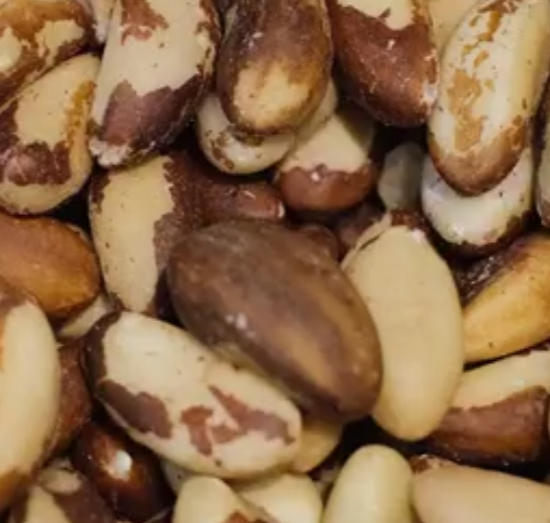
Definizione
Semi oleosi di grande pezzatura, dal gusto ricco e burroso, noti per l’elevatissimo contenuto di selenio. Utilizzati come snack premium, in bakery/confetteria e per l’estrazione dell’olio.
Nome comune: Noci del Brasile (o noci amazzoniche)
Pianta di origine: Bertholletia excelsa Bonpl.
Regno: Plantae
Clado: Angiosperme
Clado: Eudicotiledoni
Ordine: Ericales
Famiglia: Lecythidaceae
Genere: Bertholletia
Specie: Bertholletia excelsa Bonpl.
Coltivazione e condizioni di crescita
Clima:
L’albero delle noci del Brasile è una specie spiccatamente amazzonica, che richiede un clima:
Cresce nelle foreste pluviali primarie ad alto livello di biodiversità, dove dipende dall’ecosistema naturale per fruttificare correttamente.
Esposizione:
Predilige una piena esposizione solare, sebbene nelle prime fasi cresca sotto copertura arborea.
Le piante adulte sviluppano chiome enormi che richiedono luce abbondante per sostenere fotosintesi e produzione dei frutti.
Terreno:
Si sviluppa in terreni:
profondi,
ben drenati,
tendenzialmente acidi (pH 4,5–6,5),
ricchi di sostanza organica,
tipici delle foreste amazzoniche non soggette a ristagno idrico.
È sensibile ai suoli compatti o pesanti, che limitano l’apparato radicale e favoriscono marciumi.
Irrigazione:
In natura non necessita irrigazione, poiché vive in aree con piogge superiori ai 2000 mm annui.
In coltivazione sperimentale:
Temperatura:
Concimazione:
In ambiente naturale sfrutta l’alta biodiversità e la ricca sostanza organica del suolo.
In coltivazione controllata risponde bene a:
apporti di fosforo per lo sviluppo radicale,
potassio per la fruttificazione,
fertilizzazioni organiche che migliorano struttura e microbiologia del terreno.
Cure colturali:
Le giovani piante beneficiano di protezione da infestanti e danni meccanici.
Potature minime, poiché la pianta cresce naturalmente con un fusto dritto e una chioma imponente.
Controlli fitosanitari per funghi e insetti possono essere necessari in coltivazione.
È una specie che dipende fortemente dagli impollinatori naturali (api euglossine) e dalla fauna amazzonica per la dispersione dei semi.
Per questo motivo, la coltivazione intensiva fuori foresta è estremamente difficile.
Raccolta:
I frutti (detti “cocos”) sono capsule legnose sferiche che maturano dopo 14–18 mesi dalla fioritura e cadono spontaneamente a terra.
Ogni frutto contiene 10–25 semi (le noci), racchiusi in un guscio molto duro.
La raccolta consiste nel recuperare i frutti caduti, aprirli manualmente e liberare i semi, che vengono poi essiccati e selezionati.
Moltiplicazione:
Le noci del Brasile si moltiplicano per seme, ma la germinazione è lenta.
I semi necessitano substrati umidi, caldi e aerati.
La crescita iniziale è molto lenta.
Le piante cominciano a fruttificare solo dopo 12–20 anni.
La propagazione vegetativa è difficile e poco praticata.
Valore calorico
~650–700 kcal per 100 g (tipico ≈ 656–680 kcal/100 g, variabile con umidità e tostatura).
Composizione media (per 100 g, secche/tostate)
Grassi: ~65–68 g
Proteine: ~14–16 g
Carboidrati: ~10–12 g (di cui fibre ~7–8 g, zuccheri ~2–3 g)
Acqua: ~2–4 g
Micronutrienti: Selenio molto alto (centinaia di µg/100 g; 1–2 noci spesso coprono o superano il fabbisogno giornaliero), Mg, P, Cu, Mn, Zn; vitamine del gruppo B (B1 in rilievo), Vit. E.
Profilo in acidi grassi (indicativo, % dei grassi totali)
MUFA (MonoUnsaturated Fatty Acids, acidi grassi monoinsaturi – in genere positivi per il profilo lipidico): oleico (C18:1) ~35–45%
PUFA (PolyUnsaturated Fatty Acids, acidi grassi polinsaturi – benefici, ma da bilanciare): linoleico (C18:2, Ω-6) ~30–38%; ALA (α-linolenico, Ω-3) ≤0,5%
SFA (Saturated Fatty Acids, acidi grassi saturi – da moderare): palmitico (C16:0) ~12–16%, stearico (C18:0) ~8–12%
Insaponificabili: fitosteroli, tocoferoli, squalene (tracce)
Proprietà sensoriali/tecnologiche
Texture: croccante da cruda; più friabile-burrosa dopo tostatura.
Aroma: note latteo-nocciolate; la tostatura (120–160 °C) accentua le note di Maillard.
Olio: colore paglierino; gusto morbido; buona stabilità grazie alla quota MUFA e a tocoferoli.
Impieghi alimentari
Snack: intere tostate/salate o ricoperte (miele/cioccolato).
Pasticceria/confetteria: pralineria, croccanti, biscotti, torte; farina per impasti gluten-free (richiede leganti).
Cucina: granella su insalate, verdure arrostite, pesce; burro di noci del Brasile; olio per condimenti a crudo/cotture moderate.
Nutrizione e salute (punti chiave)
Selenio: 1–2 noci possono raggiungere o superare la RDA (attenzione a non eccedere per evitare selenĩosi: nausea, fragilità ungueale, alito “aglio”, in casi gravi neuropatie).
Lipidi: combinazione di MUFA (favorevoli) e PUFA Ω-6 (da bilanciare con Ω-3). SFA presenti in quota moderata.
Fibre e minerali supportano sazietà e funzione metabolica.
Porzione suggerita: ~15–30 g (2–5 noci), tenendo conto del selenio totale nella dieta.
Allergeni e sicurezza
Allergene frutta a guscio → possibile risposta IgE-mediata: etichettare e prevenire cross-contact.
Micotossine: rischio aflatossine da filiere tropicali—necessarie forniture controllate e corretta essiccazione/stoccaggio.
Radioattività naturale: le piante possono accumulare radioisotopi del suolo; livelli alimentari tipici bassi e non preoccupanti nelle porzioni normali.
Pet safety: come altre noci, non consigliate agli animali domestici.
Qualità e specifiche (temi tipici)
Umidità kernel ≤3–4% per croccantezza e shelf-life.
Indici di perossidi/anisidina bassi (assenza di rancido).
Selezione per calibro, difetti (rotture, macchie), assenza di insetti.
Residui nei limiti di legge; aflatossine conformi.
Conservazione e shelf-life
Conservare al fresco, asciutto e al buio, in packaging ermetico (le noci assorbono odori).
6–12 mesi a T ambiente controllata; più a lungo refrigerate/congelate.
Preferire barriere all’ossigeno (sottovuoto/gas inerte) per limitare l’ossidazione.
Troubleshooting
Rancidità precoce: ridurre T di stoccaggio, usare pack barriera, ruotare stock.
Perdita di croccantezza: ri-essiccazione/ritostatura leggera; eventuale coating zuccherino/salino.
Impasti troppo friabili (gluten-free): integrare leganti (xantano/psyllium/uova) e bilanciare con amidi.
Sostenibilità
Conclusione
Le noci del Brasile offrono un profilo sensoriale ricco e un mix lipidico orientato a MUFA/PUFA, con il vantaggio (e la cautela) del selenio molto elevato. Porzioni moderate e filiere controllate permettono di valorizzarle in snack e pasticceria mantenendo sicurezza e qualità.
Bibliografia__________________________________________________________________________
Godos J, Giampieri F, Micek A, Battino M, Forbes-Hernández TY, Quiles JL, Paladino N, Falzone L, Grosso G. Effect of Brazil Nuts on Selenium Status, Blood Lipids, and Biomarkers of Oxidative Stress and Inflammation: A Systematic Review and Meta-Analysis of Randomized Clinical Trials. Antioxidants (Basel). 2022 Feb 16;11(2):403. doi: 10.3390/antiox11020403.
Abstract. Tree nuts, including Brazil nuts, have been hypothesized to impact cardiovascular health through the modulation of oxidative stress and inflammation. Nonetheless, a quantitative analysis of these effects has not been performed. Therefore, the aim of this study was to systematically revise and quantify the effect of Brazil nut intervention on selenium status, blood lipids, and biomarkers of oxidative stress and inflammation using a meta-analytical approach. To meet the goals of this study, a systematic search of PubMed, EMBASE, and Web of Science databases of published randomised clinical trials reporting on dietary interventions with Brazil nuts and their effects on selenium status, blood lipids, and markers of oxidative stress and inflammation was performed. Eight articles were included for systematic review and meta-analysis. Based on the conducted analysis, a significant positive effect of Brazil nuts on selenium blood concentration (SMD = 6.93, 95% CI: 3.99; 9.87) was found. Additionally, a positive effect of Brazil nut intervention on glutathione peroxidase activity (SMD = 0.53, 95% CI: 0.07; 0.99) was observed. However, no significant results were found when considering blood lipid levels, including results for total cholesterol (SMD = -0.22, 95% CI: -0.57; 0.14), HDL cholesterol (SMD = -0.04, 95% CI: -0.28; 0.19) and LDL cholesterol (SMD = -0.15; 95% CI: -0.43; 0.13). In conclusion, the findings from this study suggest that Brazil nut consumption improves selenium status and exerts antioxidant effects, which could be considered a potential pathway for the prevention of metabolic disorders related to altered blood lipid profiles. However, further studies are needed to elucidate the effect of Brazil nuts toward blood lipid profile, also preferably controlling for other biomarkers.
Bonifácio DB, Caldas APS, Costa MAC, Rocha DMUP, Hermsdorff HHM, Bressan J. Acute effect of a beverage containing Brazil and cashew nuts on oxidative stress, lipemia, and blood pressure of women with cardiometabolic risk (Brazilian Nuts Study): a randomized clinical trial. Appl Physiol Nutr Metab. 2023 Oct 1;48(10):789-798. doi: 10.1139/apnm-2023-0049.
Abstract. Nuts are important sources of antioxidants that combat oxidative stress and improve lipid profile as well as vascular function. However, the intake of typical Brazilian nuts and its acute effect on cardiovascular health needs to be better understood. Thus, the present study aimed to evaluate the acute effect of a beverage containing cashew (Anacardium occidentale L.) and Brazil nuts (Bertholletia excelsa H.B.K.) on postprandial oxidative stress, lipemia, and blood pressure of adult women aged 20 to 55 years with cardiometabolic risk. This was an acute, randomized, parallel arm, controlled clinical trial. The participants received either a beverage containing nuts (30 g Brazil nuts + 15 g cashew nuts) or a beverage without nuts with similar macronutrient composition. Oxidative stress markers and lipid profiles were evaluated at fasting and 4 h after beverage consumption. Blood pressure was measured during fasting and after beverage intake (1, 2, 3, and 4 h). In the postprandial state, there was a greater reduction in malondialdehyde levels in the intervention group compared to the control group (-12.3 ± 0.59 vs. -10.7 ± 0.43 µmol/mL; p < 0.05), which was positively correlated with the concentrations of TG (r = 0.399; p < 0.05), VLDL (r = 0.399; p < 0.05), TG/HDL (r = 0.380; p < 0.05), and blood pressure (iAUC SBP r = 0.391; p < 0.05, iAUC DBP r = 0.409; p < 0.05). The remaining oxidative stress markers showed similar postprandial changes between groups. In women with cardiometabolic risk, a beverage containing Brazilian nuts promoted a significant acute reduction on postprandial malondialdehyde levels. The study was registered in the Brazilian Clinical Trials Registry-ReBEC (protocol: RBR-3ntxrm).
Caldas APS, Rocha DMUP, Dionísio AP, Hermsdorff HHM, Bressan J. Brazil and cashew nuts intake improve body composition and endothelial health in women at cardiometabolic risk (Brazilian Nuts Study): a randomized controlled trial. Br J Nutr. 2022 Feb 23:1-38. doi: 10.1017/S000711452100475X.
Abstract. Several mechanisms have been proposed for the beneficial effect of nuts on health. However, Brazil and cashew nuts remain the least studied. We aim to evaluate the effect of these nuts within an energy-restricted diet on body weight, body composition, cardiometabolic markers, and endothelial function in cardiometabolic risk women. Brazilian nuts study is a randomized controlled parallel 8-week dietary intervention trial. Forty women were randomly allocated to 1) Control group: Energy-restricted diet without nuts, n= 19 or, 2) Brazil and cashew nuts group (BN-Group): Energy-restricted diet containing daily 45 g of nuts (15 g of Brazil nuts + 30g of cashew nuts), n= 21. At the beginning and final intervention, anthropometry, body composition, and blood pressure were measured. Fasting blood sampling was obtained to evaluate lipid profile, glucose homeostasis, and endothelial function markers. After 8-week, plasma selenium concentration increased in BN-group (∆ = + 31.5 ± 7.8 μg/L; p= 0.001). Brazil and cashew nuts intake reduced total body fat (-1.3 ± 0.4 %) parallel to improvement of lean mass percentage in BN-group compared to the control. Besides, the soluble adhesion molecule VCAM-1 decreased (24.03 ± 15.7 pg/mL vs. -22.2 ± 10.3 pg/mL; p= 0.019) after Brazil and cashew nuts intake compared to the control. However, lipid and glucose profile markers, apolipoproteins, and blood pressure remained unchanged after the intervention. Thus, the addition of Brazil and cashew nuts to an energy-restricted diet can be a healthy strategy to improve body composition, selenium status, and endothelial inflammation in cardiometabolic risk women.
Thomson CD, Chisholm A, McLachlan SK, Campbell JM. Brazil nuts: an effective way to improve selenium status. Am J Clin Nutr. 2008 Feb;87(2):379-84. doi: 10.1093/ajcn/87.2.379.
Abstract. Background: Brazil nuts provide a rich natural source of selenium, yet no studies have investigated the bioavailability of selenium in humans. Objective: We investigated the efficacy of Brazil nuts in increasing selenium status in comparison with selenomethionine. Design: A randomized controlled trial was conducted with 59 New Zealand adults. Participants consumed 2 Brazil nuts thought to provide approximately 100 mug Se, 100 mug Se as selenomethionine, or placebo daily for 12 wk. Actual intake from nuts averaged 53 mug Se/d (possible range: 20-84 mug Se). Plasma selenium and plasma and whole blood glutathione peroxidase (GPx) activities were measured at baseline and at 2, 4, 8, and 12 wk, and effects of treatments were compared. Results: Plasma selenium increased by 64.2%, 61.0%, and 7.6%; plasma GPx by 8.3%, 3.4%, and -1.2%; and whole blood GPx by 13.2%, 5.3%, and 1.9% in the Brazil nut, selenomethionine, and placebo groups, respectively. Change over time at 12 wk in plasma selenium (P < 0.0001 for both groups) and plasma GPx activity in the Brazil nut (P < 0.001) and selenomethionine (P = 0.014) groups differed significantly from the placebo group but not from each other. The change in whole blood GPx activity was greater in the Brazil nut group than in the placebo (P = 0.002) and selenomethionine (P = 0.032) groups. Conclusion: Consumption of 2 Brazil nuts daily is as effective for increasing selenium status and enhancing GPx activity as 100 mug Se as selenomethionine. Inclusion of this high-selenium food in the diet could avoid the need for fortification or supplements to improve the selenium status of New Zealanders.
Rajaram S, Damasceno NRT, Braga RAM, Martinez R, Kris-Etherton P, Sala-Vila A. Effect of Nuts on Markers of Inflammation and Oxidative Stress: A Narrative Review. Nutrients. 2023 Feb 22;15(5):1099. doi: 10.3390/nu15051099.
Abstract. Oxidative stress and inflammation are mediators in the pathophysiology of several non-communicable diseases (NCDs). Tree nuts and peanuts lower risk factors of cardiometabolic disease, including blood lipids, blood pressure and insulin resistance, among others. Given their strong antioxidant/anti-inflammatory potential, it is plausible that nuts may also exert a favorable effect on inflammation and oxidative stress. Evidence from systematic reviews and meta-analyses of cohort studies and randomized controlled trials (RCTs) suggest a modest protective effect of total nuts; however, the evidence is inconsistent for specific nut types. In this narrative review, the state of evidence to date is summarized for the effect of nut intake on biomarkers of inflammation and oxidative stress, and an attempt is made to define the gaps in research while providing a framework for future research. Overall, it appears that some nuts, such as almonds and walnuts, may favorably modify inflammation, and others, such as Brazil nuts, may favorably influence oxidative stress. There is a pressing need for large RCTs with an adequate sample size that consider different nut types, and the dose and duration of nut intervention, while evaluating a robust set of biomarkers for inflammation and oxidative stress. Building a stronger evidence base is important, especially since oxidative stress and inflammation are mediators of many NCDs and can benefit both personalized and public health nutrition.




