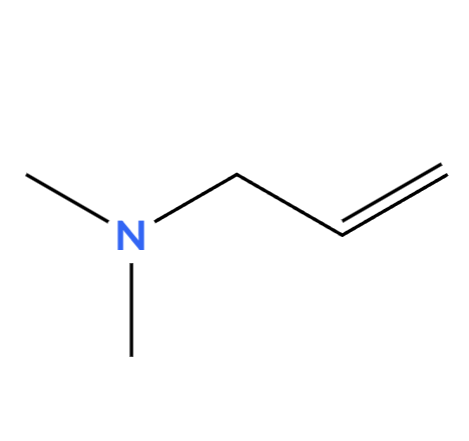
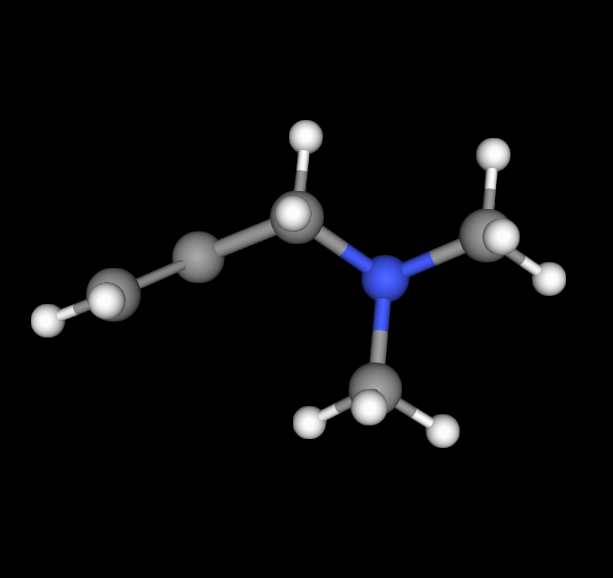
La Dimethyltolylamine (spesso abbreviata in DMTA) è una amina aromatica secondaria utilizzata principalmente come co-iniziatore in sistemi di polimerizzazione UV e come acceleratore nei processi di indurimento di resine acriliche e metacriliche, tipicamente in combinazione con perossidi o fotoiniziatori.
In cosmetica, il suo impiego si concentra nei prodotti per unghie UV/LED professionali, dove migliora l'efficienza della catalisi e riduce i tempi di polimerizzazione.
1. Struttura chimica e proprietà fisiche
Nome IUPAC: N,N-dimetil-p-toluidina
Formula molecolare: C₉H₁₃N
Massa molare: 135.21 g/mol
Classe chimica: ammine aromatiche secondarie
Gruppi funzionali: gruppo amminico secondario (-N(CH₃)₂), anello aromatico
Aspetto fisico:
Stato: liquido limpido
Colore: da incolore a giallo pallido
Odore: amminico, leggermente dolciastro
Punto di ebollizione: 217 °C
Solubilità: miscibile con solventi organici; insolubile in acqua
Densità: ~0.91 g/cm³ a 20 °C
Stabilità: sensibile all’ossidazione, reagisce con agenti ossidanti forti
2. Principali sostanze associate
La DMTA è un composto puro, ma viene utilizzata in formulazioni insieme a:
Benzoyl peroxide (BPO) – per attivare la polimerizzazione radicalica
Fotoiniziatori come TPO o TPO-L – nei sistemi duali UV/LED
Monomeri acrilici e metacrilici – per applicazioni in gel unghie e dentali
3. Metodo di produzione o sintesi
La Dimethyltolylamine è sintetizzata tramite:
Non si tratta di un composto naturale: è ottenuto esclusivamente per sintesi chimica e utilizzato in ambiti tecnici e professionali.
4. Proprietà funzionali
Parametro | Effetto / Valore |
|---|
Attività catalitica | Molto alta in presenza di perossidi |
Ruolo nei sistemi UV | Co-iniziatore sinergico con fotoiniziatori |
Velocità di polimerizzazione | Accelera notevolmente i tempi di indurimento |
Influenza sul colore | Può causare ingiallimento se presente in eccesso |
Compatibilità | Elevata con monomeri acrilici/metacrilici |
5. Applicazioni
In cosmetica (uso professionale):
Gel UV per unghie: acceleratore nei sistemi con BPO
Smalti semipermanenti: per migliorare l’adesione e ridurre i tempi di lampada
Top coat e builder gel: migliora la resistenza meccanica e la polimerizzazione profonda
CAS 99-97-8
EC number 202-805-4
In altri settori:
Materiali dentali: co-iniziatore nelle resine composite
Industria automobilistica: indurenti rapidi per adesivi e sigillanti UV
Elettronica: rivestimenti protettivi e isolanti
6. Sicurezza e regolamentazione
Tossicità acuta: moderata, dipendente dalla concentrazione e dalla via di esposizione
Potenziale allergenico: sensibilizzante in caso di esposizione prolungata o insufficiente polimerizzazione
Effetti ambientali: tossico per gli organismi acquatici, non facilmente biodegradabile
Normativa UE (Reg. 2025/877) II/1745:
IFRA: non applicabile
Etichettatura CLP:
H302 (nocivo se ingerito)
H315 (provoca irritazione cutanea)
H319 (provoca grave irritazione oculare)
H411 (tossico per gli organismi acquatici con effetti a lungo termine)
7. Conclusione
Dimethyltolylamine (DMTA) è un ingrediente tecnicamente indispensabile nei prodotti da polimerizzare sotto lampada UV o LED, in particolare per i gel professionali per unghie. Agisce come acceleratore chimico altamente efficace, migliorando adesione, velocità e profondità di polimerizzazione.
A causa della sua tossicità potenziale, il suo impiego è strettamente regolamentato e limitato ai soli prodotti da indurire in lampada. È fondamentale assicurarsi che la polimerizzazione sia completa per evitare rischi di sensibilizzazione o irritazione.
Vietato in Unione Europea dal 1.9.2025
Bibliografia__________________________________________________________________________
Manimaran NH, Usman H, Kamga KL, Davidson SL, Beckman E, Niepa THR. Developing a Functional Poly(dimethylsiloxane)-Based Microbial Nanoculture System Using Dimethylallylamine. ACS Appl Mater Interfaces. 2020 Nov 11;12(45):50581-50591. doi: 10.1021/acsami.0c11875.
Abstract. Here, a novel poly(dimethylsiloxane) (PDMS)-based microbial culture system was investigated. Bacteria were encapsulated in functional and semipermeable membranes, mimicking the cell microenvironment and facilitating mass transport for interrogating microbial dynamics, thereby overcoming one of the major challenges associated with commercially available PDMS such as Sylgard 184. The hydrophobic nature and lack of control in the polymer network in Sylgard 184 significantly impede the the tunability of the transport and mechanical properties of the material as well as its usage as an isolation chamber for culturing and delivering microbes. Therefore, a novel PDMS composition was developed and functionalized with dimethylallylamine (DMAA) to alter its hydrophobicity and modify the polymer network. Characterization techniques including NMR spectroscopy, contact angle measurements, and sol-gel process were utilized to evaluate the physical and chemical properties of the newly fabricated membranes. Furthermore, the DMAA-containing polymer mixture was used as a proof of concept to generate hydrodynamically stable microcapsules and cultivate Escherichia coli cells in the functionalized capsules. The membrane exhibited a selective permeability to tetracycline, which diffused into the capsules to inhibit the growth of the encapsulated microbes. The functionality achieved here with the addition of DMAA, coupled with the high-throughput encapsulation technique, could prove to be an effective testing and diagnostic tool to evaluate microbial resistance, growth dynamics, and interspecies interaction and lays the foundation for in vivo models.
Bailey GS, Gillett D, Hill DF, Petersen GB. Automated sequencing of insoluble peptides using detergent. Bacteriophage fl coat protein. J Biol Chem. 1977 Apr 10;252(7):2218-25.
Abstract. Peptides which are highly nonpolar and insoluble under moderate conditions of pH and ionic strength cannot be subjected to automated sequence analysis. We report a method for solubilization of one such peptide, bacteriophage fl coat protein, by chemical modification in the presence of sodium dodecyl sulfate. Following this treatment the 50-residue peptide was degraded stepwise in an automated sequenator using a single cleavage Quadrol program with high repetitive yield through residue 47. We also report a modified program using detergent incorporated into dimethylallylamine buffer which permitted sequencing with high repetitive yields for at least the first 18 residues of the unmodified and otherwise highly insoluble coat protein. The presence of detergent caused no observable difficulties in detection of residues by gas chromatography, thin layer chromatography, or amino acid analysis.
Wang W, Wang X, Lakey PSJ, Ezell MJ, Shiraiwa M, Finlayson-Pitts BJ. Gas Phase and Gas-Solid Interface Ozonolysis of Nitrogen Containing Alkenes: Nitroalkenes, Enamines, and Nitroenamines. J Phys Chem A. 2022 Aug 18;126(32):5398-5406. doi: 10.1021/acs.jpca.2c04400.
Abstract. Emerging contaminants are of concern due to their rapidly increasing numbers and potential ecological and human health effects. In this study, the synergistic effects of the presence of multifunctional nitro, amino and carbon-carbon double bond (C═C) groups on the gas phase ozonolysis in O2 or at the air/solid interface were investigated using five simple model compounds. The gas phase ozonolysis rate constants at 296 K were (3.5 ± 0.9) × 10-20 cm3 molecule-1 s-1 for 2-methyl-1-nitroprop-1-ene and (6.8 ± 0.8) × 10-19 cm3 molecule-1 s-1 for 4-methyl-4-nitro-1-pentene, with lifetimes of 134 and 7 days in the presence of 100 ppb ozone in the atmosphere, respectively. The rate constants for gas phase E-N,N-dimethyl-1-propenylamine and N,N-dimethylallylamine reactions with ozone were too fast (>10-18 cm3 molecule-1 s-1) to be measured, implying lifetimes of less than 5 days. A multiphase kinetics model (KM-GAP) was used to probe the gas-solid kinetics of 1-dimethylamino-2-nitroethylene, yielding a rate constant for the surface reaction of 1.8 × 10⁻⁹ cm2 molecule-1 s-1 and in the bulk 1× 10-16 cm3 molecule-1 s-1. These results show that a nitro group attached to the C═C lowers the gas phase rate constant by 2-3 orders of magnitude compared to the simple alkenes, while amino groups have the opposite effect. The presence of both groups provides counterbalancing effects. Products with deleterious health effects including dimethylformamide and formaldehyde were identified by FTIR. The identified products differentiate whether the initial site of ozone attack is C═C and/or the amino group. This study provides a basis for predicting the environmental fates of emerging contaminants and shows that both the toxicity of both the parent compounds and the products should be taken into account in assessing their environmental impacts.
Lü H, Wang J, Wang X, Wu X, Lin X, Xie Z. Single-step preparation and characterization of polymeric monolith for pressurized capillary electrochromatography of typical homologs. J Sep Sci. 2007 Nov;30(17):2993-9. doi: 10.1002/jssc.200700220.
Abstract. A monolithic stationary phase was prepared in a single step by in situ copolymerization of iso-butyl methacrylate (IBMA), ethylene dimethacrylate (EDMA), and N,N-dimethylallylamine (DMAA) in a binary porogenic solvent consisting of N,N-dimethylformamide (DMF) and 1,4-butanediol. As the frame structures of monoliths, the amino groups are linked to support the EOF necessary for driving the mobile phase through the monolithic capillary, while the hydrophobic groups are introduced to provide the nonpolar sites for the chromatographic retention. To evaluate the column performance, separations of typical kinds of neutral or charged homologs, such as alkylbenzenes, phenols (including isomeric compounds of hydroquinone, resorcin, and catechol), and anilines (including isomeric compounds of o-phenylenediamine and 1,4-phenylenediamine), were performed, respectively on the prepared column under the mode of pressurized pCEC. Effects of the buffer pH and the mobile phase composition on the linear velocity of mobile phase and the retention factors of these compounds were investigated. It was found that the retention mechanism of charged solutes could be attributed to a mixed mode of hydrophobic interaction and electrophoresis, while an RP chromatographic behavior on the monolithic stationary phases was exhibited for neutral solutes. Especially, basic compounds such as anilines were well separated on the monolithic columns in the "counterdirectional mode," which effectively eliminated the electrostatic adsorption of basic analytes on the charged surface of the stationary phases.