Ciao, Visitatore!


🔍
RECENSIONE

Recensione

Al222
Al222 (25264 pt) 04-Sep-2025 16:44

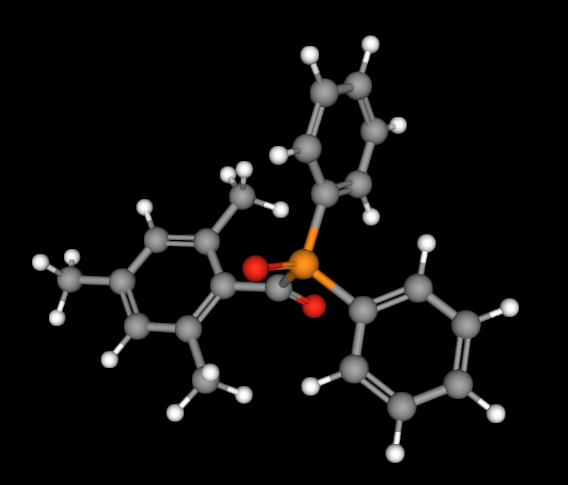
Il Trimethylbenzoyl diphenylphosphine oxide (noto come TPO) è un composto chimico organofosforico utilizzato come foto-iniziatore nei sistemi di polimerizzazione UV. La sua funzione principale nei cosmetici (soprattutto nei gel UV per unghie) è quella di attivare la reazione di polimerizzazione in presenza di radiazione ultravioletta, solidificando il prodotto in modo rapido e uniforme.

Viene impiegato anche in resine fotopolimeriche, adesivi UV, materiali dentali e rivestimenti ad alta prestazione, grazie alla sua elevata efficienza di assorbimento nella regione UV-A.


1. Struttura chimica e proprietà fisiche

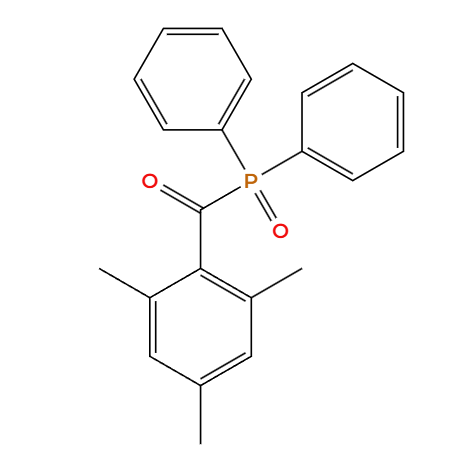
  • Nome IUPAC: [2,4,6-trimetilbenzoyl]diphenylphosphine oxide

  • Formula molecolare: C₂₂H₂₁O₂P

  • Massa molare: 364,38 g/mol

  • Classe chimica: fosfine ossido aromatiche

  • Gruppi funzionali: fosfine ossido (P=O), gruppi aromatici
Proprietà fisiche:

  • Aspetto: polvere cristallina bianca o leggermente giallastra

  • Odore: quasi inodore

  • Punto di fusione: 90–95 °C

  • Solubilità: insolubile in acqua, solubile in solventi organici (es. metacrilati)

  • Stabilità: stabile alla luce visibile, sensibile ai raggi UV

  • Assorbimento UV: massimo intorno a 380 nm (UV-A)


2. Principali costituenti

Essendo una sostanza pura, il TPO non contiene altri componenti, ma può essere utilizzato in combinazione con:

  • altri foto-iniziatori (es. BPO, camforochinone)

  • monomeri metacrilici o resine acriliche

  • stabilizzanti UV o inibitori di polimerizzazione per aumentare la sicurezza e l'efficienza


3. Metodo di produzione o sintesi

Il TPO è prodotto industrialmente attraverso sintesi organica multistep, che coinvolge:

  • Reazione tra derivati benzilici e ossidi di fosfina arilici

  • Condensazione controllata in condizioni anidre

  • Purificazione tramite cristallizzazione o distillazione sotto vuoto

Si tratta di una sostanza sintetica, non presente in natura, e viene usata in formulazioni tecniche avanzate.


4. Proprietà funzionali

Parametro
Valore / effetto
Foto-attività
elevata, polimerizza rapidamente con UV-A
Profondità di cura
ottima (anche strati spessi)
Compatibilità
buona con resine acriliche e metacriliche
Colore iniziale
basso ingiallimento rispetto ad altri foto-iniziatori
Efficienza
superiore a BPO nei gel UV

5. Applicazioni

In cosmetica professionale:

  • Gel UV per unghie: accelera e uniforma la polimerizzazione

  • Sistemi LED/UV ibridi: compatibile con molte sorgenti luminose

  • Top coat e basi fotopolimerizzabili

  • Prodotti semipermanenti con formulazioni a rapida catalisi

CAS   75980-60-8

EC number  278-355-8

In ambito non cosmetico (informativo):

  • Compositi dentali fotopolimerici

  • Adesivi UV per industria elettronica

  • Rivestimenti trasparenti ad alte prestazioni


6. Sicurezza e regolamentazione

  • Irritazione cutanea: classificato come potenzialmente irritante in forma pura

  • Sensibilizzazione: possibile se non polimerizzato completamente

  • Fototossicità: non fototossico nei prodotti ben formulati

  • Classificazione CLP (UE):

    • Tossico per organismi acquatici (con effetti a lungo termine)

    • Non classificato come cancerogeno o mutageno

  • Conformità cosmetica: ammesso solo in prodotti da lampada (es. smalti UV)

  • Non consentito in prodotti leave-on a uso topico classico

  • Sicurezza d’uso: garantita solo se completamente polimerizzato in lampada UV secondo le istruzioni del produttore


7. Conclusione

Il TPO è un foto-iniziatore di nuova generazione altamente efficiente, usato principalmente nei gel UV per unghie, dove garantisce una polimerizzazione rapida, profonda e uniforme, anche in spessori maggiori. Rispetto ad altri agenti, mostra minor ingiallimento, maggiore compatibilità con luci UV-A e LED, e un profilo prestazionale superiore.

Tuttavia, in quanto composto sintetico e potenzialmente irritante, il suo uso è strettamente regolato e confinato a prodotti professionali da polimerizzare in lampada, senza applicazioni su pelle o mucose.

Il TPO è vietato in Unione Europea dal 1.9.2025

Bibliografia__________________________________________________________________________

Zeng B, Cai Z, Lalevée J, Yang Q, Lai H, Xiao P, Liu J, Xing F. Cytotoxic and cytocompatible comparison among seven photoinitiators-triggered polymers in different tissue cells. Toxicol In Vitro. 2021 Apr;72:105103. doi: 10.1016/j.tiv.2021.105103. Epub 2021 Jan 29. Erratum in: Toxicol In Vitro. 2022 Sep;83:105411. doi: 10.1016/j.tiv.2022.105411. PMID: 33516932.

Kowalska A, Sokolowski J, Bociong K. The Photoinitiators Used in Resin Based Dental Composite-A Review and Future Perspectives. Polymers (Basel). 2021 Feb 2;13(3):470. doi: 10.3390/polym13030470.

Abstract. The presented paper concerns current knowledge of commercial and alternative photoinitiator systems used in dentistry. It discusses alternative and commercial photoinitiators and focuses on mechanisms of polymerization process, in vitro measurement methods and factors influencing the degree of conversion and hardness of dental resins. PubMed, Academia.edu, Google Scholar, Elsevier, ResearchGate and Mendeley, analysis from 1985 to 2020 were searched electronically with appropriate keywords. Over 60 articles were chosen based on relevance to this review. Dental light-cured composites are the most common filling used in dentistry, but every photoinitiator system requires proper light-curing system with suitable spectrum of light. Alternation of photoinitiator might cause changing the values of biomechanical properties such as: degree of conversion, hardness, biocompatibility. This review contains comparison of biomechanical properties of dental composites including different photosensitizers among other: camphorquinone, phenanthrenequinone, benzophenone and 1-phenyl-1,2 propanedione, trimethylbenzoyl-diphenylphosphine oxide, benzoyl peroxide. The major aim of this article was to point out alternative photoinitiators which would compensate the disadvantages of camphorquinone such as: yellow staining or poor biocompatibility and also would have mechanical properties as satisfactory as camphorquinone. Research showed there is not an adequate photoinitiator which can be as sufficient as camphorquinone (CQ), but alternative photosensitizers like: benzoyl germanium or novel acylphosphine oxide photoinitiators used synergistically with CQ are able to improve aesthetic properties and degree of conversion of dental resin.

Rudenko, Y., Kozlov, V., Burmistrov, D., Fedyakova, N., Bermeshev, M., & Chapala, P. (2025). Comprehensive investigation of phosphine oxide photoinitiators for vat photopolymerization. Progress in Additive Manufacturing, 1-14.

Abstract. Herein for the first time comprehensive analysis of commercial phosphine oxide-based photoinitiators was done for vat photopolymerization 3D printing resins. Resin accuracy, reactivity and cytotoxicity have been evaluated for the studied photoinitiators in different UV curable systems. Different methods for the accuracy assessment (pin hole, Dp) were used and it was shown that phenylbis(2,4,6-trimethylbezoyl)phosphine oxide (BAPO) possessed the highest x–y–z accuracy. It was shown that the increase of photoinitiator content in all cases resulted in the increase of accuracy and reactivity. The higher absorption value of a photoinitiator at a wavelength resulted in a higher reactivity and higher accuracy of corresponding VPP resin. It has been also estimated that for all studied samples, HSF cell viability was higher than 90%. Cell nuclei area and cell size have been also investigated in for the studied resins to evaluate the performance of photoinitiators after incubation with resin extracts and 3D printed parts. Newly developed 2,4,6-trimethylbenzoyl bis(4-methylphenyl)phosphine oxide (TMO) photoinitiator is considered as a more biocompatible alternative to the widely used 2,4,6-trimethylbezoyldiphenylphosphine oxide (TPO).