Ardea cinerea, commonly known as the grey heron, is one of the most majestic and recognizable water birds in Europe and much of Asia. Belonging to the family Ardeidae, it is known for its elegant posture, long neck, and long legs, which allow it to wade effortlessly in shallow waters. The grey heron has an average body length of 84–102 cm, a wingspan of 155–175 cm, and a weight ranging from 1 to 2 kg.
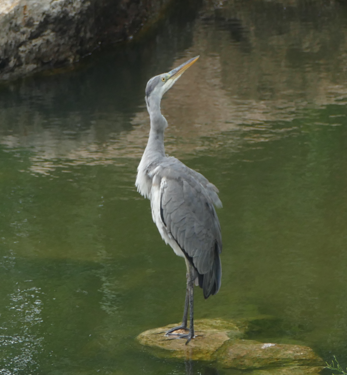
Its plumage is predominantly grey on the back and wings, with lighter shades on the belly. The head features black and white streaks, with a distinctive black crest extending from the nape, particularly noticeable during the breeding season. The eyes are yellow, and the long, sharp bill ranges from yellow to grey depending on age and season.
Scientific classification
Kingdom: Animalia
Phylum: Chordata
Class: Aves
Order: Pelecaniformes
Family: Ardeidae
Genus: Ardea
Species: Ardea cinerea
Physical characteristics and structure
The grey heron has a slender body well adapted to aquatic life. Its long, thin legs allow it to move gracefully in shallow water while hunting, and its long, flexible neck is ideal for striking quickly at prey such as fish, amphibians, and small invertebrates. The wide and long wings enable slow, steady flight, often alternating deep wingbeats with gliding.
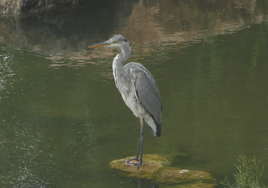
The sharp bill is a precise tool for catching prey, and its color may change seasonally, sometimes taking on a more orange hue. The yellow eyes, located laterally, provide a wide field of vision to detect movement in water and along the banks.
Physical properties
Ardea cinerea measures 84–102 cm in length, with a wingspan of 155–175 cm. Adults weigh between 1 and 2 kg. Flight is graceful and steady, with wide wings and deep wingbeats; the neck is often folded into an “S” shape during flight, a characteristic feature of herons. The grey and white plumage gives a balanced and harmonious appearance, while the black crest is more pronounced in males during the breeding season.
Reproduction and life cycle
The grey heron is monogamous for the breeding season, and sometimes forms longer-term pair bonds. Breeding begins in spring, when adults build large stick nests in colonies, typically on tall trees near water bodies or wetlands. The nest is lined with softer materials to protect and insulate the eggs.
Females usually lay 3–5 eggs, incubated for about 25–30 days. Both parents participate in incubation and feeding the chicks, which are altricial—born partially feathered but unable to feed themselves. Young herons remain in the nest for approximately 6–8 weeks before exploring the surrounding environment and eventually becoming independent.
Ecology and environmental role
Ardea cinerea plays a key ecological role in wetland and lacustrine ecosystems. It is primarily piscivorous but also feeds on amphibians, insects, and small mammals. Its slow and patient hunting behavior helps control fish and other aquatic populations, maintaining the ecological balance of wetlands.
The grey heron also serves as an environmental indicator: its presence in an area signals a healthy ecosystem, particularly the availability of clean, biodiverse aquatic habitats.
Environmental considerations and conservation
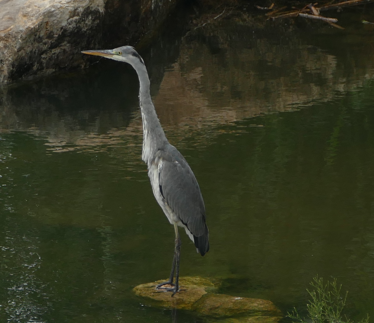
Currently, Ardea cinerea is not considered globally threatened, being widespread across Europe, Asia, and North Africa. However, local populations may be affected by habitat loss, water pollution, and human disturbances, especially in wetlands used for recreation or intensive agriculture.
Conservation of the grey heron requires the protection of wetland habitats and nesting sites, monitoring populations, and maintaining clean, sustainable aquatic ecosystems. The species benefits from environmental restoration projects and protected natural reserves dedicated to preserving aquatic wildlife.
References__________________________________________________________________________
Gustinelli A, Caffara M, Florio D, Otachi EO, Wathuta EM, Fioravanti ML. First description of the adult stage of Clinostomum cutaneum Paperna, 1964 (Digenea: Clinostomidae) from grey herons Ardea cinerea L. and a redescription of the metacercaria from the Nile tilapia Oreochromis niloticus niloticus (L.) in Kenya. Syst Parasitol. 2010 May;76(1):39-51. doi: 10.1007/s11230-010-9231-5.
Abstract. The combined use of morphological and molecular studies allowed for the first time the recognition and description of the adult stage of Clinostomum cutaneum Paperna, 1964 from the grey heron Ardea cinerea L. in Kenya. A redescription of the metacercaria that infect Nile tilapia Oreochromis niloticus niloticus (L.) from the same aquatic environment is also presented. C. cutaneum differs from all other species of Clinostomum Leidy, 1856 in the shape of its uterus. Sequencing the rRNA confirmed the morphological similarity between adults from the grey heron and the metacercarial stage from tilapia, and a level of genetic similarity with the other previously sequenced Clinostomum spp. was observed. The need for a reorganisation of Clinostomum using both morphological and molecular methods is highlighted.
Ogórek R, Borzęcka J, Kłosińska K, Piecuch A, Przymencki M, Litwiniak K, Suchodolski J. A Culture-Based Study of Micromycetes Isolated from the Urban Nests of Grey Heron (Ardea cinerea) in SW Poland. Animals (Basel). 2022 Mar 8;12(6):676. doi: 10.3390/ani12060676.
Abstract. There are many positive relationships between micromycetes and birds: They can spread fungal spores, and fungi facilitate cavity woodpecker excavation by preparing and modifying excavation sites. In turn, bird nests are mainly a source of potentially zoopathogenic fungi. The Wrocław city centre hosts the biggest grey heron breeding colony in Poland with at least 240 breeding birds pairs. To assess the possible public health risks associated with bird nests, the goal of the present study was to identify cultivable fungi present in the nests of grey herons (Ardea cinerea) in Wrocław. Additionally, attempts were made to determine whether the obtained species of fungi may pose a potential threat to animal health. Fungi were cultured at 23 and 37 ± 0.5 °C, and identified based on phenotypic and genotypic traits. Moreover, during routine inspection, visible fungal growth in some of the nests was found. Overall, 10 different fungal species were obtained in the study (Alternaria alternata, Aspergillus fumigatus, Botryotrichum piluliferum, Cladosporium cladosporioides, Epicoccum layuense, Mucor circinelloides, M.hiemalis, Penicillium atramentosum, P.coprophilum, and P.griseofulvum). They are both cosmopolitan species and a source of potential threat to humans, homoiothermous animals and plants. The greatest number of fungal species was obtained from the nest fragments with visible fungal growth incubated at 23 °C, and the least from western conifer seed bugs (Leptoglossus occidentalis) inhabiting the nests. The species such as A. fumigatus, P. coprophilum, and P.griseofulvum can be directly related to the occurrence of visible fungal growth on plant fragments of grey heron's nests.
Choi G, Nam HK, Son SJ, Do MS, Yoo JC. Effects of Pesticide Use on the Distributions of Grey Herons (Ardea cinerea) and Great Egrets (Ardea alba) in Rice Fields of the Republic of Korea. Zoolog Sci. 2021 Apr;38(2):162-169. doi: 10.2108/zs200079.
Abstract. Pesticide use is known to have a negative impact on the habitat use of birds. The decomposition of residual pesticides causes a drastic decrease in the biomass of wildlife food sources, indirectly affecting the ecosystem. In this study, we investigated the effects of pesticide use on the distributions of grey herons (Ardea cinerea) and great egrets (Ardea alba) in rice fields in the Republic of Korea. From early May to mid-June in 2015 and 2016, we recorded the abundance of these birds and their prey (loaches, other fish, tadpoles, and benthic invertebrates) and investigated their dependence on rice agricultural practices (eco-friendly vs conventional) and field types (harrowed, plowed, or transplanted). We found that both grey herons and great egrets preferentially used transplanted fields. Grey herons were observed more in conventional rice fields, while great egrets were observed more in eco-friendly rice fields. This may be driven by the distribution of their preferred prey types; we observed a higher density of tadpoles (the prey type favored by grey herons) in conventional fields and a higher density of loaches (the preferred prey of great egrets) in eco-friendly fields. Pesticides drive these patterns both directly and indirectly; pesticide use in conventional rice fields directly suppresses the abundance of loaches, which frees the tadpole population from predation pressures and indirectly boosts their abundance in conventional rice fields. Our findings suggest that the distributions of grey herons and great egrets vary depending on food availability and are directly and indirectly influenced by pesticide use.
Jakubas D, Kitowski I, Wiącek D, Bzoma S. Inter-species and inter-colony differences in elemental concentrations in eggshells of sympatrically nesting great cormorants Phalacrocorax carbo and grey herons Ardea cinerea. Environ Sci Pollut Res Int. 2019 Jan;26(3):2747-2760. doi: 10.1007/s11356-018-3765-5.
Abstract. We compared the concentrations of 17 heavy metals and essential elements in post-hatching eggshells of two waterbirds, the obligate piscivorous great cormorant Phalacrocorax carbo (GCM) and the more omnivorous grey heron Ardea cinerea (GHR), breeding sympatrically in eight mixed colonies in Poland. We found significant inter-species and inter-colony differences in the levels of most of the elements. GHR had significantly higher concentrations of Al, which can be explained by its very low stomach pH: an acidic environment favours the release of Al compounds. Differences in Mn, Ni, Cu, Se and Hg concentrations can be attributed to the various contributions of fish and other aquatic organisms to the diet, and to the exploration of different habitats (GCM exclusively aquatic, GHR a wider range) and microhabitats (GCM, in contrast to wading GHR, dive for food, exploring the whole depth range of water bodies), differently exposed to contamination by those elements from sediments. Inter-colony differences were related to the level of industrialisation. We recorded higher levels of some elements in the eggshells (Fe, Mn in both species and Cr, Ni and Zn in GCM) collected in industrialised areas, which may be associated with the negative environmental impact of industrial areas.
Quesada-Canales O, Díaz-Delgado J, Paz Y, Domínguez L, Bezos J, Calabuig P, Suárez-Bonnet A, Fernández A, Andrada M. Disseminated avian mycobacteriosis in a free-living grey heron (Ardea cinerea). Avian Dis. 2013 Sep;57(3):703-6. doi: 10.1637/10474-122612-Case.1.
Abstract. Wild birds share with humans the capacity for moving fast over large distances. During migratory movements, birds carry pathogens that can be transmitted between species. One of these concerning pathogens is Mycobacterium spp. A necropsy was performed in a grey heron (Ardea cinerea) that had been medically treated for a polyarthritic process. Grossly, firm white-yellowish nodules of various size, resembling granulomas, were observed in right carpal joint, both patellar joints, neck musculature, palate, pharynx, larynx, nasal sinuses, pericardial sac, air sacs, proventriculus and intestinal serosa, pancreas, kidneys, adrenal glands, and oviduct. Microscopically, these lesions were composed of multinucleated giant cells, large macrophages, and lymphocytes, with a central zone of necrosis and in some cases with peripheral fibrosis. Acid-fast bacilli were detected within these lesions. Lesions were cultured and Mycobacterium avium subsp. avium was identified. To the best of our knowledge this is the first description of mycobacteriosis in grey herons. Although the grey heron is currently considered a least-concern species, avian mycobacteriosis remains a threat on the conservation management of endangered avian species, and constitutes a public health concern as well.




