Ardea cinerea, comunemente conosciuta come airone cenerino, è uno degli uccelli acquatici più maestosi e riconoscibili d’Europa e di gran parte dell’Asia. Appartenente alla famiglia Ardeidae, è noto per il suo portamento elegante, il collo lungo e le lunghe zampe che le permettono di camminare agevolmente in acque poco profonde. L’airone cenerino ha una lunghezza corporea media di 84-102 cm e un’apertura alare compresa tra 155 e 175 cm, con un peso variabile tra 1 e 2 kg.
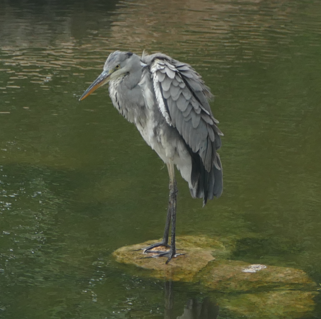
Il piumaggio è prevalentemente grigio cenerino sul dorso e sulle ali, con tonalità più chiare sul ventre. La testa presenta striature bianche e nere, con una caratteristica cresta nera allungata che emerge dalla nuca, visibile soprattutto durante il periodo riproduttivo. Gli occhi sono gialli, e il becco, lungo e affilato, varia dal giallo al grigio in base all’età e alla stagione.
Classificazione scientifica
Regno: Animalia
Phylum: Chordata
Classe: Aves
Ordine: Pelecaniformes
Famiglia: Ardeidae
Genere: Ardea
Specie: Ardea cinerea
Caratteristiche fisiche e struttura
L’airone cenerino possiede un corpo slanciato e ben adattato alla vita acquatica. Le zampe lunghe e sottili permettono di muoversi agilmente in acque basse alla ricerca di cibo, mentre il collo lungo e flessibile è perfetto per colpire rapidamente prede come pesci, anfibi e piccoli invertebrati. Le ali ampie e lunghe consentono un volo lento e regolare, spesso con battiti profondi alternati a planate.
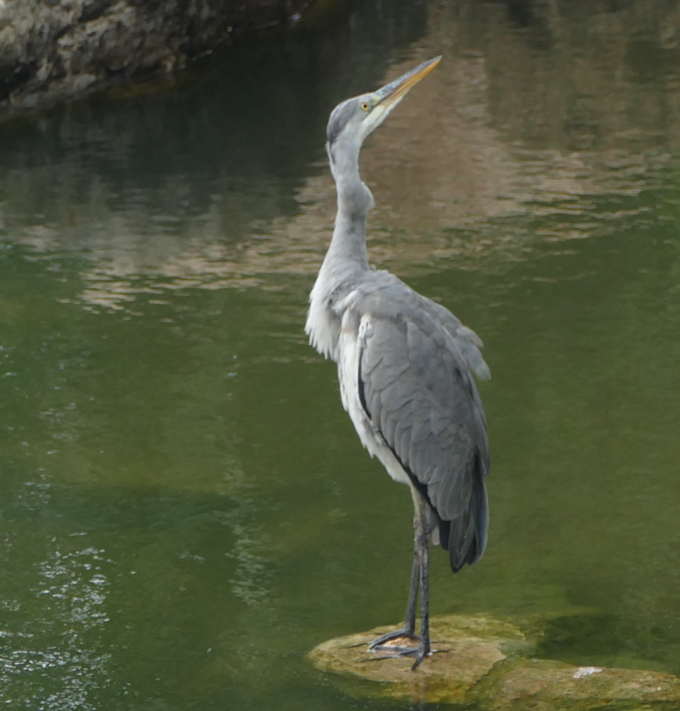
Il becco affilato è uno strumento di precisione per la cattura di prede e varia leggermente di colore in base alla stagione riproduttiva, assumendo talvolta una tonalità più aranciata. Gli occhi gialli, posti lateralmente, offrono un ampio campo visivo per individuare movimenti in acqua e sulle sponde.
Proprietà fisiche
Ardea cinerea misura tra 84 e 102 cm di lunghezza, con apertura alare di 155-175 cm. Gli adulti pesano mediamente 1-2 kg. Il volo è elegante e regolare, caratterizzato da ali larghe e battiti profondi; il collo viene spesso ripiegato a forma di “S” durante il volo, una caratteristica distintiva degli aironi. Il piumaggio cenerino e bianco conferisce un aspetto sobrio e armonioso, mentre la cresta nera è più pronunciata nei maschi durante la stagione degli accoppiamenti.
Processo di riproduzione e ciclo biologico
L’airone cenerino è monogamo per stagione, e talvolta forma legami più duraturi. La stagione riproduttiva inizia in primavera, quando gli adulti costruiscono grandi nidi di rami in colonie, generalmente su alberi alti vicino a corsi d’acqua o zone umide. Il nido è rivestito con materiale più morbido per garantire protezione e isolamento termico alle uova.
La femmina depone generalmente tra 3 e 5 uova, incubate per circa 25-30 giorni. Entrambi i genitori partecipano all’incubazione e alla cura dei pulcini, che sono nidicoli, cioè nascono con piumaggio parziale ma incapaci di nutrirsi da soli. I giovani rimangono nel nido per circa 6-8 settimane prima di iniziare a esplorare l’ambiente circostante e, successivamente, diventano indipendenti.
Ecologia e ruolo ambientale
Ardea cinerea occupa un ruolo ecologico chiave negli ecosistemi umidi e lacustri. È principalmente piscivora, ma si nutre anche di anfibi, insetti e piccoli mammiferi. Il suo comportamento di caccia lento e paziente contribuisce al controllo delle popolazioni di pesci e altri animali acquatici, mantenendo l’equilibrio ecologico delle zone umide.
L’airone cenerino è anche un indicatore ambientale: la sua presenza in un’area suggerisce la qualità dell’ecosistema, in particolare la disponibilità di habitat acquatici sani e ricchi di biodiversità.
Considerazioni ambientali e conservazione
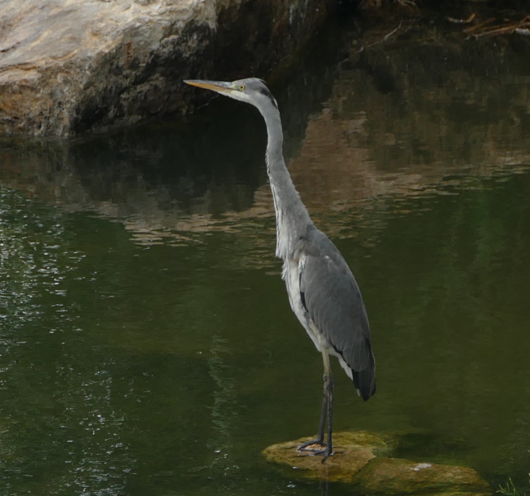
Attualmente Ardea cinerea non è considerato a rischio a livello globale, essendo diffuso in Europa, Asia e Nord Africa. Tuttavia, le popolazioni locali possono essere minacciate dalla perdita di habitat, dall’inquinamento delle acque e dalla disturbo antropico, in particolare nelle zone umide utilizzate per attività ricreative o agricole intensive.
La conservazione dell’airone cenerino richiede la protezione degli habitat umidi e dei siti di nidificazione, il monitoraggio delle popolazioni e il mantenimento di ecosistemi acquatici puliti e sostenibili. La specie beneficia di progetti di ripristino ambientale e di riserve naturali dedicate alla tutela della fauna acquatica.
Bibliografia__________________________________________________________________________
Gustinelli A, Caffara M, Florio D, Otachi EO, Wathuta EM, Fioravanti ML. First description of the adult stage of Clinostomum cutaneum Paperna, 1964 (Digenea: Clinostomidae) from grey herons Ardea cinerea L. and a redescription of the metacercaria from the Nile tilapia Oreochromis niloticus niloticus (L.) in Kenya. Syst Parasitol. 2010 May;76(1):39-51. doi: 10.1007/s11230-010-9231-5.
Abstract. The combined use of morphological and molecular studies allowed for the first time the recognition and description of the adult stage of Clinostomum cutaneum Paperna, 1964 from the grey heron Ardea cinerea L. in Kenya. A redescription of the metacercaria that infect Nile tilapia Oreochromis niloticus niloticus (L.) from the same aquatic environment is also presented. C. cutaneum differs from all other species of Clinostomum Leidy, 1856 in the shape of its uterus. Sequencing the rRNA confirmed the morphological similarity between adults from the grey heron and the metacercarial stage from tilapia, and a level of genetic similarity with the other previously sequenced Clinostomum spp. was observed. The need for a reorganisation of Clinostomum using both morphological and molecular methods is highlighted.
Ogórek R, Borzęcka J, Kłosińska K, Piecuch A, Przymencki M, Litwiniak K, Suchodolski J. A Culture-Based Study of Micromycetes Isolated from the Urban Nests of Grey Heron (Ardea cinerea) in SW Poland. Animals (Basel). 2022 Mar 8;12(6):676. doi: 10.3390/ani12060676.
Abstract. There are many positive relationships between micromycetes and birds: They can spread fungal spores, and fungi facilitate cavity woodpecker excavation by preparing and modifying excavation sites. In turn, bird nests are mainly a source of potentially zoopathogenic fungi. The Wrocław city centre hosts the biggest grey heron breeding colony in Poland with at least 240 breeding birds pairs. To assess the possible public health risks associated with bird nests, the goal of the present study was to identify cultivable fungi present in the nests of grey herons (Ardea cinerea) in Wrocław. Additionally, attempts were made to determine whether the obtained species of fungi may pose a potential threat to animal health. Fungi were cultured at 23 and 37 ± 0.5 °C, and identified based on phenotypic and genotypic traits. Moreover, during routine inspection, visible fungal growth in some of the nests was found. Overall, 10 different fungal species were obtained in the study (Alternaria alternata, Aspergillus fumigatus, Botryotrichum piluliferum, Cladosporium cladosporioides, Epicoccum layuense, Mucor circinelloides, M.hiemalis, Penicillium atramentosum, P.coprophilum, and P.griseofulvum). They are both cosmopolitan species and a source of potential threat to humans, homoiothermous animals and plants. The greatest number of fungal species was obtained from the nest fragments with visible fungal growth incubated at 23 °C, and the least from western conifer seed bugs (Leptoglossus occidentalis) inhabiting the nests. The species such as A. fumigatus, P. coprophilum, and P.griseofulvum can be directly related to the occurrence of visible fungal growth on plant fragments of grey heron's nests.
Choi G, Nam HK, Son SJ, Do MS, Yoo JC. Effects of Pesticide Use on the Distributions of Grey Herons (Ardea cinerea) and Great Egrets (Ardea alba) in Rice Fields of the Republic of Korea. Zoolog Sci. 2021 Apr;38(2):162-169. doi: 10.2108/zs200079.
Abstract. Pesticide use is known to have a negative impact on the habitat use of birds. The decomposition of residual pesticides causes a drastic decrease in the biomass of wildlife food sources, indirectly affecting the ecosystem. In this study, we investigated the effects of pesticide use on the distributions of grey herons (Ardea cinerea) and great egrets (Ardea alba) in rice fields in the Republic of Korea. From early May to mid-June in 2015 and 2016, we recorded the abundance of these birds and their prey (loaches, other fish, tadpoles, and benthic invertebrates) and investigated their dependence on rice agricultural practices (eco-friendly vs conventional) and field types (harrowed, plowed, or transplanted). We found that both grey herons and great egrets preferentially used transplanted fields. Grey herons were observed more in conventional rice fields, while great egrets were observed more in eco-friendly rice fields. This may be driven by the distribution of their preferred prey types; we observed a higher density of tadpoles (the prey type favored by grey herons) in conventional fields and a higher density of loaches (the preferred prey of great egrets) in eco-friendly fields. Pesticides drive these patterns both directly and indirectly; pesticide use in conventional rice fields directly suppresses the abundance of loaches, which frees the tadpole population from predation pressures and indirectly boosts their abundance in conventional rice fields. Our findings suggest that the distributions of grey herons and great egrets vary depending on food availability and are directly and indirectly influenced by pesticide use.
Jakubas D, Kitowski I, Wiącek D, Bzoma S. Inter-species and inter-colony differences in elemental concentrations in eggshells of sympatrically nesting great cormorants Phalacrocorax carbo and grey herons Ardea cinerea. Environ Sci Pollut Res Int. 2019 Jan;26(3):2747-2760. doi: 10.1007/s11356-018-3765-5.
Abstract. We compared the concentrations of 17 heavy metals and essential elements in post-hatching eggshells of two waterbirds, the obligate piscivorous great cormorant Phalacrocorax carbo (GCM) and the more omnivorous grey heron Ardea cinerea (GHR), breeding sympatrically in eight mixed colonies in Poland. We found significant inter-species and inter-colony differences in the levels of most of the elements. GHR had significantly higher concentrations of Al, which can be explained by its very low stomach pH: an acidic environment favours the release of Al compounds. Differences in Mn, Ni, Cu, Se and Hg concentrations can be attributed to the various contributions of fish and other aquatic organisms to the diet, and to the exploration of different habitats (GCM exclusively aquatic, GHR a wider range) and microhabitats (GCM, in contrast to wading GHR, dive for food, exploring the whole depth range of water bodies), differently exposed to contamination by those elements from sediments. Inter-colony differences were related to the level of industrialisation. We recorded higher levels of some elements in the eggshells (Fe, Mn in both species and Cr, Ni and Zn in GCM) collected in industrialised areas, which may be associated with the negative environmental impact of industrial areas.
Quesada-Canales O, Díaz-Delgado J, Paz Y, Domínguez L, Bezos J, Calabuig P, Suárez-Bonnet A, Fernández A, Andrada M. Disseminated avian mycobacteriosis in a free-living grey heron (Ardea cinerea). Avian Dis. 2013 Sep;57(3):703-6. doi: 10.1637/10474-122612-Case.1.
Abstract. Wild birds share with humans the capacity for moving fast over large distances. During migratory movements, birds carry pathogens that can be transmitted between species. One of these concerning pathogens is Mycobacterium spp. A necropsy was performed in a grey heron (Ardea cinerea) that had been medically treated for a polyarthritic process. Grossly, firm white-yellowish nodules of various size, resembling granulomas, were observed in right carpal joint, both patellar joints, neck musculature, palate, pharynx, larynx, nasal sinuses, pericardial sac, air sacs, proventriculus and intestinal serosa, pancreas, kidneys, adrenal glands, and oviduct. Microscopically, these lesions were composed of multinucleated giant cells, large macrophages, and lymphocytes, with a central zone of necrosis and in some cases with peripheral fibrosis. Acid-fast bacilli were detected within these lesions. Lesions were cultured and Mycobacterium avium subsp. avium was identified. To the best of our knowledge this is the first description of mycobacteriosis in grey herons. Although the grey heron is currently considered a least-concern species, avian mycobacteriosis remains a threat on the conservation management of endangered avian species, and constitutes a public health concern as well.




