



Microcar Dué costs, pros, cons and common fixes
Country of Manufacture
The Microcar Dué is produced in Abrest, France, at Ligier’s facility, on a dedicated light quadricycle (L6e) platform.
Quick Overview
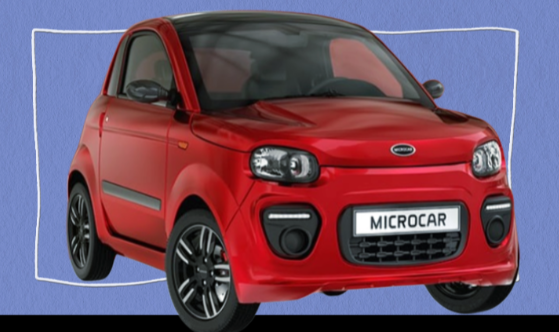
The Dué is a two-seat light quadricycle measuring just 2.87 m long. It features soft, rounded bodywork, a bonnet-style “snout” grille, and elliptical LED DRL headlights. A contrasting black roof and two-tone 14″ (Initial) or 15″ (Must) wheels give it a playful, modern look. It’s perfectly suited for urban environments with its exceptional maneuverability and ease of parking.
Powertrain & Performance
| Engine | Power & Torque | Top Speed |
|---|---|---|
| 498 cc 2-cylinder diesel | 6 kW (8 hp) | 45 km/h |
A CVT automatic transmission and front-wheel drive comply with light quadricycle regulations, limiting the top speed to 45 km/h.
Efficiency & Fuel Economy
| Characteristic | Value |
|---|---|
| Average Consumption | 3.2 L/100 km |
| CO₂ Emissions | 85 g/km* |
* Estimated values for a diesel-powered light quadricycle.
Dimensions & Capacity
| Specification | Measurement |
|---|---|
| Length | 2,870 mm |
| Width | 1,500 mm |
| Height | 1,460 mm |
| Seats | 2 |
| Cargo Volume | 318 L |
Trim Levels & Pricing
| Trim | Price (€) |
|---|---|
| Initial | 11,390 |
| Must | 12,700* |
* Estimated price for the Must with 15″ wheels and multimedia package.
(On-the-road price; VAT included, incentives and delivery fees excluded.)
Warranty
2 years (unlimited mileage)
Maintenance & First Services (Indicative Costs)
| Service | Avg. Cost (€) |
|---|---|
| 1st Service (6 months or 5,000 km) | 80–100 |
| 2nd Service (1 year or 10,000 km) | 100–120 |
| Oil & Filter Change | 50–70 |
| Brake Inspection | 60–80 |
| 12 V Battery Replacement | 40–60 |
Pros
Ultra-compact & city-friendly: unmatched maneuverability in dense urban areas
Very low running costs: minimal fuel consumption and inexpensive maintenance
Surprisingly roomy cargo area: 318 L behind the seats
Accessible: drivable with a moped license from age 14
Customizable styling: contrasting roof, wheels, and interior trims
Cons
Limited performance: 8 hp and 45 km/h top speed unsuitable for faster roads
Basic ride comfort: firm suspension and minimal sound insulation
Minimal safety features: no airbags or advanced driver-assist systems
Diesel noise: the twin-cylinder engine can be loud under acceleration
In Summary
The Microcar Dué is an ideal solution for short urban trips: extremely compact, highly economical, and effortless to park. While it sacrifices speed, comfort, and advanced safety of a full-sized car, it offers a practical, budget-friendly alternative—especially for young drivers and city dwellers.
Verdict — Microcar Dué (Model Year 2025)
Light Quadricycle · 0.5 L dCi Diesel 498 cc, 6 kW (8 hp), 21 Nm · FWD · CVT · Top Speed 45 km/h · 0–45 km/h in ~7 s · NEDC 3.6 L/100 km · 93 g/km CO₂ · 400 kg curb weight · Dimensions 2.87 × 1.50 × 1.485 m (L×W×H)
The 2025 Microcar Dué is the ideal no-license urban runabout. Its reinforced monocoque chassis and coil-spring suspension underpin a compact footprint (2.87 m long, 1.50 m wide) with a modern “X-UV” grille, LED daytime running lights, skid-plate styling, and 13″ alloy wheels—delivering nimble agility in tight city streets.
Inside, the “Urban Utility” cabin keeps things simple yet functional: a 3.5″ LCD-integrated analogue cluster, a 6.2″ Pioneer touchscreen with Bluetooth and a rear-view camera, soft-touch dash panels, and a multifunction steering wheel. Two supportive seats and ample storage cubbies (center console, door pockets, bottle holders) ensure everyday convenience. A surprisingly roomy 243 L trunk (expanding to 900 L with seats folded) handles groceries or weekend bags with ease.
Key Technical Highlights:
Powertrain: 498 cc 2-cylinder diesel, 6 kW (8 hp), 21 Nm; CVT automatic.
Performance: Limited to 45 km/h; 0–45 km/h in ~7 s.
Dimensions & Weight: 2.87 m L × 1.50 m W × 1.485 m H; 1.90 m wheelbase; 400 kg curb.
Efficiency & Emissions: 3.6 L/100 km (NEDC); 93 g/km CO₂; 17.5 L fuel tank.
Safety & ADAS: ABS + EBD, dual front airbags, rear parking sensors with camera, ice-warning indicator.
| Category | Strengths | Performs Well | Limitations |
|---|---|---|---|
| Design & Styling | Distinctive mini-SUV look; LED DRLs | Robust underbody protection | Less refined than higher-segment microcars |
| Comfort & Space | Supportive seats for two; raised driving position | Excellent urban visibility | No rear seating or rear cabin space |
| Efficiency & Economy | Ultra-low fuel consumption | Simple, reliable diesel powertrain | No electric or hybrid variant |
| Driving Dynamics | Feather-light steering; tiny turning circle (8.3 m) | Extremely maneuverable in city traffic | Top speed limited to 45 km/h |
| Practicality | 243 L boot (+900 L folded); low load sill | Multiple internal cubbies | No front-boot or frunk |
| Infotainment & Connect | 6.2″ touchscreen with rear camera; Bluetooth | Intuitive, user-friendly interface | No integrated satellite navigation |
| Safety & ADAS | ABS, EBD, airbags, ice-warning | Rear parking sensors with camera | Lacks ESC and advanced driver aids |
| Running Costs | Economical to buy and maintain | Low insurance premiums | Limited dedicated service network |
| Depreciation | Strong residuals for entry-level microcars | Steady demand in used market | Brand awareness lower than some rivals |
Who It’s For
Urban commuters without a full license seeking a safe, ultra-compact, and economical vehicle for grocery runs and short trips.
Who Should Look Elsewhere
If you need zero-emission driving or higher performance, consider the electric quadricycle L’Automobile Elettrica, Renault Twizy, or Citroën Ami.
Recommended Specification
Progress ACT Must trim with reinforced suspension, 13″ two-tone alloy wheels, standard rear-view camera, optional eco-leather upholstery, and ice-warning sensor—for the perfect balance of versatility, safety, and style.

