



Volkswagen ID.3 costs, pros, cons and common fixes
Country of Manufacture
The Volkswagen ID.3 is built in Zwickau, Germany, on the Group’s modular electric MEB platform.
Quick Overview
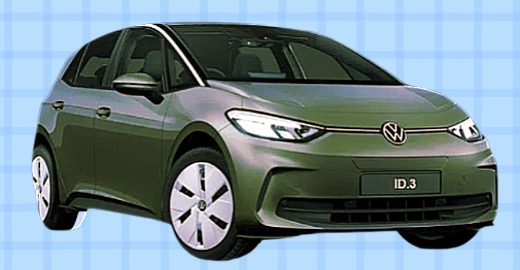
The ID.3 is a compact five-door electric hatchback featuring clean, aerodynamic lines, flush door handles, and LED matrix headlights on higher trims. Its “Open Space” cabin offers a minimalist layout with a 12″ central touchscreen, a configurable digital instrument cluster, and seats upholstered in partially recycled materials for a sustainable, modern interior.
Powertrain & Performance
| Model | Power & Torque | 0–100 km/h | Top Speed |
|---|---|---|---|
| Pure Performance (45 kWh) | 107 kW (145 hp) / 310 Nm | 8.9 s | 160 km/h |
| Pro Performance (58 kWh) | 150 kW (204 hp) / 310 Nm | 7.4 s | 160 km/h |
| Pro S (77 kWh) | 210 kW (286 hp) / 550 Nm | 5.6 s | 180 km/h |
Efficiency & Charging
| Characteristic | Value |
|---|---|
| WLTP Range | 330 km / 420 km / 550 km (45 / 58 / 77 kWh) |
| Average Consumption | 14–16 kWh/100 km |
| AC Charging | 11 kW standard (optional 22 kW) |
| DC Charging | Up to 170 kW (10–80 % in ≈ 25 min) |
Dimensions & Capacity
| Specification | Measurement |
|---|---|
| Length | 4,261 mm |
| Width | 1,809 mm (excl. mirrors) |
| Height | 1,568 mm |
| Wheelbase | 2,765 mm |
| Curb Weight | 1,700–1,900 kg |
| Cargo Volume | 385 L / 1,267 L |
| Ground Clearance | 145 mm |
| Turning Circle | 10.2 m |
Trim Levels & Pricing
| Trim | Price (€) |
|---|---|
| Pure Performance | 37,900 |
| Pro Performance | 44,900 |
| Pro S | 52,900 |
(On-the-road price; VAT included, incentives and delivery fees excluded.)
Maintenance & First Services (Indicative Costs)
| Service | Average Cost (€) |
|---|---|
| 1st Service (1 yr or 20 000 km) | 200–240 |
| 2nd Service (2 yr or 40 000 km) | 220–260 |
| Front Brake Pads Replacement | 220–260 |
| Front Discs + Pads Replacement | 600–700 |
| Cabin & Engine Air Filter Replacement | 120–150 |
| 12 V Auxiliary Battery Replacement | 150–180 |
| Tire Replacement (each) | 150–180 |
Pros
Spacious “Open Space” Cabin with eco-friendly materials and a large touchscreen
Impressive Range up to 550 km WLTP in the Pro S model
Fast DC Charging at up to 170 kW for quick turnaround
Brisk Acceleration: 0–100 km/h in 5.6 s (Pro S)
Zero Emissions and whisper-quiet operation
Cons
Premium Entry Price compared to internal-combustion compacts
Firm Ride over rough surfaces due to stiffer EV suspension
Essential Options (22 kW charger, comfort pack) add to the base cost
Heavy Curb Weight slightly impacts agility in city traffic
In Summary
The Volkswagen ID.3 sets the standard for the compact EV segment with its blend of sustainability, technology, and range. It delivers a comfortable, high-tech experience and rapid charging capabilities, making it an ideal daily electric driver—at the expense of a higher purchase price and firmer ride.
Verdict — Volkswagen ID.3 (Model Year 2025)
Compact Electric Hatchback · 58 kWh Battery (usable ~54 kWh) · Rear Motor 150 kW (204 hp), 310 Nm · RWD · 0–100 km/h in 7.3 s · WLTP Range ≈ 420 km · DC Charging up to 100 kW · 160 mm Ride Height
The 2025 Volkswagen ID.3 continues as VW’s pioneering electric hatch, featuring modern proportions (4.26 m length, 2.77 m wheelbase) and a clean, aerodynamic design. Signature elements include smooth body surfaces, Matrix LED headlights, flush door handles, and a minimalist “cab-forward” stance. Optimized 18″ “Boren” wheels further enhance range and efficiency.
Inside, the “Open Space” cabin emphasizes light and tech: a wrap-around dash with soft-touch inserts, a 12″ central touchscreen for infotainment and climate, a 5.3″ digital driver display, and optional head-up display. Modular seating offers space akin to a mid-size sedan, with a 385 L boot expandable to 1,267 L. Wireless App-Connect, over-the-air software updates, and VW’s ID software ecosystem complete the package.
| Category | Strengths | Performs Well | Limitations |
|---|---|---|---|
| Design & Styling | Sleek, aerodynamic hatch profile; distinctive Matrix LEDs | Futuristic yet understated look | Less commanding presence than a compact EV SUV |
| Comfort & Space | Airy “Open Space” cabin; modular rear seats | Elevated seating position; excellent visibility | Slightly intrusive center console |
| Efficiency & Range | Up to 420 km WLTP; efficient powertrain | 100 kW rapid charging capability | Range drops at sustained high speeds |
| Driving Dynamics | Quick electric torque; nimble handling | Precise steering; balanced ride comfort vs. agility | Ride feels firm on very rough roads |
| Practicality | 385 L boot (+1,267 L folded); “Simply Clever” storage | Generous interior cubbies and door pockets | No front trunk (“frunk”) |
| Infotainment & Connect. | 12″ touchscreen with VW ID software; OTA updates | Wireless App-Connect; intuitive UI | Built-in navigation requires optional upgrade |
| Safety & ADAS | Standard Travel Assist; autonomous emergency braking | Effective adaptive cruise and lane-keep assist | No fully hands-free highway driving |
| Running Costs | Near-zero “fuel” cost; EV incentives | Low routine maintenance | Specialized EV service centers not everywhere |
| Depreciation | Stable residuals for an entry-level EV hatchback | Growing demand on the used-EV market | Intense competition from city EVs and compact SUVs |
Who It’s For
Drivers seeking a tech-forward, zero-emission hatch with genuine everyday range, spacious interior packaging, and the simplicity of VW’s ID ecosystem—ideal for both urban commuting and longer trips.
Who Should Look Elsewhere
If you need higher ride height or all-wheel drive, consider the Volkswagen ID.4, Škoda Enyaq iV, or Hyundai Kona Electric.
Recommended Configuration
Pro Performance trim with 58 kWh battery, 150 kW motor, 18″ “Boren” wheels, Comfort & Lighting pack (heated seats, head-up display), and Travel Assist Plus—for the optimal blend of range, comfort, and advanced driver aids.

