



Sasa quelpaertensis (Sasa quelpaertensis Nakai)
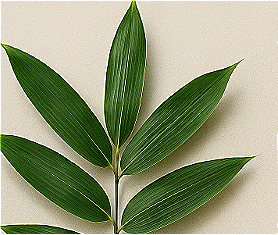
Sasa quelpaertensis is a dwarf, broad-leaved bamboo in the Poaceae (subfamily Bambusoideae), endemic to Jeju Island (Republic of Korea), particularly to the montane areas of Mt. Halla. It is a perennial, rhizomatous species forming dense ground-cover stands in the forest understorey, with relatively short culms compared with tree bamboos. Culms are slender, erect to slightly arching, bearing broad, lanceolate leaves of deep green colour, which together create a compact, continuous undergrowth layer.
From an ecological perspective, Sasa quelpaertensis typically colonises cool, moist montane forests on volcanic, well-drained but humus-rich soils, where it can dominate large areas in the montane to subalpine belt of Mt. Halla. The species tolerates cold winters, snow cover and marked temperature fluctuations, showing high cold hardiness compared with many other bamboos. Dense stands form a competitive understorey, often limiting regeneration of other plant species through shading, space occupation and possible chemical interactions. Where its cover is extensive, this bamboo can strongly influence plant community dynamics, understorey biodiversity and the overall functioning of the forest ecosystem.
In terms of land use and stand management, Sasa quelpaertensis contributes significantly to soil protection and erosion control, thanks to its extensive network of rhizomes and fine roots that stabilise slopes and reduce surface runoff. At the same time, its vigorous growth and competitive behaviour require careful management where natural regeneration of trees or other understorey species is a management objective.
From a compositional standpoint, the main focus is on the leaves, which are used for extracts and bamboo leaf tea. Leaves contain a high proportion of water, structural and storage polysaccharides, amino acids, polyphenols and other secondary metabolites. The phenolic profile includes phenolic acids (such as p-coumaric acid) and flavonoids (notably tricin and related flavone derivatives), along with other antioxidant constituents; in some extraction systems, compounds such as arbutin have also been identified. Leaf extracts show marked antioxidant and anti-inflammatory activity, with clear seasonal variation in phenolic content and radical-scavenging capacity. A mineral fraction rich in potassium, with calcium, magnesium and trace elements, is also present, with levels influenced by soil characteristics and harvest time.
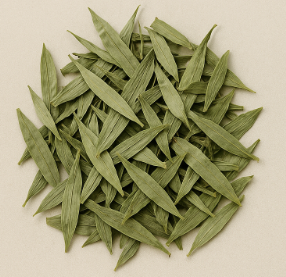
In food and nutraceutical applications, leaves of Sasa quelpaertensis are used to prepare a traditional bamboo leaf tea, consumed in Korea for its functional and health-oriented properties. Standardised leaf extracts are being investigated as potential ingredients for functional foods and supplements, particularly in relation to their possible role in supporting the management of metabolic disorders (for example disturbances in lipid metabolism) and in maintaining redox balance via antioxidant action. Experimental studies have reported links between leaf extracts and modulation of inflammation, regulation of lipid metabolism and potential interactions with the gut microbiota, suggesting prospective use in targeted nutraceutical formulations.
In the cosmetic and technical sectors, Sasa quelpaertensis leaf extracts are considered as potential antioxidant and soothing ingredients, exploiting their phenolic content to help counteract oxidative stress at the skin surface and to provide calming, protective effects. The physicochemical characteristics of aqueous or hydroalcoholic extracts (for example stability, solubility, phenolic profile) are subjects of optimisation for use as functional plant-based ingredients in cosmetic and other technical products.
In animal nutrition, the biomass of Sasa quelpaertensis (leaves and young culms) has been evaluated as a possible local forage resource in extensive systems. Key parameters include nutritive value, fibre characteristics, digestibility and safe inclusion levels. The combination of fibre, polysaccharides and bioactive compounds makes the species potentially interesting for controlled inclusion in specific rations, although practical use must be guided by dedicated nutritional studies.
Quality assessment of Sasa quelpaertensis material used for tea, extracts or functional ingredients focuses on harvest stage, leaf appearance and colour, moisture content, microbial load, presence of impurities (other plant species, foreign matter, excess woody particles) and levels of polyphenols and other bioactives. For extracts, in addition to yield, key parameters include physicochemical properties (pH, solubility, stability), chromatographic profile of major phenolics, oxidative stability and the absence of contaminants above permitted limits. Traceability of the harvesting area, appropriate drying procedures and suitable storage conditions are essential to preserve the technological and sensory properties of the raw material and derived products.
 |  |
Botanical classification (APG IV system)
Common name: Sasa quelpaertensis (Jeju dwarf bamboo)
Botanical name: Sasa quelpaertensis Nakai
Kingdom: Plantae
Clade: Angiosperms → Monocots → Commelinids
Order: Poales
Family: Poaceae
Genus: Sasa
Species: Sasa quelpaertensis Nakai
Indicative nutritional values per 100 g (dried leaves)*
| Component | Approx. value per 100 g |
|---|---|
| Energy | ~ 250–300 kcal |
| Total carbohydrates | ~ 35–45 g |
| — of which sugars | ~ 2–4 g |
| Dietary fibre (total) | ~ 30–40 g |
| Proteins | ~ 12–18 g |
| Total fats | ~ 2–4 g |
| — of which saturated fatty acids (SFA) | minor share of total lipids |
| Sodium | present, but not as high as in marine algae; depends on washing/drying |
| Potassium | moderate |
| Calcium | present in appreciable amounts |
| Magnesium | present |
| Other minerals (trace) | iron, manganese, zinc, variable |
* Indicative values derived from available data on the forage value of Sasa quelpaertensis leaves and, by analogy, on similar fibrous forages. Values refer to dried leaves (dry matter basis). Fresh leaves contain much more water and therefore much lower values per 100 g for all nutrients.
Mini-glossary of acronyms
SFA = Saturated fatty acids. When they predominate over unsaturated fatty acids in the diet, they are considered less favourable for cardiovascular health.
MUFA = Monounsaturated fatty acids. Generally regarded as more favourable when they replace saturated fats.
PUFA = Polyunsaturated fatty acids. Include omega-6 and omega-3; essential in small amounts and important for cell membrane structure and inflammatory balance.
Plant Characteristics
- Height: Typically grows to a height of 50–100 cm, making it a dwarf bamboo.
- Leaves: Green, lance-shaped leaves, approximately 10–15 cm long, with serrated edges. The leaves remain green year-round, giving the plant an evergreen appearance.
- Rhizomes: Spreads through underground rhizomes, forming dense mats of vegetation.
- Natural Habitat: Prefers cool temperate climates and well-drained soils but can tolerate poor, windy environments.
Chemical Composition
Sasa quelpaertensis contains several bioactive compounds, including:
- p-coumaric acid, Myricetin and Tricin perform cancer stem cell contrast action (1)
- Polyphenols: Antioxidants with potential health benefits.
- Flavonoids: Known for their anti-inflammatory and antioxidant properties.
- Silica: Present in the leaves, providing structural strength.
- Fibers: The leaves and stems are rich in fibers, suitable for industrial applications.
Habitat and Ecology
- Environment: Found primarily in mountainous and hilly areas, often in mixed woodlands and marginal soils.
- Adaptability: Cold-hardy and capable of growing in extreme climatic conditions, including strong winds and poor soils.
- Ecological Role:
- Helps prevent soil erosion through its rhizomatous growth.
- Provides habitat for small animals and insects.
How to Cultivate Sasa quelpaertensis
Sasa quelpaertensis is a low-maintenance plant, ideal for gardens and conservation projects:
- Climate: Prefers cool temperate climates but tolerates both cold and moderate heat.
- Soil: Thrives in well-drained, moderately fertile soils but can adapt to sandy or clayey substrates.
- Light: Grows well in full sun or partial shade.
- Watering: Requires regular watering during the early growth stages. Once established, it becomes drought-tolerant.
- Growth Control: To prevent invasive spreading, use barriers to contain the rhizomes.
Uses and Benefits
- Soil Stabilization: Its rhizomes are used to prevent soil erosion, especially in hilly or coastal areas.
- Ornamental: Commonly planted in gardens and parks for its evergreen appearance and ability to form dense borders.
- Traditional Medicine: In some Asian cultures, the leaves of Sasa quelpaertensis are used in teas and decoctions, often for their antioxidant and anti-inflammatory benefits.
- Industrial Applications: The plant’s fibers can be utilized for paper production and other materials.
Applications
Environmental Conservation:
- Suitable for reforestation and soil management projects.
- Effective in stabilizing slopes and embankments.
Culinary and Medicinal:
- The leaves can be brewed into herbal infusions.
- Preliminary studies suggest immune-boosting benefits due to its antioxidant compounds.
Ornamental Use:
- Ideal for low-maintenance gardens.
- Used as a border plant or to create green screens in outdoor spaces.
Environmental and Safety Considerations
Environmental Benefits:
- Promotes biodiversity by providing shelter for wildlife and insects.
- Contributes to soil stabilization in fragile ecosystems.
Safety:
- Generally non-invasive in controlled conditions, but rhizomes may spread quickly without barriers.
- No known risks to humans or animals.

