Scutellaria baicalensis, comunemente nota come "scutellaria del Baikal" o "skullcap cinese," è un’erba perenne ampiamente utilizzata nella Medicina Tradizionale Cinese (MTC) per le sue proprietà antiossidanti, antinfiammatorie e antimicrobiche. Originaria dell’Asia orientale, in particolare Cina, Corea e Mongolia, questa pianta è apprezzata per le sue radici, ricche di composti bioattivi. Scutellaria baicalensis è spesso utilizzata per la salute del fegato, ridurre l'infiammazione e combattere varie infezioni.
Classificazione Botanica
- Regno: Plantae
- Clade: Tracheophytes
- Classe: Magnoliopsida
- Ordine: Lamiales
- Famiglia: Lamiaceae
- Genere: Scutellaria
- Specie: Scutellaria baicalensis
Caratteristiche della Pianta
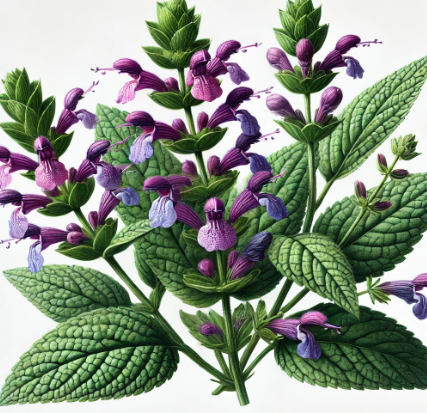
Scutellaria baicalensis è un’erba perenne che può raggiungere un’altezza di 20–60 cm. Presenta foglie strette e lanceolate di colore verde e produce piccoli fiori tubulari di colore viola-blu che sbocciano verso la fine dell'estate. Le radici spesse e gialle sono la parte più preziosa della pianta, utilizzata a scopi medicinali. Cresce bene in terreni sabbiosi ben drenati e si trova comunemente in prati e pendii erbosi.
Composizione Chimica e Struttura
Le radici di Scutellaria baicalensis sono ricche di composti bioattivi che contribuiscono alle sue proprietà terapeutiche, tra cui:
Flavonoidi: Baicalina, baicaleina e wogonina, noti per i loro effetti antinfiammatori, antiossidanti e antimicrobici.
Triterpenoidi: Composti che contribuiscono alle proprietà antinfiammatorie e protettive per il fegato della pianta.
Polisaccaridi: Conosciuti per il loro effetto immunostimolante e il supporto alla salute generale.
Acidi Fenolici: Come l'acido rosmarinico, che presenta attività antiossidanti e antimicrobiche.
Vitamine e Minerali: Contiene tracce di nutrienti che arricchiscono il suo valore terapeutico.
Come Coltivare Scutellaria baicalensis
La coltivazione di Scutellaria baicalensis richiede alcune condizioni specifiche per garantire una crescita sana e un raccolto ricco di composti bioattivi:
Clima: Cresce bene in climi temperati con pieno sole o ombra parziale. È tollerante al freddo e può sopportare leggere gelate.
Requisiti del Suolo: Predilige terreni sabbiosi o limosi ben drenati con un pH leggermente acido o neutro. Evitare suoli argillosi pesanti che trattengono l'acqua.
Propagazione: Si propaga tramite semi o talee di radice. I semi vanno seminati in primavera, mentre le divisioni radicali possono essere effettuate in autunno o inizio primavera.
Annaffiatura e Manutenzione: Richiede annaffiature moderate. È importante evitare ristagni idrici per prevenire il marciume radicale. La pacciamatura e la rimozione delle erbacce aiutano a mantenere la salute del suolo.
Raccolta: Le radici vengono generalmente raccolte nel secondo o terzo anno di crescita, in autunno inoltrato o inizio inverno, quando i composti bioattivi sono più concentrati. Dopo la raccolta, le radici vengono pulite, essiccate e lavorate per usi medicinali.
Usi e Benefici
Scutellaria baicalensis è rinomata nella MTC e nella medicina erboristica moderna per i suoi numerosi benefici per la salute:
Proprietà Antinfiammatorie: I flavonoidi nelle radici aiutano a ridurre l’infiammazione, rendendo la pianta utile per condizioni come l’artrite e altri disturbi infiammatori.
Salute del Fegato: Utilizzata per supportare la funzione epatica e proteggere dai danni al fegato, in particolare in caso di epatite o esposizione a tossine.
Effetti Antiossidanti: L’alto contenuto di flavonoidi combatte lo stress ossidativo, proteggendo le cellule dai danni e promuovendo il benessere generale.
Proprietà Antimicrobiche e Antivirali: Efficace contro una varietà di infezioni batteriche e virali, comprese quelle respiratorie e gastrointestinali.
Supporto Immunitario: I polisaccaridi della pianta potenziano la funzione del sistema immunitario, aiutando il corpo a combattere le infezioni.
Applicazioni
Medico: Scutellaria baicalensis è ampiamente utilizzata nella MTC per trattare febbre, infiammazioni, infezioni respiratorie e disturbi epatici. È disponibile sotto forma di capsule, tè, tinture ed estratti in polvere.
Cosmetico: Gli estratti delle radici sono utilizzati nei prodotti per la cura della pelle per le loro proprietà antiossidanti e lenitive, spesso inseriti in formulazioni per pelli sensibili o irritate.
Altri Usi: La pianta è inclusa in integratori alimentari per ridurre lo stress ossidativo e supportare la salute immunitaria.
Considerazioni Ambientali e di Sicurezza
Scutellaria baicalensis è generalmente sicura se utilizzata secondo le indicazioni. Tuttavia, un uso eccessivo può causare lievi disagi gastrointestinali in alcune persone. Si raccomandano pratiche di coltivazione sostenibile per proteggere le popolazioni selvatiche e garantire la disponibilità a lungo termine. La pianta non è invasiva e può essere coltivata in modo ecologico. Come per tutti i prodotti erboristici, è consigliabile consultare un professionista sanitario prima dell'uso, soprattutto in caso di allergie o sensibilità.
Bibliografia__________________________________________________________________________
Chmiel M, Stompor-Gorący M. Promising Role of the Scutellaria baicalensis Root Hydroxyflavone-Baicalein in the Prevention and Treatment of Human Diseases. Int J Mol Sci. 2023 Mar 1;24(5):4732. doi: 10.3390/ijms24054732.
Abstract. Plant roots, due to a high content of natural antioxidants for many years, have been used in herbal medicine. It has been documented that the extract of Baikal skullcap (Scutellaria baicalensis) has hepatoprotective, calming, antiallergic, and anti-inflammatory properties. Flavonoid compounds found in the extract, including baicalein, have strong antiradical activity, which improves overall health and increases feelings of well-being. Plant-derived bioactive compounds with antioxidant activity have for a long time been used as an alternative source of medicines to treat oxidative stress-related diseases. In this review, we summarized the latest reports on one of the most important aglycones with respect to the pharmacological activity and high content in Baikal skullcap, which is 5,6,7-trihydroxyflavone (baicalein).
Wen Y, Wang Y, Zhao C, Zhao B, Wang J. The Pharmacological Efficacy of Baicalin in Inflammatory Diseases. Int J Mol Sci. 2023 May 26;24(11):9317. doi: 10.3390/ijms24119317.
Abstract. Baicalin is one of the most abundant flavonoids found in the dried roots of Scutellaria baicalensis Georgi (SBG) belonging to the genus Scutellaria. While baicalin is demonstrated to have anti-inflammatory, antiviral, antitumor, antibacterial, anticonvulsant, antioxidant, hepatoprotective, and neuroprotective effects, its low hydrophilicity and lipophilicity limit the bioavailability and pharmacological functions. Therefore, an in-depth study of baicalin's bioavailability and pharmacokinetics contributes to laying the theoretical foundation for applied research in disease treatment. In this view, the physicochemical properties and anti-inflammatory activity of baicalin are summarized in terms of bioavailability, drug interaction, and inflammatory conditions.
Yu P, Li J, Luo Y, Sun J, Hu Y, Lin B, Meng X, Xiang L. Mechanistic Role of Scutellaria baicalensis Georgi in Breast Cancer Therapy. Am J Chin Med. 2023;51(2):279-308. doi: 10.1142/S0192415X23500155.
Abstract. Breast cancer is one of the most common malignancies in women, and exhibits high metastasis, recurrence and fatality rates. Novel therapies for breast cancer are constantly emerging, such as targeted therapy, oncolytic virotherapy, and immunotherapy. Despite their potential, these new therapies are still in their infancy, and chemotherapy remains the standard treatment for breast cancer. Therefore, it is of great significance to develop safe and efficient treatment drugs or adjuvants for breast cancer treatment. Traditional Chinese medicine (TCM) has a long clinical history in China, in which Scutellaria baicalensis Georgi exhibits favorable antibreast cancer activities. We therefore conducted a systematic review of the available literature to better understand the molecular mechanisms of S. baicalensis in breast cancer treatment. S. baicalensis and its active components (baicalein, baicalin, wogonin, wogonoside, oroxylin A and scutellarin) exhibited promising antibreast cancer activity through proliferation inhibition, apoptosis induction, invasion and metastasis blockading, and drug-resistance and non-coding RNA regulation. Additionally, senescence, autophagy, angiogenesis, and glycolysis mechanisms were observed to play a role in their antibreast cancer activity. Furthermore, multiple signaling pathways contributed to the antitumor effects of S. baicalensi, such as the NF-[Formula: see text]B, Wnt/[Formula: see text]-catenin, SATB1, Bcl2 family proteins, Caspase, PI3K/Akt, mTOR, ERK, p38-MAPK, TGF-[Formula: see text]/Smad, and Hippo/YAP pathways. This review provides valuable insights into the role of S. baicalensis as a breast cancer treatment and acts as a foundation for further investigations in this field.
Wu TH, Lin TY, Yang PM, Li WT, Yeh CT, Pan TL. Scutellaria baicalensis Induces Cell Apoptosis and Elicits Mesenchymal-Epithelial Transition to Alleviate Metastatic Hepatocellular Carcinoma via Modulating HSP90β. Int J Mol Sci. 2024 Mar 6;25(5):3073. doi: 10.3390/ijms25053073.
Abstract. Hepatocellular carcinoma is one of the most common malignant tumors in the world and shows strong metastatic potential. Current medicine for hepatocellular carcinoma therapy is invalid, while Scutellaria baicalensis Georgi exhibits the pharmaceutical potential to treat liver diseases and liver cancer. Herein, we verified the inhibitory properties and the pivotal molecules regimented by Scutellaria baicalensis on advanced hepatocellular carcinoma. At first, the viability of SK-Hep-1 cells was significantly reduced under treatment of Scutellaria baicalensis extract in a dose-dependent manner without affecting the growth of normal hepatocyte. Scutellaria baicalensis extract application could remarkably cause apoptosis of SK-Hep-1 cells through p53/cytochrome C/poly-ADP ribose polymerase cascades and arrest the cell cycle at the G1/S phase by downregulating cyclin-dependent kinases. Meanwhile, administration of Scutellaria baicalensis extract remarkably attenuated the migration capability as well as suppressed matrix metalloproteinase activity of advanced hepatocellular carcinoma cells. The proteome profiles and network analysis particularly implied that exposure to Scutellaria baicalensis extract downregulated the expression of HSP90β, and the clinical stage of hepatocellular carcinoma is also positively correlated with the HSP90β level. Combined treatment of Scutellaria baicalensis extract and HSP90β siRNAs could markedly enhance the ubiquitination activity and the degradation of vimentin to subsequently inhibit the metastatic property of SK-Hep-1 cells. Moreover, application of Scutellaria baicalensis extract and HSP90β siRNAs depleted phosphorylation of AKT, which stimulated the expression of p53 and consecutively triggered cell apoptosis. These findings suggest that HSP90β may be a prospective target for the effective therapy of advanced hepatocellular carcinoma via accelerating apoptosis of hepatocellular carcinoma cells and eliciting mesenchymal-epithelial transition with the administration of Scutellaria baicalensis extract.
Jo HG, Baek CY, Song HS, Lee D. Network Pharmacology and Experimental Verifications to Discover Scutellaria baicalensis Georgi's Effects on Joint Inflammation, Destruction, and Pain in Osteoarthritis. Int J Mol Sci. 2024 Feb 9;25(4):2127. doi: 10.3390/ijms25042127.
Abstract. Osteoarthritis is the most common type of arthritis, characterized by joint pain and a decline in physiological function. Scutellaria baicalensis Georgi (SB) is potentially effective against osteoarthritis because of its wide range of anti-inflammatory pharmacological activities. This study aimed to identify the mode of action of SB against osteoarthritis using network pharmacology prediction and experimental verification. Networks were constructed to key compounds, hub targets, and pathways essential for SB's effectiveness against osteoarthritis. Additionally, in vivo and in vitro tests were performed, including investigations on weight bearing in hind limbs, the acetic acid-induced writhing response, lipopolysaccharide-stimulated RAW264.7 cells, and serum cytokine responses. We identified 15 active compounds and 14 hub targets, supporting the anti-osteoarthritis effects of SB. The Kyoto Encyclopedia of Genes and Genomes pathway analysis indicated that fluid shear stress, atherosclerosis, phosphatidylinositol 3-kinase-Akt signaling, and cellular senescence pathways were important. SB showed substantial anti-inflammatory, analgesic, and joint tissue-protective effects against osteoarthritis. Our study shows that SB has the potential value to be further investigated as a candidate material for the treatment of osteoarthritis in the future.
Wang PW, Lin TY, Yang PM, Fang JY, Li WT, Pan TL. Therapeutic efficacy of Scutellaria baicalensis Georgi against psoriasis-like lesions via regulating the responses of keratinocyte and macrophage. Biomed Pharmacother. 2022 Nov;155:113798. doi: 10.1016/j.biopha.2022.113798.




