Garcinia mangostana, comunemente nota come mangostano, è un albero tropicale sempreverde appartenente alla famiglia delle Clusiaceae, originario del Sud-est asiatico. Molto apprezzato per il suo frutto unico, dolce e acidulo, il mangostano è spesso definito come la "Regina dei Frutti". L'albero è noto per la sua crescita lenta, il fogliame verde scuro e richiede un clima molto specifico per prosperare.
Classificazione Botanica
Regno: Plantae
Clade: Angiosperme
Classe: Eudicotiledoni
Ordine: Malpighiales
Famiglia: Clusiaceae
Genere: Garcinia
Specie: G. mangostana
Caratteristiche della Pianta
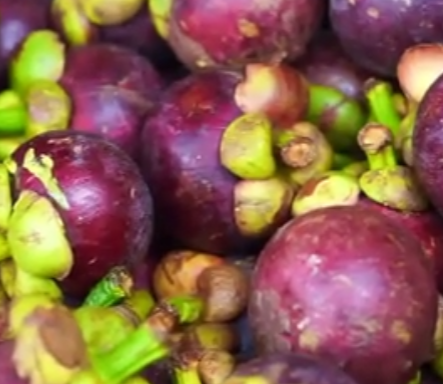
Gli alberi di mangostano possono crescere fino a un'altezza di 6-25 metri. Hanno una chioma simmetrica e piramidale composta da foglie spesse e coriacee che sono verde scuro nella parte superiore e giallo-verde nella parte inferiore. L'albero produce grandi fiori rosa-porpora che sono solitari o a coppie. Il frutto, che è la parte più apprezzata, ha un grosso rivestimento viola che racchiude un interno delicato e succoso di colore bianco, segmentato come un'arancia. Ogni segmento può contenere un seme.
Composizione Chimica e Struttura
Il mangostano contiene una ricca gamma di antiossidanti, principalmente xantoni e tannini. Gli xantoni sono composti biologicamente attivi noti per avere proprietà anti-infiammatorie, anti-cancerogene e anti-invecchiamento. Il frutto è anche una buona fonte di vitamina C, fibre e minerali essenziali.
La coltivazione di Garcinia mangostana richiede condizioni specifiche:
- Terreno: Preferisce terreni ricchi, ben drenati con un alto contenuto organico.
- Luce: Richiede luce solare filtrata o ombra parziale.
- Acqua: Necessita di un'umidità costante senza ristagni d'acqua. È sensibile sia alla siccità che all'eccesso d'acqua.
- Temperatura: Prospera in condizioni di calore costante senza estremi di caldo o freddo. Non tollera temperature inferiori a 4°C.
Usi e Benefici
Il mangostano è consumato sia come frutto fresco che in forme lavorate come succhi, marmellate e anche in integratori alimentari. La buccia del frutto è stata utilizzata nella medicina tradizionale in tutto il Sud-est asiatico per trattare vari disturbi, inclusi infezioni cutanee, ferite e dissenteria. Studi recenti suggeriscono potenziali benefici per la salute, inclusi effetti antinfiammatori e antiossidanti.
Applicazioni
- Culinarie: Il frutto fresco è celebrato per il suo delicato profilo di sapori ed è utilizzato anche in dessert e bevande.
- Medicinali: La medicina tradizionale e contemporanea utilizza estratti del frutto e della buccia per i loro benefici per la salute.
- Cosmetici: Gli estratti di mangostano sono inclusi in vari prodotti per la cura della pelle grazie alle loro proprietà antiossidanti.
Considerazioni Ambientali e di Sicurezza
La coltivazione del mangostano è relativamente sostenibile poiché generalmente non richiede un uso estensivo di pesticidi o fertilizzanti. Tuttavia, è suscettibile a parassiti e malattie che devono essere gestiti attentamente per evitare l'uso di sostanze chimiche nocive. La pianta non è invasiva e tipicamente non disturba gli ecosistemi locali. Come per ogni frutto o integratore, i consumatori dovrebbero considerare potenziali allergie e condizioni di salute individuali prima del consumo.
Bibliografia__________________________________________________________________________
Shan T, Ma Q, Guo K, Liu J, Li W, Wang F, Wu E. Xanthones from mangosteen extracts as natural chemopreventive agents: potential anticancer drugs. Curr Mol Med. 2011 Nov;11(8):666-77. doi: 10.2174/156652411797536679.
Abstract. Despite decades of research, the treatment and management of malignant tumors still remain a formidable challenge for public health. New strategies for cancer treatment are being developed, and one of the most promising treatment strategies involves the application of chemopreventive agents. The search for novel and effective cancer chemopreventive agents has led to the identification of various naturally occurring compounds. Xanthones, from the pericarp, whole fruit, heartwood, and leaf of mangosteen (Garcinia mangostana Linn., GML), are known to possess a wide spectrum of pharmacologic properties, including antioxidant, anti- tumor, anti-allergic, anti-inflammatory, anti-bacterial, anti-fungal, and anti-viral activities. The potential chemopreventive and chemotherapeutic activities of xanthones have been demonstrated in different stages of carcinogenesis (initiation, promotion, and progression) and are known to control cell division and growth, apoptosis, inflammation, and metastasis. Multiple lines of evidence from numerous in vitro and in vivo studies have confirmed that xanthones inhibit proliferation of a wide range of human tumor cell types by modulating various targets and signaling transduction pathways. Here we provide a concise and comprehensive review of preclinical data and assess the observed anticancer effects of xanthones, supporting its remarkable potential as an anticancer agent.
Barua A, Choudhury P, Mandal S, Panda CK, Saha P. Therapeutic potential of xanthones from Swertia chirata in breast cancer cells. Indian J Med Res. 2020 Sep;152(3):285-295. doi: 10.4103/ijmr.IJMR_1153_18.
Abstract. Background & objectives: Medicinal plants like Swertia chirata are rich sources of different xanthones. This study was aimed to assess the cytotoxic potential of four most abundant xanthones present in S. chirata both in vivo and in vitro in Ehrlich ascites carcinoma (EAC), a mouse transplantable breast carcinoma cell line and two human breast carcinoma cell lines (MCF-7 and MDA-MB-231).....Results: Among all the xanthones tested XD showed IC50at the lowest dose, and normal cells were unaffected at this dose. Survivability of mice increased significantly when treated with XD compared to other xanthones and cisplatin. Significantly increased ROS and LPO were found in cancer cells as a result of XD treatment which was unaltered in normal cell line. XD induced DNA damage and apoptosis in cancer cell lines. Interpretation & conclusions: Our experimental data indicate that XD may potentially act as a chemotherapeutic agent by enhancing ROS in breast cancer cells thereby leading to apoptosis.
Feng Z, Lu X, Gan L, Zhang Q, Lin L. Xanthones, A Promising Anti-Inflammatory Scaffold: Structure, Activity, and Drug Likeness Analysis. Molecules. 2020 Jan 30;25(3):598. doi: 10.3390/molecules25030598.
Abstract. Inflammation is the body's self-protective response to multiple stimulus, from external harmful substances to internal danger signals released after trauma or cell dysfunction. Many diseases are considered to be related to inflammation, such as cancer, metabolic disorders, aging, and neurodegenerative diseases. Current therapeutic approaches include mainly non-steroidal anti-inflammatory drugs and glucocorticoids, which are generally of limited effectiveness and severe side-effects. Thus, it is urgent to develop novel effective anti-inflammatory therapeutic agents. Xanthones, a unique scaffold with a 9H-Xanthen-9-one core structure, widely exist in natural sources. Till now, over 250 xanthones were isolated and identified in plants from the families Gentianaceae and Hypericaceae. Many xanthones have been disclosed with anti-inflammatory properties on different models, either in vitro or in vivo. Herein, we provide a comprehensive and up-to-date review of xanthones with anti-inflammatory properties, and analyzed their drug likeness, which might be potential therapeutic agents to fight against inflammation-related diseases.
Nauman MC, Johnson JJ. The purple mangosteen (Garcinia mangostana): Defining the anticancer potential of selected xanthones. Pharmacol Res. 2022 Jan;175:106032. doi: 10.1016/j.phrs.2021.106032.
Panda SS, Chand M, Sakhuja R, Jain SC. Xanthones as potential antioxidants. Curr Med Chem. 2013;20(36):4481-507. doi: 10.2174/09298673113209990144.
Klein-Júnior LC, Campos A, Niero R, Corrêa R, Vander Heyden Y, Filho VC. Xanthones and Cancer: from Natural Sources to Mechanisms of Action. Chem Biodivers. 2020 Feb;17(2):e1900499. doi: 10.1002/cbdv.201900499.




