



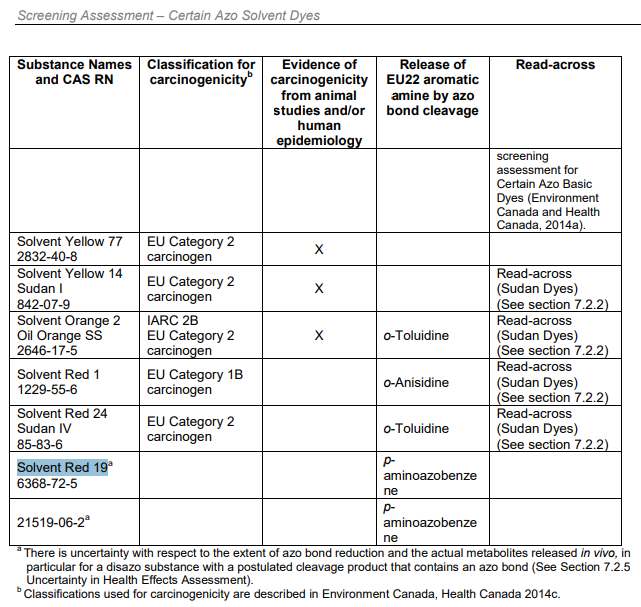
Solvent Red 19, also known as Sudan Red 7B, is a synthetic azo dye primarily used in industrial applications for coloring plastics, oils, waxes, and some solvents. A major concern associated with Solvent Red 19 is its ability to release hazardous aromatic amines, such as aminoazobenzene, through the cleavage of the azo bond. These aromatic amines are classified as EU22 hazardous substances and are known carcinogens. The classifications used for the carcinogenicity of this compound are described in the 2014 report by Environment Canada and Health Canada.
Chemical Composition and Structure
Solvent Red 19 is an azo dye composed of an azo bond (-N=N-) linking two aromatic rings. Its chemical structure includes functional groups that, through the cleavage of the azo bond, can degrade into aromatic amines like aminoazobenzene, a known carcinogen. The azo bond is responsible for the dye’s characteristic bright red color but also poses significant health risks due to its potential degradation into harmful by-products.
Physical Properties
Solvent Red 19 appears as a bright red crystalline powder. It is soluble in organic solvents such as oils and waxes but insoluble in water. This dye is valued for its light and heat stability, making it suitable for a wide range of industrial applications requiring long-lasting color.
Production Process
Solvent Red 19 is produced through an azo coupling reaction, where aromatic amines are treated with nitrous acid to form a diazonium salt, which is then coupled with another aromatic compound to form the azo bond. The process must be strictly controlled to prevent the degradation and release of hazardous aromatic amines such as aminoazobenzene.
Applications
Plastics Industry: Solvent Red 19 is used to color plastics and synthetic materials, where a stable, bright red color is required.
Oils and Waxes: The dye is widely used in the coloring of lubricating oils and waxes due to its high solubility in organic solvents.
Inks and Coatings: It is also employed in industrial inks and coatings where a vivid and durable color is needed.
Health and Safety Concerns
Carcinogenicity
Solvent Red 19 can release aminoazobenzene, a classified carcinogen, through azo bond cleavage. Aminoazobenzene is known for its ability to cause cancer, particularly in the urinary tract and bladder. The carcinogenicity classifications for this dye were outlined in the 2014 Environment Canada and Health Canada report, highlighting the risks associated with exposure to Solvent Red 19 and other related azo dyes.
Toxicity
In addition to its carcinogenic risk, Solvent Red 19 can cause acute toxicity if ingested, inhaled, or absorbed through the skin. Prolonged exposure may result in skin and respiratory irritation, as well as an increased risk of developing cancer. As a result, the use of Solvent Red 19 is regulated and subject to strict controls in industrial environments.
Environmental and Safety Considerations
Solvent Red 19 is not biodegradable and can accumulate in the environment, posing a significant threat to aquatic ecosystems. Its ability to degrade into toxic aromatic amines, such as aminoazobenzene, presents an additional environmental risk. To prevent contamination, regulations mandate strict waste management and disposal procedures for products containing Solvent Red 19.
Regulatory Status
Due to its ability to release carcinogenic aromatic amines, the use of Solvent Red 19 is regulated in many jurisdictions. Although it continues to be used in industrial applications such as coloring plastics and oils, its use in consumer products is limited or banned. Regulations impose strict safety measures to protect workers and minimize exposure to the risks associated with this dye.
Applications Under Strict Control
Manufacturing: Solvent Red 19 continues to be used in industrial applications for coloring plastics and oils, where strict safety protocols are imposed.
Research and Analytical Use: The dye may be used in research under controlled conditions, where stringent safety measures are applied.
Safety
The problem with azo dyes (monoazo or diazo) is photocatalytic degradation leading to oxidation and the subsequent formation of impurities such as aromatic amines, some of which have carcinogenic activity. (Chung KT, Stevens SE Jr, Cerniglia CE. The reduction of azo dyes by the intestinal microflora. Crit Rev Microbiol. 1992;18(3):175-90. doi: 10.3109/10408419209114557. )
Overall, the study cited in Bibliography finds that Solvent Red 19 has mutagenic potential. Although the available data did not provide evidence of carcinogenicity of this substance, p-aminoazobenzene, a community aromatic amine that has produced carcinogenic effects in experimental animals, could be released from this substance through reductive cleavage of the azo bond.
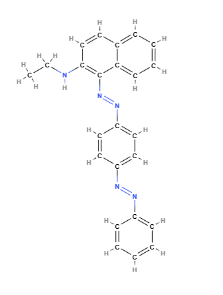 | 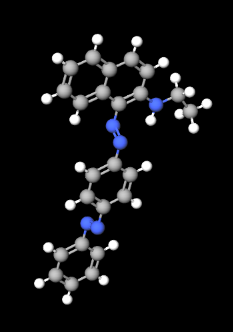 |
Molecular Formula C24H21N5
Molecular Weight 379.5 g/mol
CAS 6368-72-5
UNII 8QUH39Y06P
EC Number 228-862-5
CHEBI:82537
DTXSID4064266
Nikkaji J34.105C
Synonyms:
Fat red 7B
Solvent Red 19
Sudan Red 7B

