

Ciao, Visitatore!


🔍
RECENSIONE

Recensione

admin
admin (19675 pt) 28-Sep-2024 17:56

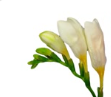
Freesia alba, comunemente nota come fresia bianca, è una pianta bulbosa appartenente alla famiglia delle Iridaceae. Originaria del Sud Africa, questa specie è particolarmente apprezzata per i suoi fiori profumati e attraenti, che spiccano in qualsiasi giardino o composizione floreale.

Classificazione Botanica

Regno: Plantae
Clade: Angiosperme
Classe: Monocotiledoni
Ordine: Asparagales
Famiglia: Iridaceae
Genere: Freesia
Specie: F. alba

Caratteristiche della Pianta

Freesia alba cresce fino a circa 30-40 cm di altezza, formando gruppi di foglie sottili e erette che emergono da un bulbo. I fiori sono tipicamente bianchi, anche se possono presentare sfumature di giallo o viola al centro, e sono noti per il loro profumo dolce e penetrante. Fioriscono principalmente in primavera.
Composizione Chimica e Struttura

I fiori di Freesia alba sono ricchi di oli essenziali che contribuiscono al loro profumo distintivo, che include componenti come linalolo, citronellol e altri composti aromatici. Questi oli sono spesso utilizzati nella produzione di profumi e altri prodotti aromatizzati.

Come Coltivarla

Per coltivare Freesia alba:

  1. Terreno: Richiede un terreno ben drenato, preferibilmente arricchito con materiale organico.
  2. Luce: Predilige una posizione soleggiata, ma tollera anche la mezz'ombra.
  3. Acqua: Mantenere il terreno umido durante la stagione di crescita, ma evitare ristagni idrici.
  4. Temperatura: Non tollera il gelo. In climi più freddi, i bulbi devono essere scavati e conservati al chiuso durante l'inverno.

Usi e Benefici

Le fresie sono ampiamente utilizzate in floricultura sia per composizioni fresche che per bouquet da sposa, grazie alla loro bellezza e al loro profumo gradevole. Sono anche usate in aromaterapia per le loro qualità rilassanti e sono studiate per le loro proprietà antinfiammatorie.

Applicazioni

  • Floricultura: Impiegate in modo estensivo per bouquet e decorazioni, particolarmente popolari nei matrimoni.
  • Profumeria: Gli oli essenziali estratti dai fiori sono usati in profumeria per creare fragranze delicate e fresche.
  • Medicinale: Esplorazione delle proprietà antinfiammatorie degli estratti di fresia in prodotti farmaceutici e cosmetici.
  • Cosmetica

Funzioni INCI:

Agente condizionante della pelle.  Rappresenta il perno del trattamento topico della pelle in quanto ha la funzione di ripristinare, aumentare o migliorare la tolleranza cutanea a fattori esterni, compresa la tolleranza dei melanociti. La funzione più importante dell'agente condizionante è  prevenire la disidratazione della pelle, ma il tema è piuttosto complesso e coinvolge emollienti ed umettanti che possono essere aggiunti nella formulazione.

Considerazioni Ambientali e di Sicurezza

Freesia alba è generalmente sicura per l'uso nei contesti umani e non presenta rischi significativi per la salute. Tuttavia, la coltivazione di fresia richiede pratiche sostenibili per evitare l'esaurimento del suolo e la gestione responsabile dell'acqua, specialmente in aree dove la risorsa idrica è limitata. È importante monitorare la presenza di parassiti e malattie, trattando con metodi biologici o minimamente invasivi per mantenere l'equilibrio ecologico.

Bibliografia__________________________________________________________________________

Manning, J., & Kaiser, R. (2009). Scentsational freesias. Veld & Flora, 95(3), 132-135.

Abstract. For city dwellers around the world, the appearance of freesias in florists' shops and in the barrows of flower sellers on street corners is the urban equivalent of the unfurling of spring wildflowers in fields and woodlands. Unlike many of their rural cousins, however, freesias pour forth a strong, sweet fragrance from their trumpet-shaped flowers, sounding a brilliant olfactory fanfare to dispel the dreary northern winter. Their bright sprays of blossom burst onto streets with the élan of a cancan chorus line, the ruffled flowers dancing down each stem in a perfectly choreographed row, petals swirling around dainty, creamy stamens - vivacious and irresistible as the grisettes of Maxim's.

Adnan Younis, A. Y., Bhatti, M. Z. M., Atif Riaz, A. R., Usman Tariq, U. T., Muhammad Arfan, M. A., Muhammad Nadeem, M. N., & Muhammad Ahsan, M. A. (2012). Effect of different types of mulching on growth and flowering of Freesia alba cv. Aurora.

Abstract. The effect of different mulching materials such as transparent plastic sheet, rice straw and black plastic sheet was investigated on growth and flowering of Freesia cv. Aurora. There were four treatments, i.e. rice straw, white plastic sheet (transparent PS), black plastic sheets (black PS), and control (no mulching) and each treatment was replicated thrice. The results showed that time to germination was decreased and germination percentage was significantly improved by black mulch as compared to control in freesia plants. Straw mulch produced maximum plant height; earlier flower emergence, highest number of flower spikes per plant, floret per spike and flowers per plant. Maximum flower diameter was also observed in black polythene mulch. From the results of this experiment it can be concluded that black plastic mulch triggers plant growth and development (vegetative growth) while straw mulch encourages flower production both qualitatively and quantitatively in freesia plants.

Wang, L. (2007). Freesia: Freesia x hybrida. In Flower Breeding and Genetics: Issues, Challenges and Opportunities for the 21st Century (pp. 665-693). Dordrecht: Springer Netherlands.

Abstract. Freesia x hybrida is a popular cut flower and flowering potted plant. Fragrance, long vase-life, and wide color range make this a versatile floriculture crop. Diagnostic traits of the 11 Freesia species are described with reference to their potential commercial value. Temperature and photoperiod are the primary factors controlling flowering. By controlling forcing, conventional and delayed planting, the crop can be kept in production for six consecutive months. Freesias are self-incompatible and exhibit inbreeding depression when inbred parental lines are developed. The crop ideotype consists of the following traits: 7 or more florets/spike, extra-large flower size (tetraploids), 70-80cm long stems, pure and clear flower colors, sweet fragrance, and disease resistance.