Politetrafluoroetilene o PTFE o, più comunemente Teflon, è un fluoropolimero ad alte prestazioni noto per la sua eccezionale resistenza chimica, le proprietà antiaderenti e il basso attrito. Spesso indicato con il nome commerciale Teflon, il PTFE è ampiamente utilizzato in varie applicazioni industriali e cosmetiche. Nelle formulazioni cosmetiche, il PTFE funge da agente filmogeno e miglioratore della texture, fornendo una sensazione liscia e setosa, migliorando al contempo la stabilità e la durata del prodotto. Le sue proprietà uniche lo rendono ideale per l'uso in prodotti come fondotinta, primer e altre formulazioni che richiedono effetti di lunga durata.
Composizione Chimica e Struttura
Il PTFE è composto da:
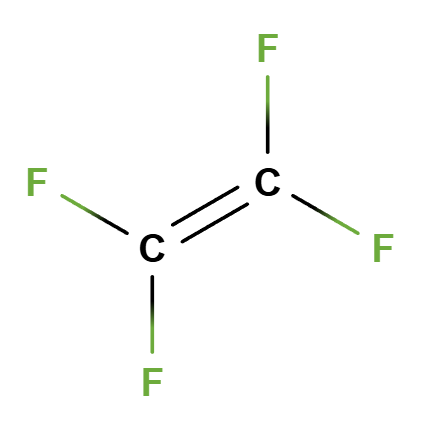
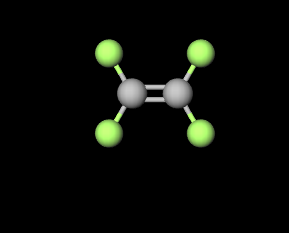
- Monomeri di Tetrafluoroetilene: Il polimero è formato dalla polimerizzazione del tetrafluoroetilene (TFE), composto da atomi di carbonio e fluoro.
- Struttura Lineare: La catena del PTFE consiste di atomi di carbonio circondati da atomi di fluoro, creando una struttura altamente stabile e inerte.
Questa composizione chimica contribuisce alla resistenza del PTFE al calore, ai prodotti chimici e all'umidità, rendendolo un'ottima scelta per una varietà di applicazioni.
Proprietà Fisiche
Aspetto: Tipicamente un solido o una polvere bianca e cerosa.
Solubilità: Insolubile in acqua e nella maggior parte dei solventi organici; presenta un'eccezionale inerzia chimica.
pH: Generalmente neutro, assicurando compatibilità con varie formulazioni cosmetiche.
Odore: Inodore.
Stabilità: Estremamente stabile in condizioni normali di conservazione; resistente al calore e alla degradazione chimica.
Processo di Produzione
Polimerizzazione: Il PTFE viene prodotto attraverso la polimerizzazione radicalica libera del gas tetrafluoroetilene, spesso in un ambiente ad alta pressione.
Purificazione: Il polimero risultante viene purificato per rimuovere eventuali monomeri non reagiti e additivi, garantendo un prodotto di alta qualità.
Formulazione: Il PTFE purificato può essere elaborato in varie forme, come polveri, emulsioni o film, e incorporato nelle formulazioni cosmetiche per migliorare texture e stabilità.
Applicazioni
Medico: Utilizzato occasionalmente in dispositivi medici e impianti grazie alla sua biocompatibilità e resistenza alla degradazione chimica.
Cosmetici: Comunemente presente in fondotinta, primer e prodotti per la cura della pelle per le sue proprietà filmogene e la capacità di fornire una finitura liscia. Migliora la longevità e le prestazioni delle applicazioni cosmetiche.
Funzioni INCI:
Considerazioni Ambientali e di Sicurezza
Il PTFE è generalmente considerato sicuro per l'uso nei cosmetici quando applicato secondo le linee guida raccomandate. È inerte e non reagisce con la pelle o gli ingredienti cosmetici.
Tuttavia, il processo di produzione può generare sottoprodotti nocivi, quindi pratiche di approvvigionamento e formulazione responsabili sono essenziali per garantire che l'ingrediente sia prodotto in modo sostenibile e privo di contaminanti dannosi.
Molecular Formula C2F4
Molecular Weight 100.01 g/mol
CAS 9002-84-0 116-14-3
UNII OMW63Z518S
EC Number 204-126-9
Synonyms:
Perfluoroethene
Tetrafluoroethene
Perfluoroethylene
Teflon
PTFE
Bibliografia__________________________________________________________________________
Ham J, Miller PJ. Expanded polytetrafluoroethylene implants in rhinoplasty: literature review, operative techniques, and outcome. Facial Plast Surg. 2003 Nov;19(4):331-9. doi: 10.1055/s-2004-815653.
Abstract. Gore-Tex, a form of expanded polytetrafluoroethylene (ePTFE), over the past 30 years has attracted much attention as an alloplast for use in rhinoplasty, both from advocates and opponents of its use. It has many desirable traits as an alloplast implant, but many surgeons harbor hesitation and reluctance for alloplast use in rhinoplasty based on historical data of previous nasal implants. Only when objective data from large series of patients with long-term follow-up become available will such skepticism be resolved. Large series of patients with Gore-Tex implant placement during rhinoplasty are beginning to emerge in the literature. The purpose of this article is twofold. The first is to provide the reader with an up-to-date review of the literature on the host response to polymer implants and, second, of the current indications and operative techniques for use and outcomes of Gore-Tex implants in rhinoplasty.
Polykandriotis E, Besrour F, Arkudas A, Ruppe F, Zetzmann K, Braeuer L, Horch RE. Flexor tendon repair with a polytetrafluoroethylene (PTFE) suture material. Arch Orthop Trauma Surg. 2019 Mar;139(3):429-434. doi: 10.1007/s00402-018-03105-3.
Abstract. Background: There is a consensus that after a flexor tendon repair an aggressive rehabilitation protocol with early active motion can improve functional outcome, provided that the combination of material and suturing technique can meet the higher biomechanic demands. Bearing this in mind we evaluated a polytetrafluoroethylene (PTFE) suture (SERAMON®, Serag-Wiessner) as a possible material for flexor tendon repair....Conclusion: PTFE demonstrates superior strength properties in comparison to PPL for flexor tendon repairs. However, standard 2 strand techniques have proved inadequate to bear the higher biomechanic demands.
Mathew A, Lee S, Ha W, Nagendrababu V, Rossi-Fedele G. Microbial Contamination Comparison Between Cotton Pellet and Polytetrafluoroethylene Tape Endodontic Spacers: A Systematic Review. Eur Endod J. 2021 Aug;6(2):143-150. doi: 10.14744/eej.2021.52244.
Abstract. This systematic review compares polytetrafluoroethylene tape and cotton pellet when used as endodontic spacers underneath provisional restorations. The review followed the PRISMA guidelines and was registered in the PROSPERO database (CRD42020176555). Studies that compared the microbial contamination between polytetrafluoroethylene tape and cotton pellet, when used as spacers, were included. Literature searches of Pubmed, Embase, EBSCOHost Dentistry & Oral Sciences Source, Scopus, and Open Grey databases were conducted from their inception until May 2020 for studies in English or other Latin script languages. Hand searching of reference lists was performed. Three laboratory and three clinical studies were included. The risk of bias of the component studies varied widely. Results from the laboratory studies showed higher bacterial counts for cotton pellets. Results from the clinical studies showed that polytetrafluoroethylene tape was associated with a significantly lower incidence of microbial contamination. Findings were consistent throughout the studies, though the evidence available is scarce and heterogeneous. Polytetrafluoroethylene tape was associated with less microbial contamination when compared with cotton pellets as endodontic spacers and therefore appears to be a more suitable material for the purpose.
Shafik A. Polytetrafluoroethylene injection for the treatment of partial fecal incontinence. Int Surg. 1993 Apr-Jun;78(2):159-61. PMID: 8354617.
Abstract. Perianal injection of polytetrafluoroethylene (Teflon or Polytef) paste was used in the treatment of 11 patients with partial fecal incontinence which followed internal sphincterotomy in 7 patients and was idiopathic in 4. All patients had been incontinent for more than 4 years, and had failed to respond to conservative measures. 5 ml of Polytef paste were injected, without anesthesia, in the rectal neck submucosa, above the pectinate line at each of the 3 and 9 o'clock positions. Patients were followed for 18 to 24 months. They were categorized into 3 scores: 1, cured; 2, improved, and 3, no change. Long-term cure (score 1) occurred in 45.4% after the 1st injection and in 63.6% after the 2nd injection. 36.4% showed partial improvement (score 2). No failures occurred. Improvement is believed to be due to the increase in rectal neck pressure produced by the cushion-effect of the polytef submucosal injection. The technique is simple, easy and without complications. It is performed on an outpatient basis.
Robertson KM, Dyer WK 2nd. Expanded polytetrafluoroethylene (Gore-Tex) augmentation of deep nasolabial creases. Arch Otolaryngol Head Neck Surg. 1999 Apr;125(4):456-61. doi: 10.1001/archotol.125.4.456. PMID: 10208685.
Abstract. Objective: To evaluate the safety and efficacy of expanded polytetrafluoroethylene (PTFE) (Gore-Tex; W. L. Gore & Associates, Flagstaff, Ariz) for augmentation of deep nasolabial creases....Conclusions: Expanded PTFE augmentation presents a safe, effective method for softening deep nasolabial creases. Patients with more severe creases are likely to show more improvement with each augmentation, but are also more likely to require multiple procedures to achieve the desired aesthetic result.
Carbonell JM, Martín IS, Santos A, Pujol A, Sanz-Moliner JD, Nart J. High-density polytetrafluoroethylene membranes in guided bone and tissue regeneration procedures: a literature review. Int J Oral Maxillofac Surg. 2014 Jan;43(1):75-84. doi: 10.1016/j.ijom.2013.05.017.
Naftalovich R, Naftalovich D, Greenway FL. Polytetrafluoroethylene Ingestion as a Way to Increase Food Volume and Hence Satiety Without Increasing Calorie Content. J Diabetes Sci Technol. 2016 Jun 28;10(4):971-6. doi: 10.1177/1932296815626726.