



Ophiopogon japonicus root extract: properties, uses, pros, cons, safety
Description
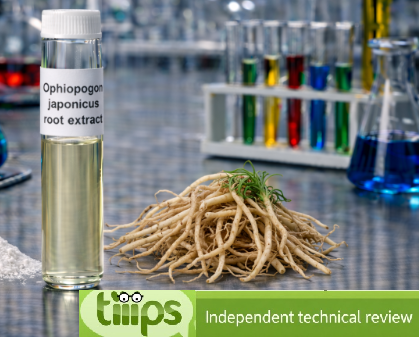
Ophiopogon japonicus root extract is obtained from the roots of Ophiopogon japonicus, a plant commonly known as mondo grass or dwarf lilyturf. The extract is widely used in cosmetic formulations for its moisturizing, soothing, and anti-inflammatory properties.
It is particularly suitable for products designed to improve skin hydration, reduce irritation and redness, and support the skin barrier function, contributing to overall skin comfort and well-being.
Chemical composition and structure
Ophiopogon japonicus root extract contains a combination of bioactive compounds with synergistic effects on the skin:
Saponins
Contribute to soothing and conditioning properties, promoting skin comfort.Polysaccharides
Play a key role in water retention, forming a protective film on the skin surface that helps prevent dehydration.Flavonoids
Provide antioxidant activity, helping protect the skin from oxidative damage induced by environmental stressors.Vitamins and minerals
Supply essential nutrients that support skin vitality and physiological function.
The overall chemical structure of the extract is complex and variable, depending on the extraction method and raw material; however, the combined presence of saponins, polysaccharides, and flavonoids is responsible for the main cosmetic effects.
| Compound class | Primary function |
|---|---|
| Saponins | Soothing, conditioning |
| Polysaccharides | Moisturizing, film-forming |
| Flavonoids | Antioxidant |
| Vitamins and minerals | Nutritional support |
Physical properties
Appearance: liquid or powder, typically light brown or beige
Odor: light, earthy, or neutral
Density: variable, depending on concentration and carrier
Solubility: generally water-soluble, suitable for aqueous-based formulations
Production process
The production of Ophiopogon japonicus root extract includes several controlled steps:
Harvesting
Selection and harvesting of roots, rich in bioactive compounds.Extraction
Use of water or hydroalcoholic solvents to extract functional constituents. Methods may include maceration, decoction, or cold extraction.Purification
Removal of impurities and concentration of active components.Formulation
Incorporation of the purified extract into creams, lotions, serums, and other cosmetic products.
| Step | Objective |
|---|---|
| Extraction | Recovery of active constituents |
| Purification | Quality improvement |
| Formulation | Cosmetic integration |
Applications
Cosmetics – skin care
Moisturizers
Improves skin hydration and helps maintain the balance of the epidermal barrier.Soothing products
Helps calm irritation, redness, and discomfort sensations.Anti-aging formulas
Supports deeper hydration and contributes to improving skin texture.
Hair care
Can be used in shampoos and conditioners to support scalp health and improve the hair’s cosmetic feel.
INCI functions
Skin conditioning agent
Supports skin tolerance to external factors and contributes to preventing dehydration, acting synergistically with emollients and humectants present in the formulation.Surfactant – foam booster
In specific cleansing formulations, it may contribute to the foam profile, facilitating product distribution during washing.
Environmental and safety considerations
Environmental impact
Production of Ophiopogon japonicus extract should be managed using sustainable harvesting practices and responsible processing, in order to reduce environmental impact and preserve the plant resource.
Safety
The ingredient is generally considered safe for use in cosmetics and personal care products when used at recommended concentrations and according to intended use. However, individuals with very sensitive skin or known allergies should use it with caution.

