



Robert Plant, complete biography, British rock, Led Zeppelin, solo career, and discography
Profile
Robert Plant is a British singer, songwriter, and performer, born in West Bromwich (England) on August 20, 1948. He is universally recognized as one of the most iconic and influential voices in rock history, best known as the frontman of Led Zeppelin, the band that redefined the boundaries of hard rock and modern rock.
Robert Plant represents a unique case: an immediately recognizable voice capable of combining power, sensuality, and blues roots, and a post-Zeppelin career built on continuous research, transformation, and a rejection of nostalgic self-replication.
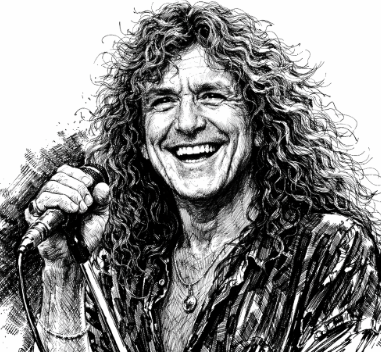
Context and musical formation (From the 1950s to the 1960s)
Raised in the English Midlands, Plant formed musically through deep listening to:
African American blues,
British folk,
American rock’n’roll,
rhythm and blues.
From a young age, he developed a strong interest in blues vocal tradition, as well as mysticism, literature, and English folk music. Before international fame, he gained experience in numerous local bands, refining an instinctive, powerful, strongly expressive vocal style.
Meeting Jimmy Page and the birth of Led Zeppelin (1968)
The decisive moment in Robert Plant’s career was meeting Jimmy Page in 1968. Their collaboration produced one of the most influential creative partnerships in rock history.
With Led Zeppelin, Plant helped define:
a new idea of the rock frontman,
an extreme, sensual vocal language,
lyrics that unite blues, mythology, and epic imagery.
The band quickly rose to global prominence, turning rock into a monumental-scale phenomenon.
The Led Zeppelin years: power, myth, and experimentation (1968–1980)
During Led Zeppelin’s active years, Robert Plant developed a unique vocal identity characterized by:
very wide range,
frequent use of high notes,
blues screams reinterpreted in a rock key,
a strong physical and theatrical component.
Alongside vocal power, a growing focus on folk, Eastern, and acoustic sonorities emerged, expanding the band’s language beyond pure hard rock.
Led Zeppelin became one of the most influential and celebrated bands ever, with Plant at the center of the visual and symbolic imagination of 1970s rock.
The end of Led Zeppelin and personal crisis (1980)
In 1980, drummer John Bonham’s death led to Led Zeppelin’s dissolution. For Robert Plant it was a profound rupture, both artistically and personally.
The end of the band closed an era, but also opened a new phase in which Plant explicitly refused the idea of continuing under the Zeppelin name or repeating its formula.
Solo career: transformation and research (1980s)
In the 1980s Robert Plant pursued a solo career oriented toward experimentation. In this phase he:
progressively reduced the use of extreme high notes,
explored new wave, pop-rock, and world-music sonorities,
reshaped his vocal role toward a more narrative approach.
This choice marked a clear break from the hard-rock frontman image, while allowing Plant to establish himself as an autonomous, credible artist outside the Zeppelin myth.
The 1990s: re-reading the past and new balances
In the 1990s, Plant approached his past selectively. Projects such as collaborations with Jimmy Page show a willingness to reinterpret rather than merely celebrate.
At the same time, he continued releasing solo work that confirmed:
interest in cultural cross-pollination,
commitment to expressive maturity,
rejection of nostalgia as an end in itself.
Artistic maturity and collaborations (2000–today)
From 2000 onward, Robert Plant developed a highly coherent artistic phase. His output focused on:
folk, blues, and traditional music,
African and Middle Eastern influences,
a more controlled, deeper vocal style.
Collaborations became central, confirming an open, curious approach far from the logic of the rock superstar.
Vocal style (discursive analysis)
Robert Plant’s vocal style is among the most studied and imitated in rock history:
bright, penetrating timbre,
expressive use of falsetto and high registers,
blues roots reinterpreted in a modern key,
strong sensual and theatrical charge,
conscious evolution toward a more mature voice.
His voice is not only a technical instrument, but a narrative and identity element.
Concerts and the live dimension
Live, Robert Plant has always favored intensity and authenticity over spectacle for its own sake. His concerts, especially in the post-Zeppelin phase, are characterized by:
centrality of reworked repertoire,
strong interaction with musicians,
attention to atmosphere more than monumental impact.
Led Zeppelin
(Period with Robert Plant: 1968–1980)
Studio albums
| Year | Album | Main tracks |
|---|---|---|
| 1969 | Led Zeppelin | Good Times Bad Times · Dazed and Confused |
| 1969 | Led Zeppelin II | Whole Lotta Love · Ramble On |
| 1970 | Led Zeppelin III | Immigrant Song · Since I’ve Been Loving You |
| 1971 | Led Zeppelin IV | Stairway to Heaven · Black Dog |
| 1973 | Houses of the Holy | The Song Remains the Same · No Quarter |
| 1975 | Physical Graffiti | Kashmir · Trampled Under Foot |
| 1976 | Presence | Achilles Last Stand · Nobody’s Fault but Mine |
| 1979 | In Through the Out Door | All My Love · Fool in the Rain |
Solo career
Studio albums
| Year | Album | Main tracks |
|---|---|---|
| 1982 | Pictures at Eleven | Burning Down One Side · Big Log |
| 1983 | The Principle of Moments | Big Log · In the Mood |
| 1985 | Shaken ’n’ Stirred | Little by Little · Too Loud |
| 1988 | Now and Zen | Heaven Knows · Tall Cool One |
| 1990 | Manic Nirvana | Hurting Kind · Tie Dye on the Highway |
| 1993 | Fate of Nations | 29 Palms · Calling to You |
| 2002 | Dreamland | Darkness, Darkness · Morning Dew |
| 2005 | Mighty ReArranger | Shine It All Around · Freedom Fries |
| 2007 | Raising Sand (with Alison Krauss) | Gone, Gone, Gone · Please Read the Letter |
| 2010 | Band of Joy | Angel Dance · Silver Rider |
| 2014 | Lullaby and… The Ceaseless Roar | Rainbow · Turn It Up |
| 2017 | Carry Fire | The May Queen · New World… |
| 2021 | Raise the Roof (with Alison Krauss) | Searching for My Love · It Don’t Bother Me |
Side projects
The Honeydrippers
| Year | Release | Main tracks |
|---|---|---|
| 1984 | The Honeydrippers: Volume One (EP) | Sea of Love · Rockin’ at Midnight |
Page and Plant
(Collaboration with Jimmy Page)
| Year | Album | Main tracks |
|---|---|---|
| 1994 | No Quarter: Jimmy Page and Robert Plant Unledded | Kashmir (reworked) · No Quarter |
| 1998 | Walking into Clarksdale | Most High · Shining in the Light |
Major live albums
| Year | Album | Note |
|---|---|---|
| 1985 | Principle of Moments Live | Solo tour |
| 1995 | No Quarter – Unledded | MTV live |
| 2006 | Nine Lives (live compilation) | Live selections |
| 2018 | Live at David Lynch Foundation | Acoustic performances |
Key compilations and special releases
| Year | Album | Content |
|---|---|---|
| 1998 | Sixty Six to Timbuktu | Solo anthology |
| 2003 | Fate of Nations / Dreamland | Remastered editions |
| 2019 | Digging Deep | Thematic compilation |
Key collaborations and appearances
| Year | Artist / Project | Album / Track |
|---|---|---|
| 1985 | Phil Collins | Live Aid |
| 1990 | Jeff Beck | Live collaborations |
| 2007 | Alison Krauss | Raising Sand |
| 2015 | Patty Griffin | Live collaborations |
Final overview
Studio albums with Led Zeppelin: 8
Solo studio albums: 11
Collaborative albums (Plant–Krauss): 2
Major side projects: 3
Years active: 1966–present

