Amyris balsamifera
Framework and general description
Amyris balsamifera (family Rutaceae), commonly known as Amyris, is a species native to the tropical regions of the Americas, including parts of the Caribbean and South America. This evergreen tree is valued for its aromatic resin and essential oil, which have been used in traditional medicine and in perfumery. The tree is also recognized for its ecological role and aesthetic value, contributing to biodiversity and landscape beauty.
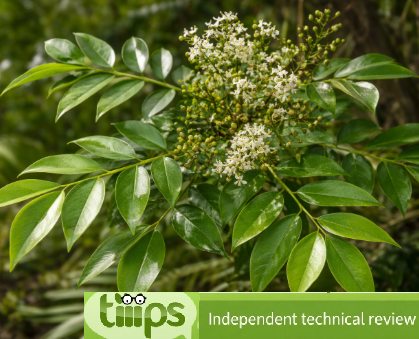
Table 1. Identification data and specifications (indicative)
| Characteristic | Data |
|---|
| Common name | Amyris |
| Botanical name | Amyris balsamifera |
| Botanical family | Rutaceae |
| Kingdom | Plantae |
| Order | Sapindales |
| Genus | Amyris |
| Species | Amyris balsamifera |
| CAS number (mixture/derivative, depending on raw material) | 8015-65-4 (indicative; may vary by extract/oil type) / 90320-49-3 |
| EC number | 291-076-6 |
| Plant parts of interest | Wood, bark, resin |
| Main forms of use | Essential oil, resin (aromatic/fixative raw materials) |
Plant characteristics
It is an evergreen tree that can reach approximately 10–20 m in height, with a dense and generally rounded crown. The bark is typically smooth and greyish. The species is known for its resilience and adaptability to different soil conditions.
Flowers: the tree produces small white or cream flowers, generally arranged in clusters. The flowers are not particularly showy but contribute to the overall appeal of the tree.
Foliage: the leaves are arranged alternately, lanceolate to elliptic, with a glossy, dark-green surface. They release a delicate, pleasant aroma when crushed.
Cultivation
It prefers well-drained soils and full sun. It grows well in tropical climates and can tolerate a variety of soil types, from sandy to silty.
Table 2. Main constituents and chemical profile (indicative)
| Characteristic | Data |
|---|
| Predominant fraction in the essential oil | Sesquiterpenes (with amyrin-related compounds, depending on raw material and chemotype) |
| Recurrent minor components | Terpenes such as limonene and pinene (generally in lower amounts than sesquiterpenes) |
| Resin fraction | Mixture of volatile oils and resinous compounds responsible for the balsamic profile |
| Phenolic components | Flavonoids and tannins (linked to antioxidant/astringent properties; more typical of non-EO extractive fractions) |
| Typical olfactory note | Woody, balsamic, with a supportive/tenacious role in fragrance accords |
Main uses
Food: not indicated as a food raw material in the provided text; any use would require specific quality, purity, and regulatory assessment.
Cosmetics: use of the essential oil in skin-care products and for fragrance in formulations (creams, lotions, perfumes), mainly for its perceived soothing profile and olfactory contribution.
Pharmaceutical / traditional medicine: traditional use of the resin and essential oil for anti-inflammatory, analgesic, and antiseptic properties, with reported applications for respiratory issues, skin conditions, and minor wounds (traditional context).
Industrial use: use of the resin and oil in the production of perfumes, incense, and as fixatives in various fragrance formulations; also used in aromatherapy (diffusers, personal-care products, scented candles) to promote relaxation and reduce stress.
INCI functions
Fragrance: has an important role in cosmetic formulations as it provides the possibility to improve, mask, or add scent to the final product, increasing its marketability. It can create a pleasant, perceivable odor and mask unpleasant odors. Consumers generally expect a pleasant or distinctive fragrance in a cosmetic product.
Perfume: unlike “fragrance”, which may also include slightly less pleasant or more characteristic odor notes, the term “perfume” indicates only very pleasant scent profiles. Used for perfumes and aromatic raw materials.
Environmental and safety considerations
Environmental impact: Amyris balsamifera plays a role in its native ecosystem by providing habitat and contributing to local biodiversity. It is well adapted to tropical climates and supports various forms of wildlife.
Safety: generally considered safe when used in recommended amounts. The essential oil should be used with caution, particularly around sensitive groups such as children and pregnant women. High concentrations may cause skin irritation or sensitization. Always follow safety guidelines and consult a professional if needed.
References__________________________________________________________________________
Van Beek, T. A., Kleis, R., Posthumus, M. A., & Van Veldhuizen, A. (1989). Essential oil of Amyris balsamifera. Phytochemistry, 28(7), 1909-1911.
Abstract. The essential oil composition of Amyris balsamifera was investigated by GC-MS. Major constituents were separated by fractional distillation and various chromatographic techniques, and identified by mass, 1H and 13C NMR spectroscopy and/or chemical reactions. The oil consisted of 17.5% sesquiterpene hydrocarbons and 82.5% oxygenated sesquiterpenes. Major compounds were β-sesquiphellandrene, elemol, 10-epi-γ-eudesmol, γ-eudesmol, valerianol, α-eudesmol, 7-epi-α-eudesmol and β-eudesmol. 7-epi-α-Eudesmol is reported for the first time as a natural product.
Yun, M. S., Yeon, B. R., Cho, H. M., Choi, J. S., & Kim, S. (2012). Herbicidal activity of essential oil from amyris (Amyris balsamifera). Weed & Turfgrass Science, 1(4), 44-49.
Abstract. The objective of this study was to know the herbicidal activity of the essential oil from amyris (Amyris balsamifera). In a seed bioassay experiment, the amyris essential oil inhibited the growth of rapeseed (Brassica napus) by fifty percent at 8.8 ${\mu}g\;g^{-1}$. And in a greenhouse experiment, sorghum, barnyard grass and Indian jointvetch, which was applied in above-ground parts, with the amyris essential oil at 4,000 ${\mu}g\;ml^{-1}$ showed visual injuries of 90, 70, and 70, respectively (0, no damage; 100, total damage). However, soil application of the essential oil did not show such herbicidal injuries. In a field experiment, foliar application of the amyris essential oil at 5% controlled effectively weeds such as barnyardgrass, shepherd's purse, and clover in 24 hours. Our results indicated that the amyris essential oil had herbicidal activity. To understand the composition of the amyris essential oil, the oil was analyzed by gas chromatography-mass spectometry with solid-phase micro-extraction apparatus. There were 15 organic chemicals in the oil and the major constituents were calarene, elemol, ${\gamma}$-eudesmol, curcumene, ${\beta}$-sesquiphellandrene, zingiberene, selina-3,7(11)-diene, 1,3-diisopropenyl-6-methyl-cyclohexene, ${\beta}$-bisabolene, and ${\beta}$-maaliene. Overall results suggest that the amyris essential oil had a herbicidal activity with fast, contact, and non-selective mechanism.
Dahiya, P., & Manglik, A. (2013). Evaluation of antibacterial, antifungal and antioxidant potential of essential oil from Amyris balsamifera against multi drug resistant clinical isolates. Asian J. Pharm. Clin. Res, 6, 57-60.
Abstract. Objective: To investigate the phytochemical constituents, TLC bioautography and antioxidants of Amyris balsamifera essential oil. The antimicrobial potential was also determined against various multi drug resistant clinical isolates. Methods: Preliminary phytochemical analysis was performed. The antimicrobial potential of essential oil from Amyris was evaluated by agar well diffusion method against multi drug resistant clinical isolates. The antibacterial effect was investigated using the TLC-bioautographic method. The antioxidants analyzed include catalase, peroxidase, superoxide dismutase, glutathione-S-transferase and glutathione reductase. Results: Phytoconstituents analysis demonstrated the presence of few phytochemicals present including saponins, terpenoids and phlobatanins. Amyris balsamifera essential oil was further investigated for its antimicrobial activity against twelve Multi drug resistant pathogenic bacteria and three fungi respectively. The oil showed broad antimicrobial activity against MDR Gram-positive bacteria and Gram-negative bacteria and fungal isolates such as Staphylococcus aureus, Salmonella paratyphi, Escherichia coli, Klebsiella pneumoniae and Candida albicans. The highest in vitro inhibitory activity was observed for Klebsiella pneumoniae with wide inhibition zone diameters (20±0.11 mm) followed by Staphylococcus aureus (18±0.15) mm. Among fungal isolates, the growth of only Candida albicans was inhibited. Thin layer chromatography bioautography assay demonstrated one large growth inhibition zone observed at Rf values of 0.63 against Klebsiella pneumoniae and Staphylococcus aureus 1. Amyris balsamifera essential oil was found to be rich in antioxidants such as superoxide dismutase, glutathione-S-transferase and glutathione reductase. Conclusions: It can be concluded that, Amyris essential oil with good antimicrobial activity against several multi drug resistant clinical isolates and possessing antioxidant activity, thus can be used in the treatment of various microbial infections.
Park, H. M., & Park, I. K. (2012). Larvicidal activity of Amyris balsamifera, Daucus carota and Pogostemon cablin essential oils and their components against Culex pipiens pallens. Journal of Asia-Pacific Entomology, 15(4), 631-634.
Abstract. Larvicidal activities of Amyris balsamifera, Daucus carota, and Pogostemon cablin essential oils were tested against Culex pipiens pallens. All three oils showed 100% larvicidal activity against C. pipiens pallens at 0.1 mg/mL. Among the tested oils, the larvicidal activity of D. carota oil was the strongest followed by P. cablin and A. balsamifera. Four active compounds such as β-eudesmol, elemol, patchoulol, and carotol were isolated from the three oils by open column chromatography. These compounds showed > 90% mortality against C. pipiens pallens at 0.1 mg/mL. In acute toxicity testing of the water flea, Daphnia magna, P. cablin oil was the most toxic followed by A. balsamifera, and D. carota. Among the isolated compounds, carotol was the most toxic to water fleas. The residues of P. cablin, A. balsamifera, and D. carota in water were 67.8%, 59.5%, and 51.2% at 2 days after treatment, respectively. High concentrations of elemol and patchoulol were detected 2 days after treatment compared to those of β-eudesmol and elemol. Whole oils and compounds tested were detected at < 50% after 7 days in water.




