



Rubus idaeus juice vesicles: properties, uses, pros, cons, safety
General description
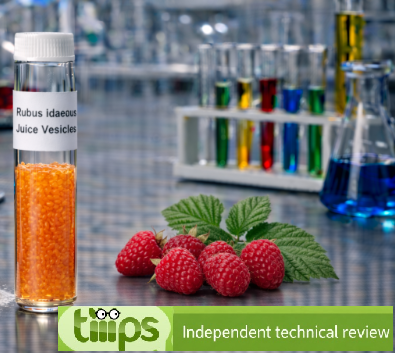
Rubus idaeus juice vesicles are microscopic vesicular structures naturally present in the juice of Rubus idaeus, commonly known as raspberry. These vesicles are isolated from the fruit juice and incorporated into cosmetic formulations for their hydrating, nourishing, and protective properties.
Thanks to their natural origin and bioactive content, they are particularly suited for skin care products aimed at improving skin comfort, radiance, and barrier function.
Chemical composition and structure
The functional activity of Rubus idaeus juice vesicles is linked to their complex composition, derived directly from raspberry juice.
Key components
Juice vesicles
Microscopic sacs containing water-soluble nutrients and bioactive compounds naturally present in raspberry juice.Antioxidants
Including polyphenols and vitamin C, which help protect the skin from oxidative stress caused by free radicals.Organic acids
Such as citric acid and malic acid, contributing to skin brightness, tone uniformity, and mild exfoliating support.
Structurally, the vesicles act as natural carriers, enclosing and gradually releasing hydrophilic compounds upon application to the skin.
| Component | Main function | Cosmetic relevance |
|---|---|---|
| Juice vesicles | Active carrier | Targeted delivery, hydration |
| Polyphenols | Antioxidant | Protection from oxidative stress |
| Vitamin C | Antioxidant | Radiance, skin vitality |
| Organic acids | Functional acids | Brightening, tone support |
Physical properties
Appearance: small particles or micro-sacs, dispersed in a liquid medium
Odor: fresh, fruity, characteristic of raspberry
Consistency: liquid to slightly gelatinous, depending on extraction method and juice concentration
Color: typically translucent to light pink/red, formulation-dependent
Production process
The production of Rubus idaeus juice vesicles follows controlled steps to preserve bioactivity:
Harvesting
Selection and collection of ripe raspberries.Juice extraction
Mechanical pressing or equivalent gentle extraction methods to obtain the juice.Vesicle separation and purification
Isolation of vesicular fractions and removal of insoluble residues or impurities.Packaging
Filling into suitable containers to maintain stability, freshness, and functional integrity.
| Step | Purpose |
|---|---|
| Harvesting | Ensure raw material quality |
| Juice extraction | Release hydrophilic actives |
| Vesicle separation | Concentrate functional fraction |
| Packaging | Preserve stability and efficacy |
Cosmetics – INCI functions
Antioxidant agent
Counteracts oxidative stress and helps protect skin cells from damage caused by reactive oxygen and nitrogen species, which are involved in skin aging processes.Adhesive agent
Improves adhesion of the formulation to the skin, supporting uniform application and prolonged contact time.Skin protectant
Contributes to the formation of a protective barrier that helps defend the skin from irritants, allergens, pollutants, and other external aggressors, while supporting the natural skin barrier.
CAS: 84929-76-0
EC number: 284-554-0
Applications
Hydration
Helps maintain skin moisture and softness through water-rich vesicular content.Nourishment
Supplies vitamins, antioxidants, and organic compounds that support skin vitality.Anti-aging support
Antioxidant activity may help counteract visible signs of aging, contributing to improved elasticity and skin appearance.
| Target benefit | Functional contribution |
|---|---|
| Hydration | Water retention, comfort |
| Nourishment | Bioactive supply |
| Anti-aging | Oxidative stress reduction |
Safety and environmental considerations
Safety
Rubus idaeus juice vesicles are generally regarded as safe for use in cosmetic and personal care products when used as intended.
Individuals with raspberry allergies or very sensitive skin should exercise caution and perform appropriate product evaluation.
Environmental impact
To ensure a responsible profile, it is recommended that:
raspberries are sourced from sustainable agriculture
extraction and purification processes are environmentally considerate, minimizing waste and solvent use

