



Epilobium angustifolium extract: properties, uses, pros, cons, safety
General description
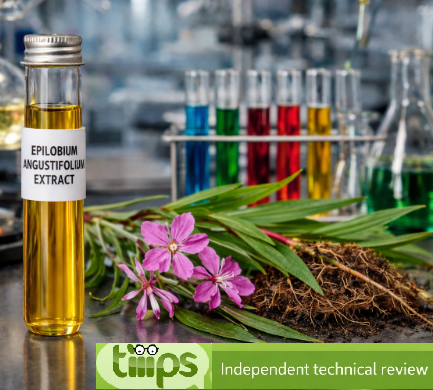
Epilobium angustifolium extract is obtained from the plant Epilobium angustifolium L., commonly known as fireweed (Italian: epilobio), belonging to the Onagraceae family.
In cosmetics it is valued for its soothing, anti-inflammatory, and antioxidant properties, making it particularly suitable for formulations intended for sensitive, reactive, blemish-prone skin or skin prone to redness. The extract is also frequently used in balancing products for the scalp.
Chemical composition and structure
The extract contains a complex mixture of phytochemicals that may act synergistically:
Flavonoids
Including quercetin and kaempferol, known for antioxidant and anti-inflammatory activity, supporting protection against cutaneous oxidative stress.Phenolic acids
Including caffeic acid and ferulic acid, contributing to skin barrier support and free-radical scavenging.Tannins
Provide a mild astringent effect, useful for toning and improving the appearance of blemish-prone skin.Aromatic fractions and volatile components
Responsible for the herbal scent profile and potential mild calming and antimicrobial effects.
Table 1 – Main constituents and cosmetic function
| Compound class | Examples | Main function |
|---|---|---|
| Flavonoids | Quercetin, kaempferol | Antioxidant, anti-inflammatory |
| Phenolic acids | Caffeic acid, ferulic acid | Skin protection, anti-radical |
| Tannins | Plant polyphenols | Astringent, balancing |
| Volatile fractions | Aromatic components | Soothing, sensory |
Physical properties
Appearance: clear to pale yellow / greenish liquid
Odor: delicate herbal fragrance
Solubility: soluble in water and alcohol; suitable for aqueous and hydroalcoholic systems
Density: generally close to 1.0 g/cm³
pH: neutral to slightly acidic, depending on the extraction solvent
Table 2 – Indicative physical properties
| Parameter | Description |
|---|---|
| Physical state | Liquid |
| Color | Clear–yellow/greenish |
| Odor | Light herbal |
| Solubility | Water and alcohol |
| pH | Neutral to slightly acidic |
Production process
Harvesting
Aerial parts of the plant are collected, preferably from a sustainable supply chain and under controlled conditions.Extraction
Bioactive compounds are obtained through maceration, infusion, or solvent extraction (water or hydroalcoholic mixtures).Purification
Removal of impurities and concentration of functional fractions.Standardization and formulation
The extract is standardized and then incorporated into cosmetic and personal care products.
Applications
Cosmetics
Skin care
Used in creams, serums, and lotions for its soothing, anti-inflammatory, and antioxidant properties; suitable also for acne-prone or irritation-prone skin.Hair care
Included in shampoos and conditioners to soothe the scalp, reduce itchiness, and support cutaneous balance.Personal care products
Used in calming and protective formulations, including mild cleansers and post-cleansing products.
INCI functions
Skin conditioning agent
Helps restore and improve skin tolerance toward external stressors, supporting the prevention of dehydration and maintaining skin comfort. The effect is often synergistic with emollients and humectants in the formula.
CAS: 90028-31-2
EC number: 289-821-5
Environmental and safety considerations
Environmental impact
Adopting responsible harvesting and sustainable extraction processes is important to reduce ecological impact and help preserve natural populations of Epilobium angustifolium.
Safety
The extract is generally regarded as safe for cosmetic use at recommended concentrations.
Caution is advised for individuals with very sensitive skin or a predisposition to allergies. Avoid direct contact with eyes and mucous membranes.

