Spearmint
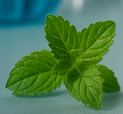
(Leaves and tops of Mentha spicata)
Description
Spearmint (Mentha spicata) is a perennial herbaceous plant belonging to the Lamiaceae family, characterized by lanceolate leaves, bright green colour and a fresh, sweet and slightly minty aroma. It is less pungent than peppermint and has an aromatic profile dominated by carvone, which gives it the typical sweet mint note.
The leaves are used fresh, dried or processed into extracts, essential oils and natural flavours for food, pharmaceutical and cosmetic applications.
Indicative nutritional values per 100 g
(fresh leaf)
Energy: 43–50 kcal
Protein: 3–4 g
Carbohydrates: 7–8 g
Lipids: 0.6–1 g
Fiber: 3–8 g
Vitamins: vitamin C, vitamin A (beta-carotene), some B-group vitamins
Minerals: calcium, iron, potassium, manganese
Typical food use (1–5 g fresh leaves, 0.1–1 g dried) provides a very modest nutritional contribution.
Main constituents
Carvone (main aromatic molecule)
Limonene and other monoterpenes
Flavonoids (luteolin, apigenin, glycosylated derivatives)
Phenolic acids (rosmarinic acid, caffeic acid)
Chlorophylls and natural pigments
Volatile compounds characteristic of the essential oil
Fiber, complex carbohydrates and small amounts of protein
Production process
(dried leaves and spearmint-based products)
Field or protected cultivation.
Harvesting at maximum aromatic stage.
Selection and cleaning: removal of stems and foreign matter.
Controlled drying (warm air, low temperature) to preserve essential oils.
Sorting and cutting of dried leaves.
Possible grinding to obtain chopped mint or powders.
For extracts:
extraction in water, ethanol or food-grade solvents;
filtration and concentration;
encapsulation (for powdered flavours).
Packaging in bags or containers protected from light and humidity.
Quality controls according to GMP/HACCP.
Physical properties
Appearance: whole or fragmented leaves, green to olive green.
Odour: fresh, sweet, herbaceous, slightly minty.
Flavour: refreshing, aromatic, sweet, less pungent than peppermint.
Moisture (dried): 8–12%
Solubility: aromatic compounds are extracted by hot water, alcohol or oils.
Sensory and technological properties
Provides a sweet, fresh and clean note to foods.
High aromatic persistence, with less aggressiveness than peppermint.
Fresh leaves release more delicate aromas; dried material is more concentrated.
Extracts allow standardisation of the aromatic profile.
Spearmint can mitigate metallic or bitter aftertastes in functional products.
Food applications
Beverages: herbal teas, mint tea, iced tea, flavoured waters, lemonades, energy drinks.
Sweets and desserts: candies, chewing gum, chocolate, ice creams, sorbets, mousses.
Savory dishes: fresh salads, couscous, tabbouleh, white meats, cold sauces (yogurt, kefir).
Bakery products: cookies, cakes, flavoured baked goods (via extracts or powders).
Dairy products: yogurts, desserts, ice creams.
Supplements and functional products: bars, soluble powders, syrups, oral sprays.
Nutrition and health
Spearmint does not provide significant nutrients at usual intake levels, but it contains aromatic and phenolic molecules with potential antioxidant effects.
Herbal tradition associates spearmint with:
These effects belong to the herbal field and cannot be claimed on foods without specific authorizations.
Generally well tolerated at normal intake levels.
Portion note
Allergens and intolerances
Spearmint is not a major allergen.
Rare sensitivities to essential oils may occur in susceptible individuals.
Naturally gluten- and lactose-free.
Check any allergens present in carriers of extracts or flavours.
Storage and shelf-life
Fresh: refrigerated, 3–7 days.
Dried: protected from light, moisture and heat; shelf-life 12–24 months.
Extracts/flavours:
Main risks: oxidation, loss of aroma, moisture absorption.
Safety and regulatory
Production compliant with GMP/HACCP.
Essential oils must comply with any usage limits established for flavours.
Labelling
It may appear as:
In blends it must be listed in descending order of weight.
Troubleshooting
Aroma too weak: old leaves or degraded extract → increase dosage or use fresher product.
Herbaceous notes too strong: excess dried material → balance with sugar or citrus.
Loss of colour: oxidative degradation → store away from light.
Instability in acidic beverages: prefer soluble/emulsified forms.
Sustainability and supply chain
Mint is a low-impact crop when properly managed:
controlled water use,
crop rotations,
reduced pesticide use.
Extraction and distillation processes generate effluents that must be managed using environmental indicators such as BOD/COD.
Organic and fair-trade supply chains are available.
Main INCI functions (cosmetics)
(as “Mentha Viridis (Spearmint) Leaf Extract”, “Mentha Viridis Leaf Oil”)
Fragrance (fresh, sweet, herbaceous note)
Refreshing and toning
Used in products such as: toothpastes, mouthwashes, deodorants, shampoos, shower gels, body creams.
Fragrance. It plays a very important role in the formulation of cosmetic products as it provides the possibility of enhancing, masking or adding fragrance to the final product, increasing its marketability. It is able to create a perceptible pleasant odour, masking a bad smell. The consumer always expects to find a pleasant or distinctive scent in a cosmetic product.
Perfuming. Unlike fragrance, which can also contain slightly less pleasant or characteristic odours, the term perfume indicates only very pleasant fragrances. Used for perfumes and aromatic raw materials.
Conclusion
Spearmint is a versatile, safe aromatic ingredient, highly appreciated for its fresh, sweet and herbaceous profile, ideal in beverages, sweets, dairy products, cold dishes and functional products. A controlled supply chain, flavour standardisation and proper storage ensure a stable, safe and high-quality ingredient, suitable both for industrial use and for home use.
Mini-glossary
SFA – Saturated Fatty Acids (acidi grassi saturi): fats to be limited when consumed in excess; present in minimal amounts in spearmint.
MUFA – Mono-unsaturated Fatty Acids (acidi grassi monoinsaturi): present in small amounts.
PUFA – Poly-unsaturated Fatty Acids (acidi grassi polinsaturi): more sensitive to oxidation, present in traces.
TFA – Trans Fatty Acids (acidi grassi trans): not naturally present in mint.
GMP/HACCP – Good Manufacturing Practices / Hazard Analysis and Critical Control Points: quality and safety management systems for food production.
BOD/COD – Biological / Chemical Oxygen Demand: indicators of the pollution load of wastewater.
Carvone: main aromatic monoterpene responsible for the characteristic flavour of spearmint.
References__________________________________________________________________________
Peshkova A, Zinicovscaia I, Cepoi L, Rudi L, Chiriac T, Yushin N, Anh TT, Manh Dung H, Corcimaru S. Effects of Gold Nanoparticles on Mentha spicata L., Soil Microbiota, and Human Health Risks: Impact of Exposure Routes. Nanomaterials (Basel). 2024 May 29;14(11):955. doi: 10.3390/nano14110955.
Abstract. Nanoparticles, due to their extensive production and application, can have significant consequences for the environment, including soil and plant pollution. Therefore, it is very important to assess how nanoparticles will affect plants depending on the exposure pathways. The effect of gold nanoparticles in a concentration range of 1-100 mg/L on Mentha spicata L. during a 28-day experiment was investigated. Two routes of nanoparticles exposure were applied: root and foliar. Transmission electron microscopy was used to characterize nanoparticles and their effect on plant leaves' ultrastructure. Gold content in soil and plant segments was determined using k0-neutron activation analysis. For root exposure, gold was mainly accumulated in soil (15.2-1769 mg/kg) followed by root systems (2.99-454 mg/kg). The maximum accumulation of gold in leaves (5.49 mg/kg) was attained at a nanoparticle concentration of 100 mg/L. Foliar exposure resulted in the maximum uptake of gold in leaves (552 mg/kg) and stems (18.4 mg/kg) at the highest applied nanoparticle concentration. The effect of nanoparticles on the Mentha spicata L. leaves' biochemical composition was assessed. Nanoparticles affected the content of chlorophyll and carotenoids and led to an increase in antioxidant activity. Root exposure to gold nanoparticles resulted in an increase in the number of starch grains in chloroplasts and also suppressed the activity of the soil microbiota. Gold extraction from mint leaves into herbal infusion varied from 2 to 90% depending on the concentration of nanoparticles in the solution and the exposure route. The health risk as a result of gold exposure via herbal tea intake was assessed through estimated daily intake. The hazard quotient values were found to be less than the cutoff, indicating that a cup of tea infusion should not cause a serious impact to human health.
Han L, Gao Y, Guo Y, Ma H, Jian X. Study on Antioxidant Activity of Spearmint Essential Oil and Pure Dew. Stud Health Technol Inform. 2023 Nov 23;308:55-61. doi: 10.3233/SHTI230824.
Abstract. Spearmint essential oil and pure dew were used as research objects, the antioxidant capacity of spearmint was evaluated by measuring the scavenging capacity of superoxide anion radical and hydroxyl radical, providing technical support for the subsequent development and utilization of spearmint truffle and essential oil. The results showed that when the volume fraction (V/V) of spearmint essential oil was 1%, its antioxidant capacity was the strongest, and its scavenging rates of superoxide anion radical and hydroxyl radical were 50.94% and 90.11% respectively; When the volume fraction (V/V) of spearmint hydrosol was 100%, its antioxidant capacity was the strongest, and its scavenging rates of superoxide anion radical and hydroxyl radical were 47.65% and 45.60%.
Zhang LL, Chen Y, Li ZJ, Li X, Fan G. Bioactive properties of the aromatic molecules of spearmint (Mentha spicata L.) essential oil: a review. Food Funct. 2022 Mar 21;13(6):3110-3132. doi: 10.1039/d1fo04080d.
Abstract. Spearmint belongs to the genus Mentha in the family Labiatae (Lamiaceae), which is cultivated worldwide for its remarkable aroma and commercial value. The aromatic molecules of spearmint essential oil, including carvone, carveol, dihydrocarvone, dihydrocarveol and dihydrocarvyl acetate, have been widely used in the flavors and fragrances industry. Besides their traditional use, these aromatic molecules have attracted great interest in other application fields (e.g., medicine, agriculture, food, and beverages) especially due to their antimicrobial, antioxidant, insecticidal, antitumor, anti-inflammatory and antidiabetic activities. This review presents the sources, properties, synthesis and application of spearmint aromatic molecules. Furthermore, this review focuses on the biological properties so far described for these compounds, their therapeutic effect on some diseases, and future directions of research. This review will, therefore, contribute to the rational and economic exploration of spearmint aromatic molecules as natural and safe alternative therapeutics.
Zheljazkov VD, Cantrell CL, Astatkie T, Hristov A. Yield, content, and composition of peppermint and spearmints as a function of harvesting time and drying. J Agric Food Chem. 2010 Nov 10;58(21):11400-7. doi: 10.1021/jf1022077.
Abstract. Peppermint ( Mentha × piperita L.) and spearmints ('Scotch' spearmint, M. × gracilis Sole, and 'Native' spearmint, Mentha spicata L.) are widely grown essential oil crops in more northern latitudes; however, there is limited information on how harvest time and drying influence peppermint and spearmint yield, oil composition, and bioactivity, when grown south of the 41st parallel. In this 2-year study, the effects of harvest time and drying on the yield, oil composition, and bioactivity of peppermint ('Black Mitcham' and 'B90-9'), 'Scotch' spearmint, and 'Native' spearmint were evaluated. Peppermint oil from the dried material had higher menthol and eucalyptol concentrations. Menthone in both peppermint cultivars decreased from harvest 1 (late June) to harvest 5 (late August) or 6 (early September), whereas menthol increased. (-)-Carvone in spearmints accumulated early, before flowering, allowing for early harvest. Oil yields from the dried spearmint biomass reached the maximum at harvest 3 (mid-July). The essential oil compositions of the four mint genotypes were similar to that of 11 commercially available oils, suggesting that these genotypes can be grown in the hot, humid environment of the southeastern United States. The antioxidant activities (ORAC(oil) values) of the essential oils were 4372, 1713, 1107, and 471 μmol of TE L(-1) for 'Scotch' spearmint, 'Native' spearmint, peppermint, and Japanese cornmint ( Mentha canadensis ), respectively. The oils of the four mint genotypes did not affect ruminal fermentation in vivo, and did not exhibit antimicrobial, antileishmanial, or antimalarial activity at levels that would warrant bioassay-directed fractionation in a drug-discovery screening program. Specifically, the oils did not show greater than 50% growth inhibition against Leishmania donovani , Plasmodium falciparum clones D6 and W2, Candida albicans , Escherichia coli , Pseudomonas aeruginosa , Cryptococcus neoformans , Mycobacterium intracellulare , or Aspergillus fumigates at 50 μg mL(-1).
Piras A, Porcedda S, Falconieri D, Maxia A, Gonçalves M, Cavaleiro C, Salgueiro L. Antifungal activity of essential oil from Mentha spicata L. and Mentha pulegium L. growing wild in Sardinia island (Italy). Nat Prod Res. 2021 Mar;35(6):993-999. doi: 10.1080/14786419.2019.1610755.
Abstract. This study aims to evaluate the antifungal activity of Mentha spicata L. and Mentha pulegium L. from Sardinia and to assess their efficacy on virulence factors for Candida albicans, particularly on the inhibition of the germ tube formation. The major compounds of the essential oils were carvone (62.9%) for M. spicata and pulegone (86.2%) for M. pulegium. The essential oil from M. spicata showed a more preeminent effect against Cryptococcus neoformans and the dermatophytes Trichophyton rubrum and T. verrucosum (0.32 μL/mL). Both oils were very effective in inhibiting C. albicans germ tube formation, at doses well below their MIC (0.16 μL/mL).
Mkaddem M, Bouajila J, Ennajar M, Lebrihi A, Mathieu F, Romdhane M. Chemical composition and antimicrobial and antioxidant activities of Mentha (longifolia L. and viridis) essential oils. J Food Sci. 2009 Sep;74(7):M358-63. doi: 10.1111/j.1750-3841.2009.01272.x.
Abstract. The study was aimed to investigate essential oil chemical composition (gas chromatography/flame ionization detection [GC-FID] and gas chromatography/mass spectrometry [GC-MS]) and antioxidant (1,1-diphenyl-2-picrylhydrazyl free radical (DPPH) and 2,2'-azinobis-3-ethylbenzothiazoline-6-sulphonate [ABTS] assays) and antimicrobial (Gram-positive and Gram-negative bacteria, fungi, and yeast) activities of essential oils extracted from leaves of Mentha longifolia L. and Mentha viridis. GC-MS analysis revealed that M. longifolia was constituted by pulegone (54.41%) as a major component followed by isomenthone (12.02%), 1,8-cineole (7.41%), borneol (6.85%), and piperitenone oxide (3.19%). M. viridis was rich in carvone (50.47%), 1,8-cineole (9.14%), and limonene (4.87%). The antioxidant activity by ABTS assay showed IC(50) values of 476.3 +/- 11.7 and 195.1 +/- 4.2 mg/L for M. longifolia and M. viridis, respectively, the DPPH assays have resulted in a moderate IC(50) (>8000 mg/L and 3476.3 +/- 133 mg/L for M. longifolia and M. viridis, respectively). Antimicrobial activity showed that Listeria monocytogenes and Klebsiella pneumoniae bacteria were more inhibited by the 2 essential oils tested. Escherichia coli was least susceptible. A strong activity was also observed on fungi and yeasts. Carvone, thymol, and piperitone oxide have not been detected in Tunisian M. longifolia. Camphor is reported for the 1st time for M. viridis. Antioxidant and antibacterial activities were correlated to chemical composition.




