



Mentha pulegium (Lamiaceae) – pennyroyal
Mentha pulegium, commonly known as pennyroyal, is a perennial herb of the family Lamiaceae, historically widespread in Europe, North Africa and Western Asia. It typically shows a low, stoloniferous growth habit, forming dense mats through slender, creeping stems that readily root at the nodes. The leaves are small, opposite, ovate and covered with fine glandular hairs that secrete a strongly aromatic essential oil; when crushed, they release a sharp, penetrating odour that is more pungent than that of many other mint species. The flowers, borne in dense, globose verticillasters in the leaf axils, have a lilac to pink corolla and appear during summer, attracting a variety of pollinating insects.
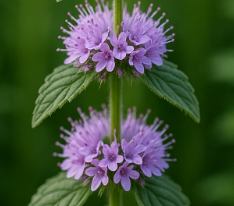 | 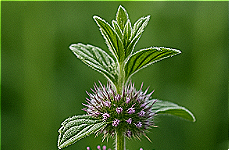 |
Chemically, Mentha pulegium is distinguished by an essential oil rich in oxygenated monoterpenes, dominated by pulegone, often accompanied by significant amounts of isomenthone, menthone, piperitenone and related compounds. In many chemotypes, pulegone can constitute 50–60% or more of the total oil, a level markedly higher than in most culinary mints, while the proportions of co-occurring terpenoids can vary with geographical origin, phenological stage and processing conditions. This pulegone-rich profile is at the same time the source of the plant’s characteristic aroma and the main determinant of its toxicological concern. Experimental studies have shown that pulegone is metabolised in the liver to reactive intermediates such as menthofuran and other oxidative metabolites, which can cause hepatotoxicity and, at higher exposures, nephrotoxicity and systemic damage in animal models and in documented human poisoning cases.
In traditional European and Mediterranean medicine, pennyroyal was used for a wide range of indications: as a digestive and carminative, a spasmolytic for mild gastrointestinal discomfort, an expectorant, an emmenagogue and, in some folk contexts, as an abortifacient. Infusions and decoctions prepared from the aerial parts were administered for colds, menstrual irregularities and digestive complaints, while pennyroyal oil or concentrated preparations were employed as insect repellents and to deter external parasites. Modern toxicology has, however, clearly demonstrated that pennyroyal essential oil is highly toxic, and multiple case reports link its ingestion to severe liver injury, multi-organ failure and death, especially when consumed in attempts to induce abortion or as a “natural remedy” in uncontrolled doses. As a consequence, the traditional uses that involved concentrated preparations are now considered unsafe, and the internal use of pennyroyal oil is widely regarded as contraindicated.
In food and flavouring applications, Mentha pulegium historically served as an aromatic herb in rustic dishes, legume soups and meat preparations in some regional cuisines. Today, its role in gastronomy is much more limited than that of other mints, essentially because of the regulatory restrictions on pulegone and the safety concerns associated with pennyroyal oils and extracts. European and international risk assessments have established very low acceptable intake levels for pulegone and its metabolite menthofuran in foods and herbal products, leading to strict control of flavourings or herbal preparations that may contain these substances. In practice, this means that pennyroyal is not recommended for frequent or high-quantity consumption, and any use as a flavouring must respect stringent limits on pulegone exposure.
From a health and functional standpoint, pennyroyal continues to be of scientific interest because its essential oil and extracts show antimicrobial, antifungal, antioxidant and spasmolytic activities in vitro and in animal studies. Nonetheless, the predominance of pulegone makes it extremely difficult to translate these findings into safe therapeutic applications. Contemporary expert opinion is largely convergent: the potential bioactivity of Mentha pulegium does not outweigh the risk profile associated with its essential oil, and any medicinal or supplementary use must be highly cautious, relying only on standardised products and clear toxicological data. Uncontrolled home-made preparations, especially those based on the pure essential oil or on strongly concentrated extracts, are considered inappropriate for internal use and may pose serious health risks.
Historically and culturally, Mentha pulegium occupies a notable place in European ethnobotany. Classical and medieval authors mention pennyroyal among the aromatic and medicinal herbs of domestic gardens, and its Latin name is linked to the root pulex (“flea”), reflecting the long-standing use of the plant as a flea and insect repellent in households and livestock environments. Over time, however, many of its functions in everyday practice have been gradually replaced by safer mint species and other aromatic herbs, as knowledge of its toxicity became better documented and regulatory frameworks for herbal products and flavourings grew more stringent.
Botanical classification (APG IV system)
| Category | Data |
|---|---|
| Common name | pennyroyal, pennyroyal mint |
| Botanical name | Mentha pulegium L. |
| Kingdom | Plantae |
| Clade | Angiosperms → eudicots → asterids |
| Order | Lamiales |
| Family | Lamiaceae |
| Genus | Mentha |
| Species | Mentha pulegium L. |
Fundamental warning on food use
Pennyroyal mint contains pulegone, a monoterpene that is potentially hepatotoxic and neurotoxic at relatively low doses.
For this reason, Mentha pulegium is not considered a safe culinary herb, either for home herbal teas or for regular food use.
Use of pennyroyal essential oil by mouth is dangerous and can be life-threatening.
In several jurisdictions its use in foods and food-supplements is severely restricted or discouraged.
Production process
Pennyroyal mint is harvested at full flowering, when the aromatic profile is at its peak. Flowering tops and leaves are selected, avoiding overly woody material and collecting only from clean, non-polluted areas. After harvesting, the aerial parts are dried in the shade in well-ventilated rooms at moderate temperature, to preserve volatile compounds and reduce moisture to levels suitable for storage.
The essential oil is obtained by steam distillation of the dried herb. The distillate is separated, filtered, and may be fractionated and standardized to meet defined specifications for composition and purity. Other preparations include hydroalcoholic extracts, CO₂ extracts and hydrolats, which are mainly used in herbal cosmetics.
Applications
In traditional herbal practice, Mentha pulegium was used as an aromatic and carminative plant, often in digestive herbal teas. Today, internal use is largely discouraged or prohibited because the essential oil is rich in pulegone and related molecules with significant toxicity. Modern phytotherapeutic use—where allowed—must rely only on very dilute preparations and extracts specifically controlled for their content of toxic constituents.
Food use is extremely restricted and in many jurisdictions not permitted at all. Historical use as a culinary herb is now considered unsafe.
In cosmetics, pennyroyal may be used in refreshing and deodorant formulations. Cosmetic products generally employ aqueous or hydroalcoholic extracts, while the essential oil is allowed only at very low concentrations and within strict regulatory limits. Typical applications include toners, products for oily or impure skin, foot baths and foot-care products. On the technical side, the plant and its oil are also studied as potential natural insect repellents.
Nutrition & health
The toxicological profile of Mentha pulegium is dominated by pulegone and menthofuran, both recognized as hepatotoxic and subject to tight regulatory control in foods and herbal preparations. Pennyroyal essential oil must never be ingested: even relatively small volumes of the pure oil can cause severe poisoning with liver and multi-organ damage. The traditional use of pennyroyal tea as a digestive or emmenagogue is no longer considered acceptable from a safety point of view.
In topical cosmetic use, the focus is on its aromatic, refreshing and mildly toning effects. When used at low levels in well-designed formulations, exposure is much lower than in internal use, but the content of pulegone and menthofuran still needs to be kept as low as reasonably achievable.
The plant is clearly contraindicated in pregnancy and breastfeeding, in patients with liver disease and in individuals with known sensitivity to essential oils or to other members of the Lamiaceae family.
There is no meaningful concept of a “food portion” for Mentha pulegium in modern practice. Safe uses are limited to regulated external applications and to herbal preparations where toxic monoterpenes are strictly controlled or effectively absent.
Allergens and intolerances
Some individuals may experience skin irritation or sensitization, particularly with products containing higher levels of essential oil. In leave-on cosmetics, the risk of allergic contact dermatitis increases with both concentration and frequency of use. In finished products, any fragrance allergens originating from pennyroyal or other perfume components must be declared on the label when they exceed the thresholds set by cosmetics legislation.
Storage and shelf-life
The dried herb should be stored in a cool, dry place, protected from direct light and excessive humidity; under suitable conditions it typically remains usable for about 1–2 years. Cosmetic extracts have variable stability depending on the solvent and preservative system and should follow the producer’s technical recommendations.
Pennyroyal essential oil is particularly prone to oxidation; it must be stored in tightly closed, dark glass or metal containers, away from heat sources. Oxidation not only alters the odor profile but may also modify the toxicological characteristics of the oil.
Safety and regulatory aspects
Because of the toxicity of pulegone and menthofuran, modern regulations impose very strict limits on their presence in foods, flavorings and herbal products. In many regions, adding pennyroyal essential oil or pure pulegone to foods is not permitted, and herbal medicinal products containing these compounds must be carefully evaluated with specific exposure limits and risk assessments.
In cosmetics, pennyroyal-derived ingredients are allowed only at low concentrations, and the content of pulegone is limited by both fragrance safety standards and cosmetics regulations. Manufacturers must operate under GMP, with robust quality control on identity, purity, contaminant levels and quantification of regulated constituents, ensuring that exposure is kept as low as practically achievable.
Labeling
In herbal products, the plant may be declared as Mentha pulegium or pennyroyal (herb, flowering tops, leaves), depending on local requirements.
In cosmetics, typical INCI names include Mentha Pulegium Extract and, where permitted, Mentha Pulegium Oil. Any regulated fragrance allergens arising from the essential oil must appear in the ingredient list when they exceed legal thresholds.
Main INCI functions (cosmetics)
In cosmetic formulations, pennyroyal-derived ingredients are mainly used for their olfactory and toning roles, with typical functions such as:
Fragrance / perfuming: fresh, herbal, mint-like top note.
Skin conditioning: mild toning and refreshing sensation, especially in lotions and foot-care products.
Masking / deodorant support: partial masking of unwanted base odors and contribution to deodorant systems, always within safe concentration ranges.
Conclusion
Mentha pulegium (pennyroyal mint) is an aromatic Lamiaceae species with a long history of traditional use, now recognized as toxic due to its high content of pulegone and related monoterpenes. Modern safe use is essentially confined to external cosmetic applications and carefully controlled herbal preparations with strictly limited levels of toxic constituents. Proper control of harvesting, drying, extraction, composition and regulatory compliance is essential to obtain ingredients that are both functionally useful and toxicologically acceptable, avoiding internal uses that are no longer considered safe.

