



Citrullus lanatus stem extract: properties, uses, pros, cons, safety
General description
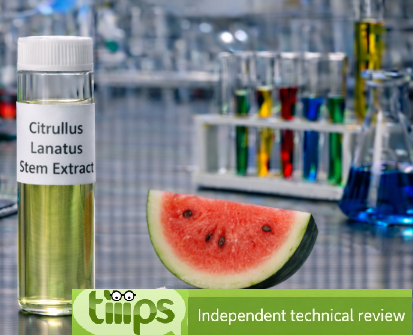
Citrullus lanatus stem extract is obtained from the stems of the watermelon plant (Citrullus lanatus), a species belonging to the family Cucurbitaceae.
It is a plant-derived ingredient used in cosmetics, personal care, and, to a more limited extent, in pharmaceutical applications, valued for its potential moisturizing, antioxidant, and soothing properties. The extract is particularly suitable for formulations intended for dehydrated, sensitive, or environmentally stressed skin.
Chemical composition and structure
Citrullus lanatus stem extract contains a heterogeneous mixture of bioactive compounds that may act synergistically:
Vitamins
Mainly vitamin C and B-group vitamins, supporting antioxidant activity and skin metabolic functions.Minerals
Including potassium, magnesium, and calcium, involved in maintaining skin physiological balance.Amino acids
Including citrulline, a known metabolic precursor in nitric oxide pathways, associated with revitalizing effects and potential support for skin microcirculation.Antioxidants
Such as phenolic compounds and flavonoids, contributing to protection against oxidative stress.Polysaccharides
Supporting film-forming and moisturizing effects by promoting surface water retention.
Compound class | Examples | Main cosmetic role |
|---|---|---|
Vitamins | Vitamin C, B group | Antioxidant, skin vitality |
Minerals | K, Mg, Ca | Physiological balance |
Amino acids | Citrulline | Revitalizing, functional support |
Phenolics/flavonoids | Various | Protection from oxidative stress |
Polysaccharides | Hydrophilic fractions | Moisturizing, film-forming |
Physical properties
Appearance: transparent to slightly yellow liquid
Odor: light, vegetal
Solubility: water-soluble, suitable for aqueous systems
Formulation compatibility: good compatibility with gels, O/W emulsions, and solutions
Parameter | Description |
|---|---|
Physical state | Liquid |
Color | Transparent–pale yellow |
Odor | Light vegetal |
Solubility | Water-soluble |
Production process
Production of Citrullus lanatus stem extract involves controlled steps designed to preserve functional constituents:
Stem harvesting
From selected mature plants.Cleaning
Thorough removal of impurities, residues, and foreign matter.Extraction
Via maceration or extraction using aqueous or hydroalcoholic solvents to solubilize active components.Filtration
Removal of solid particles to obtain a clear extract.Concentration (optional)
Increasing the functional content of the extract.Quality control
Chemical and microbiological testing to confirm purity, stability, and safety.
Step | Objective |
|---|---|
Harvesting | Raw material quality |
Extraction | Recovery of bioactives |
Filtration | Clarity and purity |
Quality control | Safety and standards |
Applications
Cosmetics and skin care
Used in creams, lotions, serums, and masks for potential moisturizing, antioxidant, and soothing benefits
Suitable for products designed to protect, refresh, and revitalize the skin
Hair care
Incorporated into shampoos, conditioners, and treatments to nourish and moisturize hair and scalp
Other fields
Pharmaceutical products: included in formulations intended for soothing support
Personal care: used in shower gels, soaps, and mild cleansers
INCI functions
Skin conditioning agent – miscellaneous
Helps improve the condition of dry or damaged skin, reducing flaking, improving elasticity, and supporting the restoration of skin comfort.
CAS: 90244-99-8
EC number: 290-802-9
Environmental and safety considerations
Safety
Citrullus lanatus stem extract is generally regarded as safe, non-toxic, and non-irritating for use in cosmetic, pharmaceutical, and personal care products when used at recommended concentrations.
Environmental impact
Adopting sustainable agricultural practices and responsible extraction processes is important to ensure:
continued availability of the raw material
protection of biodiversity in cultivation areas

