



Solvent Red 1 (CI 12150), also known as Sudan R, Sudan Red G is a synthetic azo dye commonly used as a colorant. It imparts a red-orange hue and has historically been used in coloring oils, waxes, plastics, and some industrial applications. While it was previously used in cosmetics and food products, its use in these applications has been largely restricted or banned in many countries due to safety concerns. In recent years, Sudan Red 1 has been classified as a non-permitted substance in food and cosmetics due to its potential carcinogenic properties.
Chemical Composition and Structure
Sudan Red 1 is an azo dye, meaning it contains an azo group (-N=N-) as part of its structure, which is responsible for its vivid red-orange color. The chemical formula is C17H14N2O2, and the dye is synthesized by coupling aromatic compounds through the azo bond. The structure of Sudan Red 1 makes it highly lipophilic, which means it dissolves well in oils, but not in water.
Physical Properties
Sudan Red 1 is typically a red or reddish-orange crystalline powder. It is insoluble in water but soluble in oils, fats, and organic solvents. This property made it suitable for use in products such as oil-based cosmetics and industrial applications where bright and stable coloration is needed. However, its stability in fats and oils has also raised concerns about its persistence and potential toxicity when used in food or personal care products.
Production Process
Sudan Red 1 is synthesized through the azo coupling process, where diazonium salts are reacted with aromatic compounds to form the characteristic azo bond (-N=N-). This process is tightly controlled to produce a consistent colorant. However, due to health and safety concerns, its production for consumer use is restricted in many parts of the world.
Applications
Industrial Use: Sudan Red 1 is still used in some industrial applications, such as coloring oils, waxes, plastics, and polishes, where its vivid color and stability in oil-based mediums are valued.
Historical Use in Cosmetics: In the past, CI 12150 was used in oil-based cosmetics like lipsticks and hair products for its vibrant red hue. However, due to safety concerns, its use in cosmetics has been largely discontinued.
Dyes and Marking: Sudan Red 1 may also be used in certain types of inks and dyes for non-food applications, such as textiles or markers, but not in products intended for direct human contact.
- Cosmetic - INCI Functions:
Colorant. This ingredient has the function of colouring the solution in which it is inserted in a temporary, semi-permanent or permanent manner, either alone or in the presence of the complementary components added for colouring.
Cosmetic safety
Restricted cosmetic ingredient as II/1231 a Relevant Item in the Annexes of the European Cosmetics Regulation 1223/2009.
Safety. The problem with azo dyes (monoazo or diazo) is photocatalytic degradation leading to oxidation and subsequent formation of impurities such as aromatic amines, some of which have carcinogenic activity. (Chung KT, Stevens SE Jr, Cerniglia CE. The reduction of azo dyes by the intestinal microflora. Crit Rev Microbiol. 1992;18(3):175-90. doi: 10.3109/10408419209114557. )
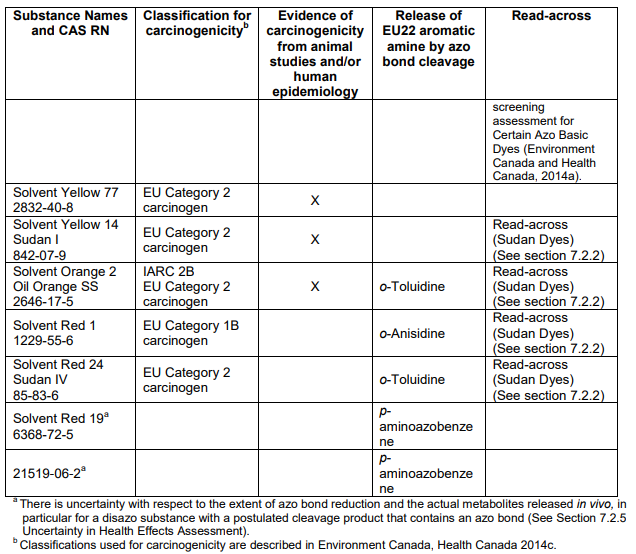
Overall, the empirical data for Solvent Red 1 are limited, particularly owing to the lack of chronic toxicity data and sufficient in vivo genotoxicity data to permit a full evaluation on its health effects potential. Limited data indicate that Solvent Red 1 is a weak mutagen in bacteria and mammalian cells, but it has exhibited potent cytotoxicity in vitro. In addition, although the azo bond reductive cleavage potential of Solvent Red 1 remains unknown, given the similarity between Solvent Red 1 and Sudan I, it is reasonable to assume that the azo linkage of Solvent Red 1 can be reduced by gut and/or skin bacteria to a certain extent. If this occurred, 1-amino-2-naphthol and o-anisidine could be released. o-Anisidine is one of the EU22 aromatic amines that has exhibitedcarcinogenicity and genotoxicity in experimental animals (Environment Canada and Health Canada 2014b).
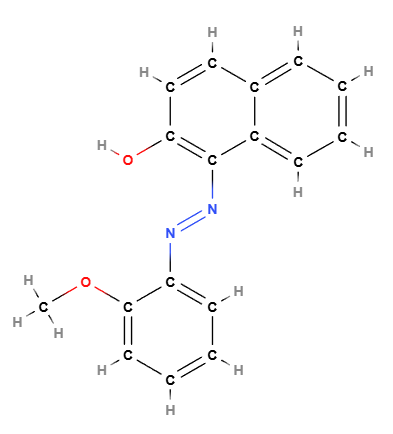 | 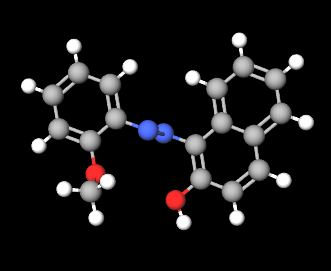 |
Molecular Formula C17H14N2O2
Molecular Weight 278.30 g/mol
CAS 1229-55-6
UNII J95C286WK5
EC Number 214-968-9
DTXSID3061635
Nikkaji Number J34.074J
Synonyms:
Sudan R
Sudan Red G
Solvent red 1

