



Polyglyceryl-3 Betainate Malate: properties, uses, pros, cons, safety
Polyglyceryl-3 Betainate Malate is a sophisticated emulsifying agent derived from the esterification process involving polyglycerol, betaine, and malic acid. This ingredient is used for its multifunctional properties, which include acting as an emulsifier, surfactant, and skin-conditioning agent. Its primary role in cosmetic formulations is to stabilize emulsions, ensuring uniform distribution of ingredients and preventing separation. Polyglyceryl-3 Betainate Malate enhances the sensory experience of products by providing a smooth, non-greasy feel upon application. Additionally, it boasts moisturizing benefits, making it suitable for formulations targeting dry or sensitive skin.
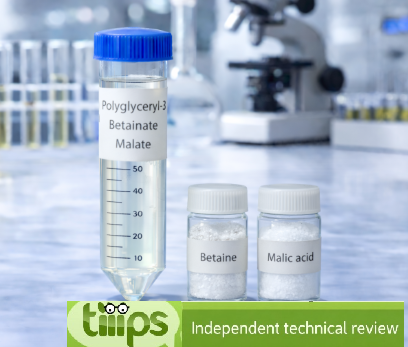
Chemical Composition and Structure
Polyglyceryl-3 Betainate Malate is composed of:
- Polyglycerol: A polymer formed from glycerol units, enhancing moisture retention and emolliency. It has multiple hydroxyl groups, which contribute to its hydrophilic nature.
- Betaine: An amino acid derivative that plays a crucial role in hydrating the skin and maintaining osmotic balance. Betaine also exhibits anti-inflammatory properties, making it beneficial for sensitive skin types.
- Malic Acid: A dicarboxylic acid that occurs naturally in various fruits. It serves as a mild exfoliant, promoting skin cell turnover and improving skin texture.
The resulting chemical structure features a hydrophilic backbone from polyglycerol, combined with hydrophobic betaine and malic acid components, allowing for effective emulsification and stabilization of formulations.
Physical Properties
Appearance: Typically appears as a clear to slightly yellow viscous liquid or gel, indicating its concentrated nature.
Solubility: Highly soluble in water, allowing for easy incorporation into aqueous formulations. It can also interact with oils, forming stable emulsions.
pH: Generally neutral to slightly acidic, typically ranging from 5 to 7, which is compatible with the natural pH of the skin.
Odor: Mild and characteristic, derived from the plant-based origins of its components, making it pleasant for cosmetic applications.
Stability: Maintains stability under normal storage conditions; however, it should be protected from extreme temperatures and direct sunlight to preserve its efficacy.
Production Process
Synthesis: The synthesis of Polyglyceryl-3 Betainate Malate begins with the esterification of polyglycerol with betaine and malic acid in a controlled environment, ensuring the formation of stable bonds.
Purification: The product undergoes purification processes, such as filtration and chromatography, to eliminate unreacted starting materials, by-products, and impurities, resulting in a high-quality ingredient.
Formulation: After purification, Polyglyceryl-3 Betainate Malate is formulated into cosmetic products. It acts as a stabilizer for emulsions and enhances the overall texture and performance of the formulation.
Applications
Medical: While not commonly used in pharmaceuticals, it may find applications in topical formulations requiring mild cleansing or moisturizing effects.
Cosmetics: Frequently utilized in various cosmetic products, including creams, lotions, shampoos, and conditioners. Its emulsifying properties ensure consistent texture and prevent ingredient separation. Additionally, it enhances the spreadability and sensory feel of products on the skin.
INCI Functions:
Hair conditioning agent. A significant number of ingredients with specific and targeted purposes may co-exist in hair shampoo formulations: cleansers, conditioners, thickeners, matting agents, sequestering agents, fragrances, preservatives, special additives. However, the indispensable ingredients are the cleansers and conditioners as they are necessary and sufficient for hair cleansing and manageability. The others act as commercial and non-essential auxiliaries such as: appearance, fragrance, colouring, etc. Hair conditioning agents have the task of increasing shine, manageability and volume, and reducing static electricity, especially after treatments such as colouring, ironing, waving, drying and brushing. They are, in practice, dispersants that may contain cationic surfactants, thickeners, emollients, polymers. The typology of hair conditioning agents includes: intensive conditioners, instant conditioners, thickening conditioners, drying conditioners. They can perform their task generally accompanied by other different ingredients.
Waving and straightening agent for hair. It is an ingredient that enables straightening and/or waving by permanently changing the shape or configuration of the keratinous hair fibres.
Food: Not typically used in food products; its primary applications are in personal care and cosmetic formulations.
Industrial Uses: May be incorporated into industrial formulations requiring emulsifying and conditioning properties, such as in personal care and household cleaning products.
Environmental and Safety Considerations
Polyglyceryl-3 Betainate Malate is regarded as safe for topical application in cosmetics when used according to recommended guidelines.
It is compatible with most skin types, including sensitive and allergy-prone skin.
Responsible sourcing practices and sustainable production methods are essential to ensure the ingredient is free from harmful contaminants and environmentally friendly.

